OVERVIEW
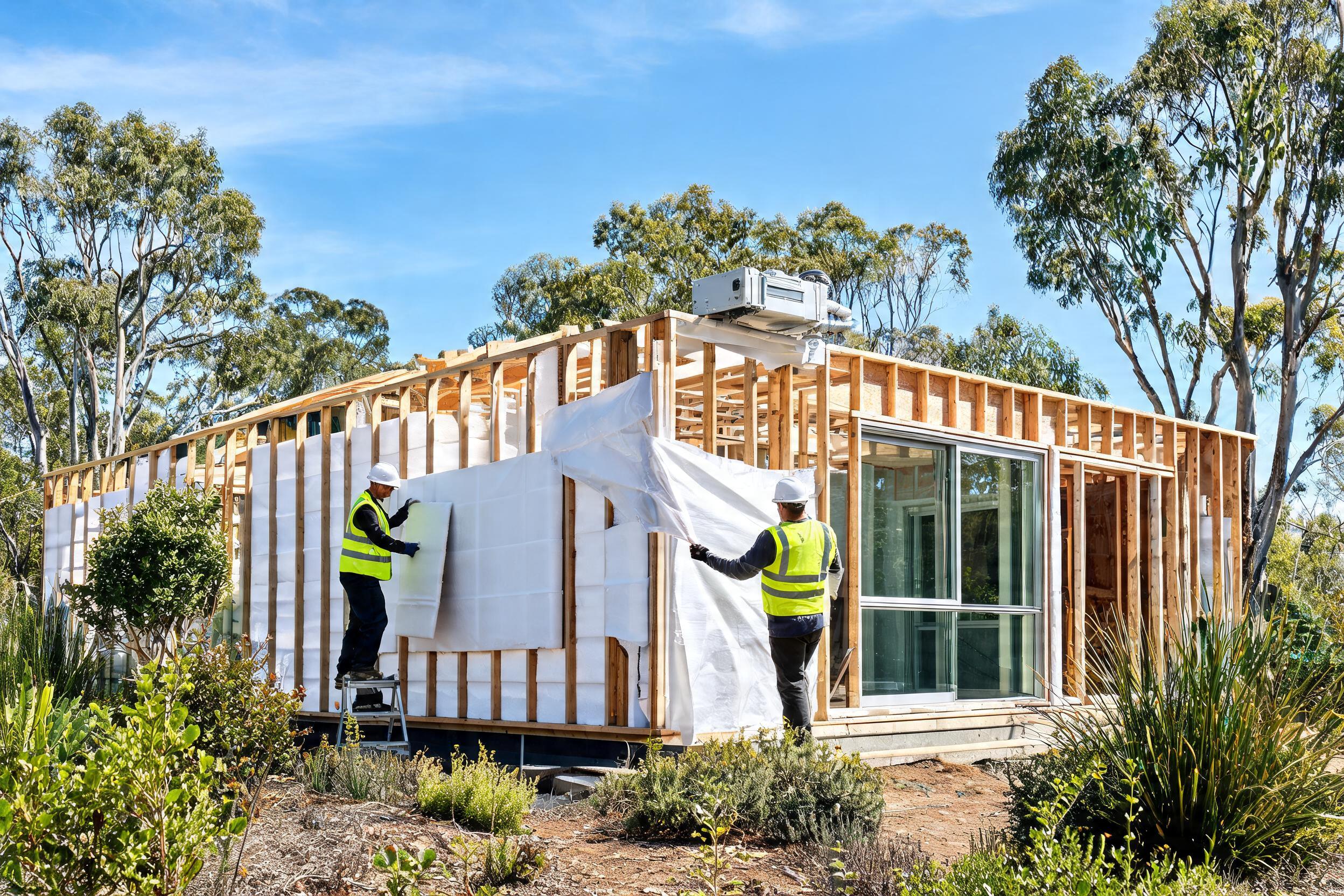
"Passive House" (from the German Passivhaus) is a way of designing and constructing a building so that it stays comfortable all year with very little added heating or cooling. It is a fabric-first, building-physics approach: get the shell of the building right — well insulated, airtight, free of thermal weak points, with good windows and controlled fresh-air ventilation — and the building will hold a steady, comfortable indoor temperature largely on its own, "passively", with only a small amount of mechanical input. The term also refers to a formal international performance standard developed by the Passive House Institute, an independent body founded in Germany, and there is an Australian Passive House Association that promotes and supports the approach locally. Buildings, and individual components, can be formally certified against the standard, but the principles are valuable to understand and apply whether or not a project seeks certification.
It is worth being precise about what the name does and does not mean. A Passive House is not a house with no heating or cooling, and it is not the same thing as a "passive solar" house, although the two share ideas. Nor is it limited to houses — the same principles are applied to apartments, schools, offices and other buildings. What unites all of them is a demanding, measured focus on how the building performs: the standard is defined by outcomes, such as very low energy demand for heating and cooling and a high level of airtightness, verified by testing and modelling rather than assumed from the specification on paper. Because this course is an introduction and must not reproduce the standard's specific numeric criteria, it describes those targets qualitatively and directs you to the certifying body — the Passive House Institute, and in Australia the Australian Passive House Association — for the exact figures and current requirements.