OVERVIEW
This course is a practical, evidence-informed refresher on basic life support for nurses and midwives working in Australia. It starts with the reasons BLS matters so much: when the heart stops pumping effectively, blood stops reaching the brain and other vital organs, and every minute that passes without effective chest compressions and, where indicated, defibrillation reduces the person's chance of surviving with good neurological function. It introduces the chain of survival as a way of thinking about the linked actions that together give a person the best chance.
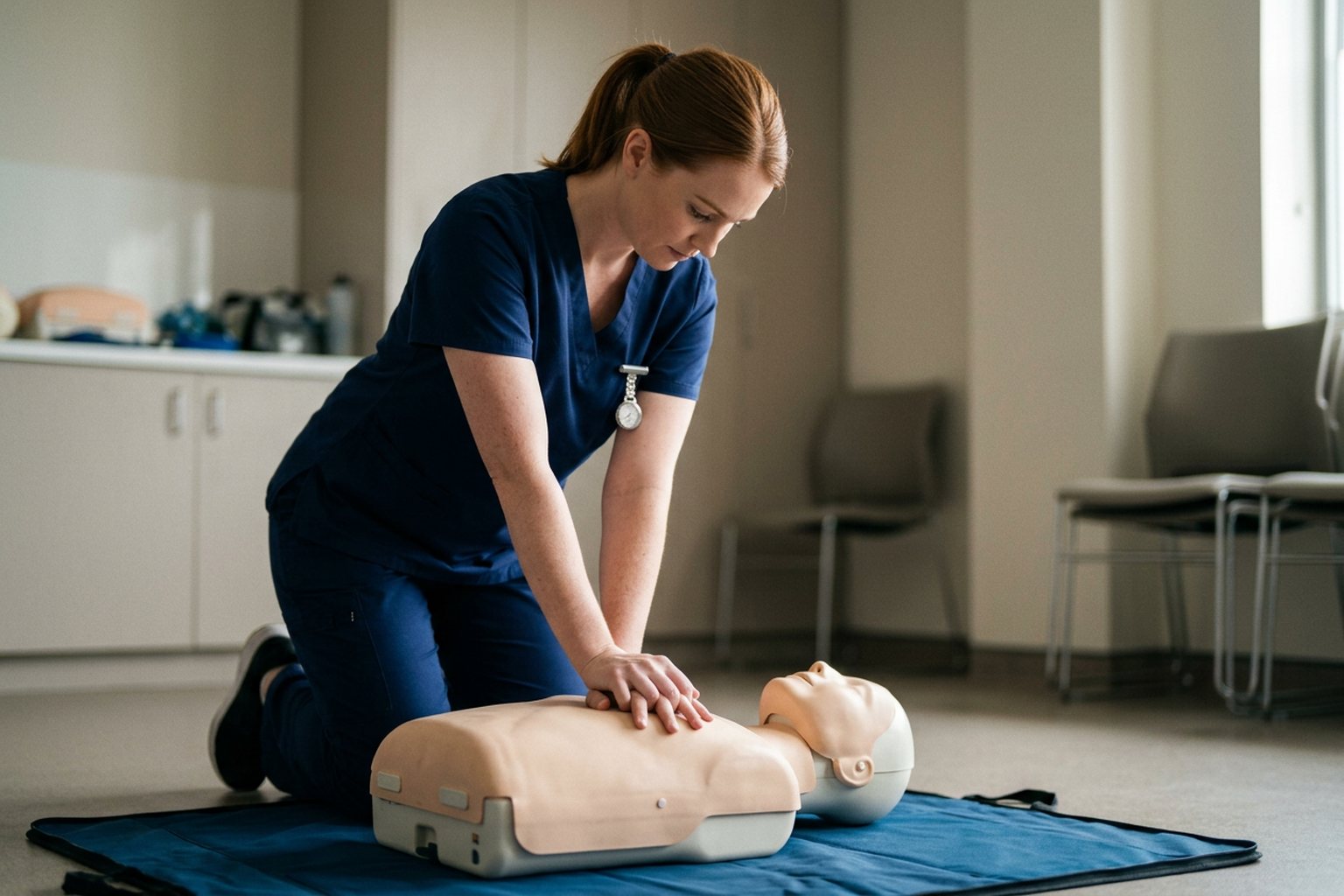
It then focuses on the core bedside and community skills: recognising that someone is in cardiac arrest — unresponsive and not breathing normally — and understanding why gasping, irregular "agonal" breaths must not be mistaken for normal breathing; working through the DRSABCD approach promoted by ANZCOR and the Australian Resuscitation Council, described here in the author's own words; delivering high-quality chest compressions, with attention to hand position, depth, rate, full chest recoil and minimal interruptions; opening and managing the airway, giving rescue breaths safely with a barrier device where available, and understanding when compression-only CPR is appropriate; and using an automated external defibrillator (AED) or manual defibrillator early and safely. The course then considers how BLS is adapted in special circumstances — cardiac arrest in pregnancy and the need for left uterine displacement, an awareness of infants and children, drowning, and choking from foreign-body airway obstruction — and closes with the in-hospital response: calling the emergency or medical emergency team, team roles, handover to advanced life support, documentation, debriefing and staff wellbeing. Where specific figures such as compression rate or depth are mentioned, they are attributed to current ANZCOR guidance, and learners are directed to verify them against the current version, because resuscitation guidelines are reviewed and updated over time.