OVERVIEW
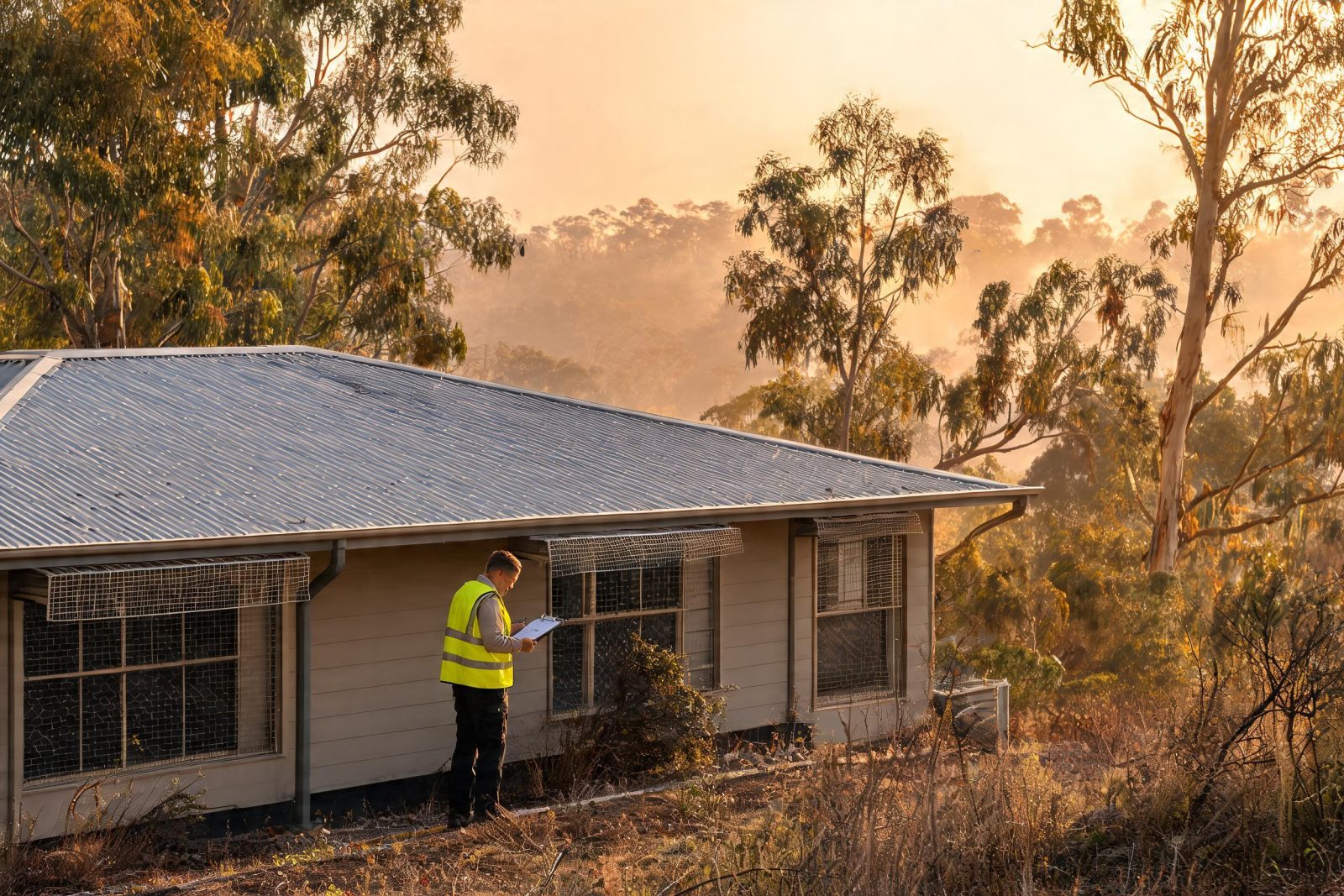
Bushfire is a serious hazard in Australia because large parts of the country combine flammable native vegetation, hot and dry conditions for much of the year, and communities that live close to or within the bush. When severe fire weather arrives, fires can move quickly, throw burning embers well ahead of the fire front, and expose buildings to intense radiant heat and, in the worst cases, direct flame. The response operates on two connected levels: the planning system decides whether and where development should occur and on what terms, while the National Construction Code (NCC), developed by the Australian Building Codes Board (ABCB), sets how a building in a bushfire-prone location must be constructed to improve its chance of withstanding attack. Together they form a layered defence rather than a single rule.
To understand the construction response it helps to understand the nature of the attack. A building in a bushfire is rarely destroyed by a single mechanism. Instead, three forms of exposure act in combination, sometimes in sequence. The first and most widespread is ember attack: burning debris carried on the wind, which can travel a considerable distance ahead of the fire and lodge in gaps, gutters, vents, decking joints and against combustible surfaces, igniting the building from small beginnings. The second is radiant heat: the intense thermal energy given off by nearby burning vegetation, which can ignite combustible materials, crack glass and make surfaces fail without any flame touching the building. The third, at the extreme, is direct flame contact, where the fire front actually reaches the structure. Much of the loss of homes in bushfires is attributed to ember attack and radiant heat rather than the passage of the main fire front, which is why construction measures concentrate heavily on sealing gaps against embers and on protecting the building from radiant heat.