OVERVIEW
Masonry is construction made from individual units — such as clay bricks, concrete blocks, or stone — bonded together in a bed of mortar to form walls and other elements, and the most important distinction for a designer or builder is whether that masonry is loadbearing (structural) or a veneer. The short answer is that loadbearing masonry carries building loads — the weight of floors, roofs and the wall above, plus wind and other forces — down to the foundations, whereas masonry veneer is a single non-structural outer leaf that carries essentially only its own weight and is tied back to a separate structural backing, usually a timber or steel frame, that does the real load-carrying. Confusing the two, or detailing one as if it were the other, is a frequent source of trouble.
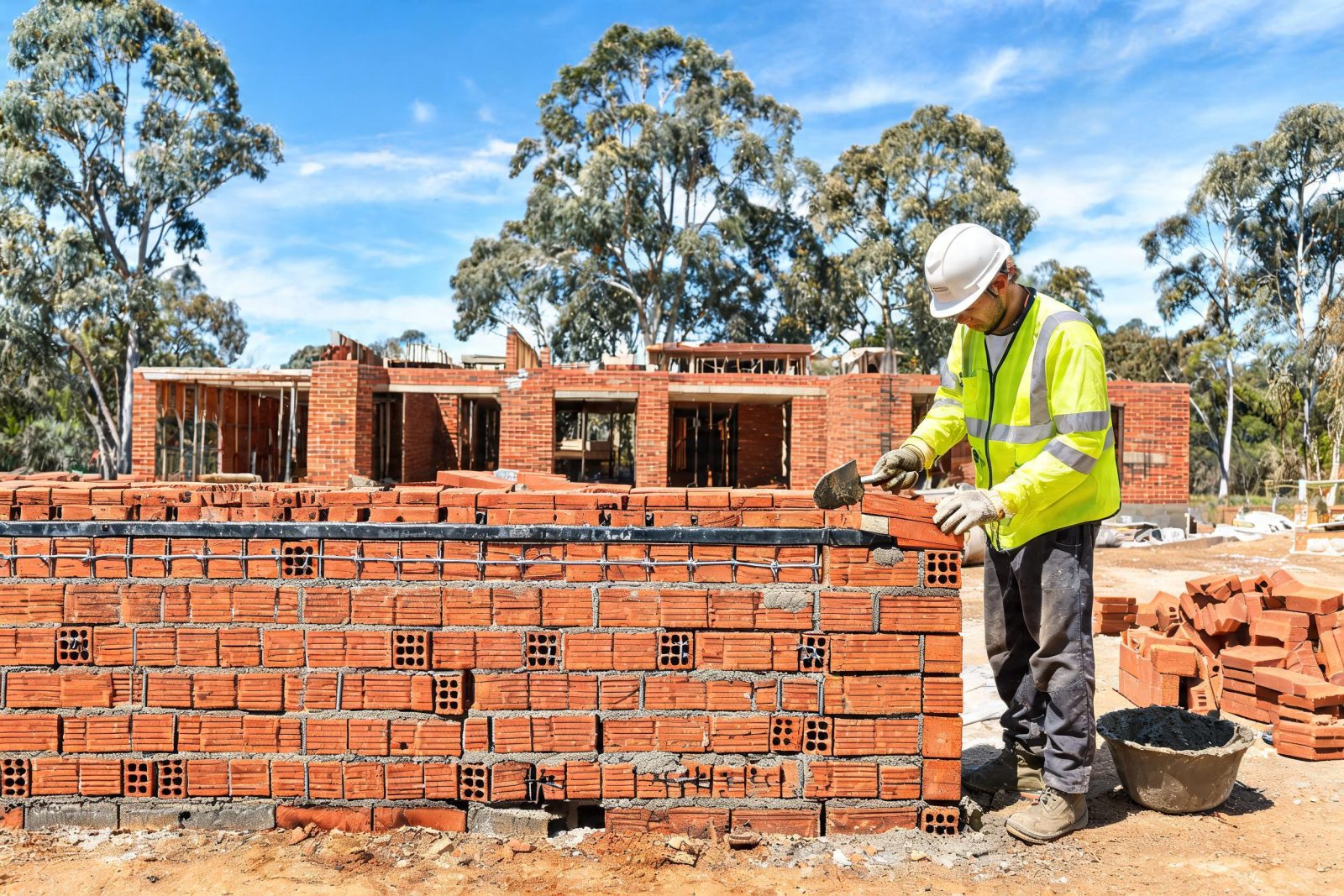
Loadbearing masonry is masonry used structurally. In a loadbearing wall the masonry itself is part of the building's structure: it supports the loads placed on it and transfers them safely to the footings. This is common in blockwork commercial, industrial and some residential construction, and in older solid-masonry buildings. Because the wall is doing structural work, its thickness, the strength of the units and mortar, any reinforcement, and the way loads are supported and transferred all matter to the safety of the building, and they fall within the province of structural design. Loadbearing masonry may be unreinforced, relying on the masonry's own compressive strength and the bond of the mortar, or reinforced, with steel bars grouted into cores or cavities to give it tensile and flexural capacity where plain masonry would be too weak — for instance to resist wind or earthquake forces, or to span and cantilever.