OVERVIEW
This course provides a practical, evidence-informed introduction to the principles of safe manual handling for Australian registered nurses and midwives. It begins by explaining why manual handling injuries are such a significant issue in nursing and midwifery: the nature of musculoskeletal disorders, the features of patient handling that make it uniquely demanding, and the consequences of unsafe handling for both practitioners and the people they care for. It then outlines, in general terms, the legal framework that applies — the duties of persons conducting a business or undertaking, officers and workers under the model work health and safety laws adopted in most jurisdictions; the concept of a hazardous manual task as described in Safe Work Australia's guidance; and the fact that Victoria has its own occupational health and safety legislation and regulator. The course explains the risk management process of identifying, assessing, controlling and reviewing risks, and the hierarchy of control that ranks control measures by their effectiveness.
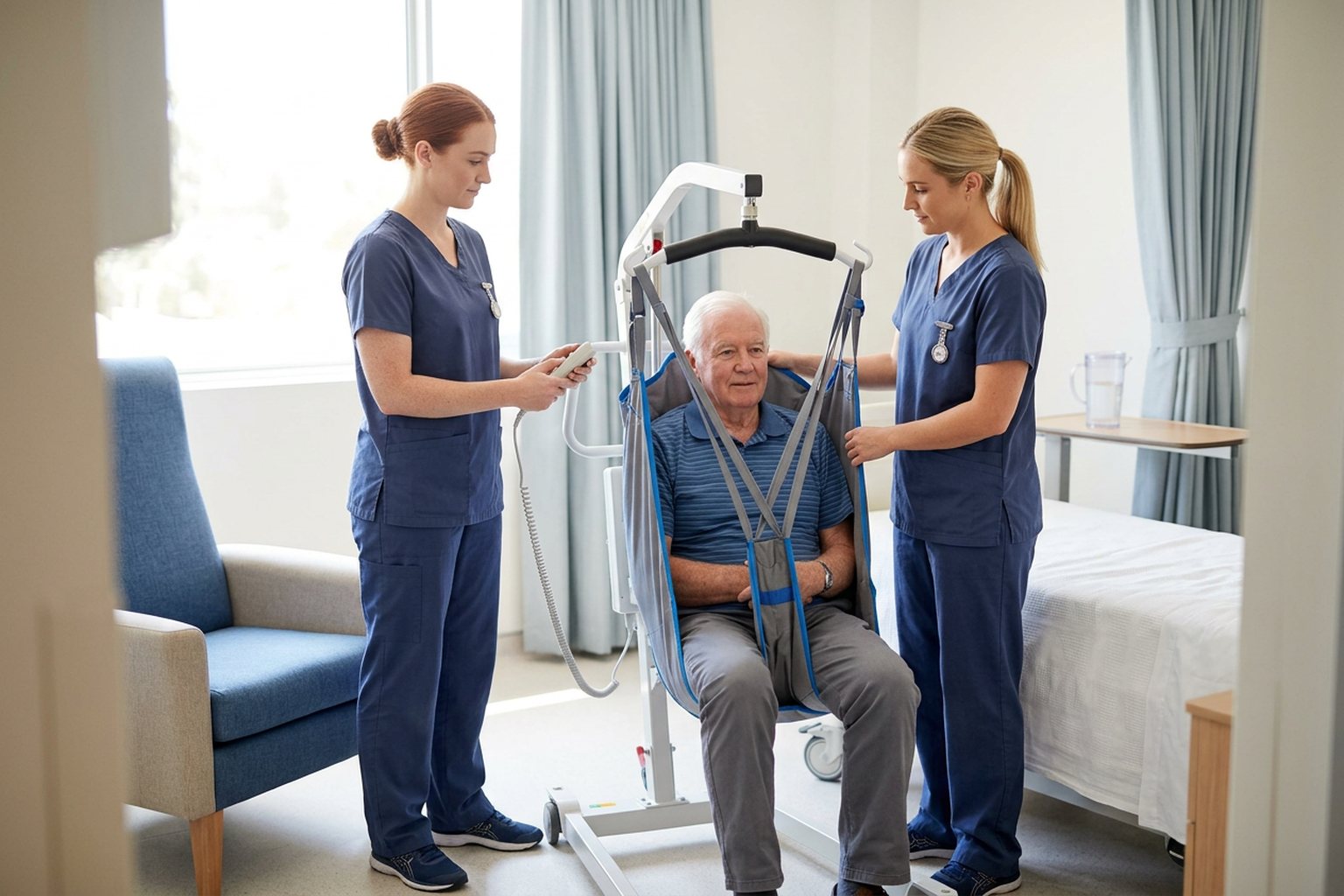
It sets out the principles of safe patient handling: assessing the person's mobility and the task before every move, encouraging the person's own movement, adopting minimal-lift or no-lift approaches, using equipment such as hoists, slide sheets, standing aids, transfer devices and electric beds correctly, and never lifting a person's full weight manually. It explains the role of ergonomics, posture and body mechanics as supporting controls rather than primary ones. It then applies these principles to specific situations — bariatric care, falls recovery, emergency situations, birthing environments, and community and home care settings. Finally, it addresses the organisational responsibilities that make safe handling possible — training, equipment provision and maintenance, staffing and culture — and the individual and organisational processes for reporting hazards and injuries, early intervention, return to work and documentation. Throughout, the course names relevant laws, frameworks and bodies without reproducing their text and directs learners to the current versions that apply in their jurisdiction.