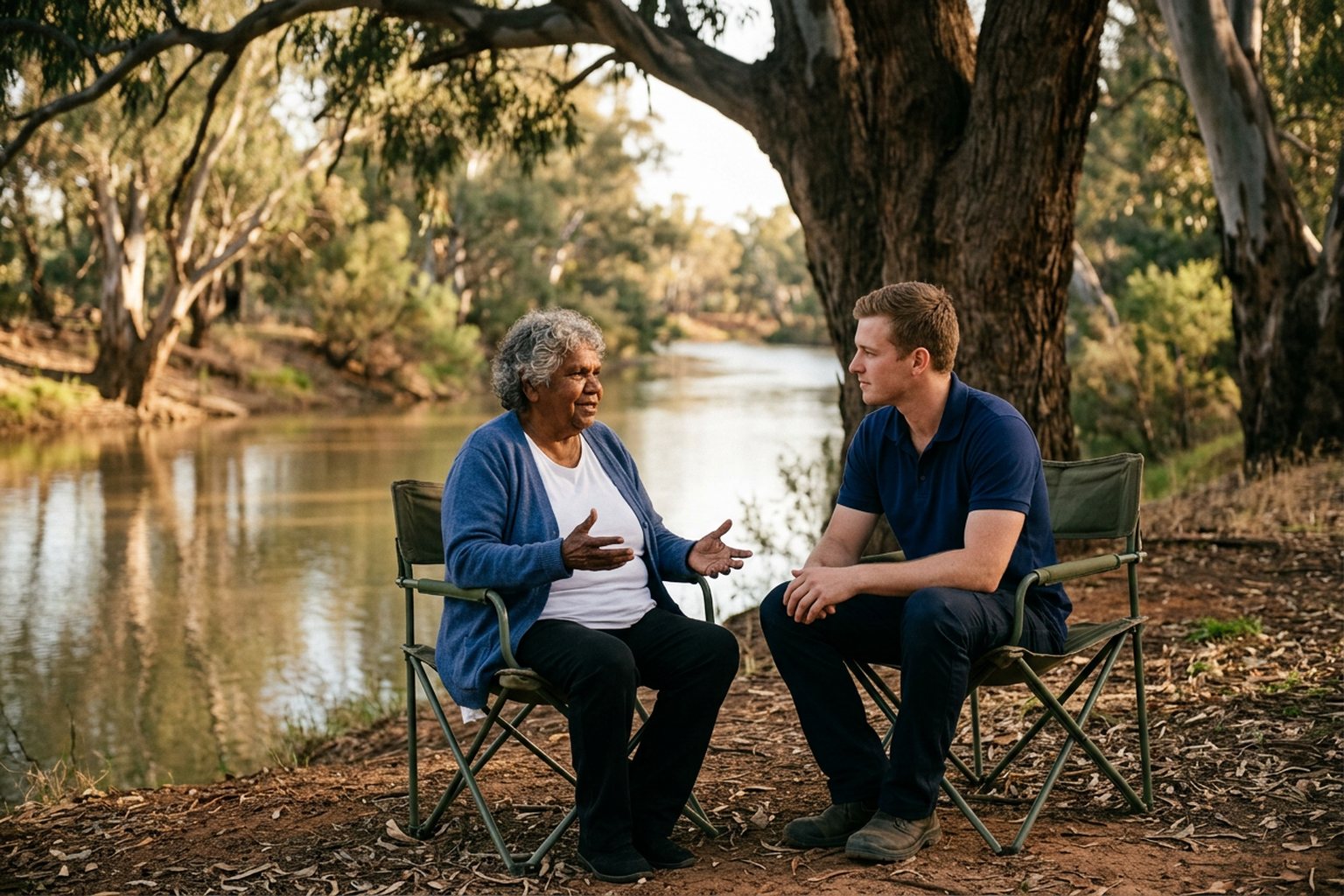
The Importance of Local History for Nurses training
All courses

The Importance of Local History for Nurses

Every health service stands somewhere, and the history of that place walks through the door with the people you care for.

Online 20 questions · 11-page handbook 2.0 CPD hours

Enrol and start straight away · assessment & instant e-certificate included

OVERVIEW

About this course.

Nurses are taught to take a history from each person. This course asks you to take a history of the place as well. Readers are warned that it discusses colonisation, the removal of children and racism in health care, in general terms and without graphic detail. If this material is personally difficult, take it at your own pace and use the supports available to you.

The course begins with the reasons local history matters for care. It then explains Country, Traditional Owners, and Welcome and Acknowledgement practices. Two modules set out the history of colonisation, missions, reserves, child removal and segregated care, and show how they continue to shape trust. A further module turns to migration, industry, disasters and closed institutions. The final module deals with how to learn local history respectfully and how to change your practice as a result.

The details
  • PriceA$0
  • CPD hours2 CPD hours
  • FormatOnline · self-paced
  • Assessment20 questions · 80% to pass
  • CertificateInstant e-certificate
  • Course access12 months
Add to basket

During launch, eligible learners can choose up to 3 courses at A$0. The limit applies per learner account and phone number.

  • Verifiable certificate after passing
  • Secure card checkout via Stripe
  • Instant e-certificate
  • Access guarantee — full refund if a technical fault stops you accessing your course
WHAT'S COVERED

Course syllabus.

Why does the history of the place you work matter for care?
What do Country and Traditional Owners mean, and how do you find out whose land you work on?
What is the difference between a Welcome to Country and an Acknowledgement of Country?
How did colonisation, missions and reserves shape Aboriginal and Torres Strait Islander health and trust?
How did the Stolen Generations and segregated hospital care affect trust in health services?
What other local histories shape a community's health?
How can you learn local history respectfully and apply it in practice?
GOOD TO KNOW

Frequently asked questions.

How much does the The Importance of Local History for Nurses course cost?

During launch, eligible learners can choose up to 3 courses at A

. The limit applies per learner account and phone number. The assessment and certificate after passing are included.

Can I use this course for CPD?

Check the CPD requirements for your role with your regulator, professional body or employer. After passing the assessment, you receive a certificate with a unique ID and QR code that can be verified online at nexiscpd.com.au/verify.

How is the course assessed and when do I get my certificate?

You study online at your own pace, then take a multiple-choice assessment with an 80% pass mark. After you pass, your Nexis CPD certificate is available to download.

Does the The Importance of Local History for Nurses certificate expire?

This certificate has no legal expiry.

Can I take this course online, and how long do I have access?

Yes — the course is 100% online and works on any device. You get 12 months of access to the course materials from the date of purchase.

READY?

Start The Importance of Local History for Nurses today.

Enrol and begin straight away. Pass the assessment and your Nexis CPD certificate is emailed instantly.