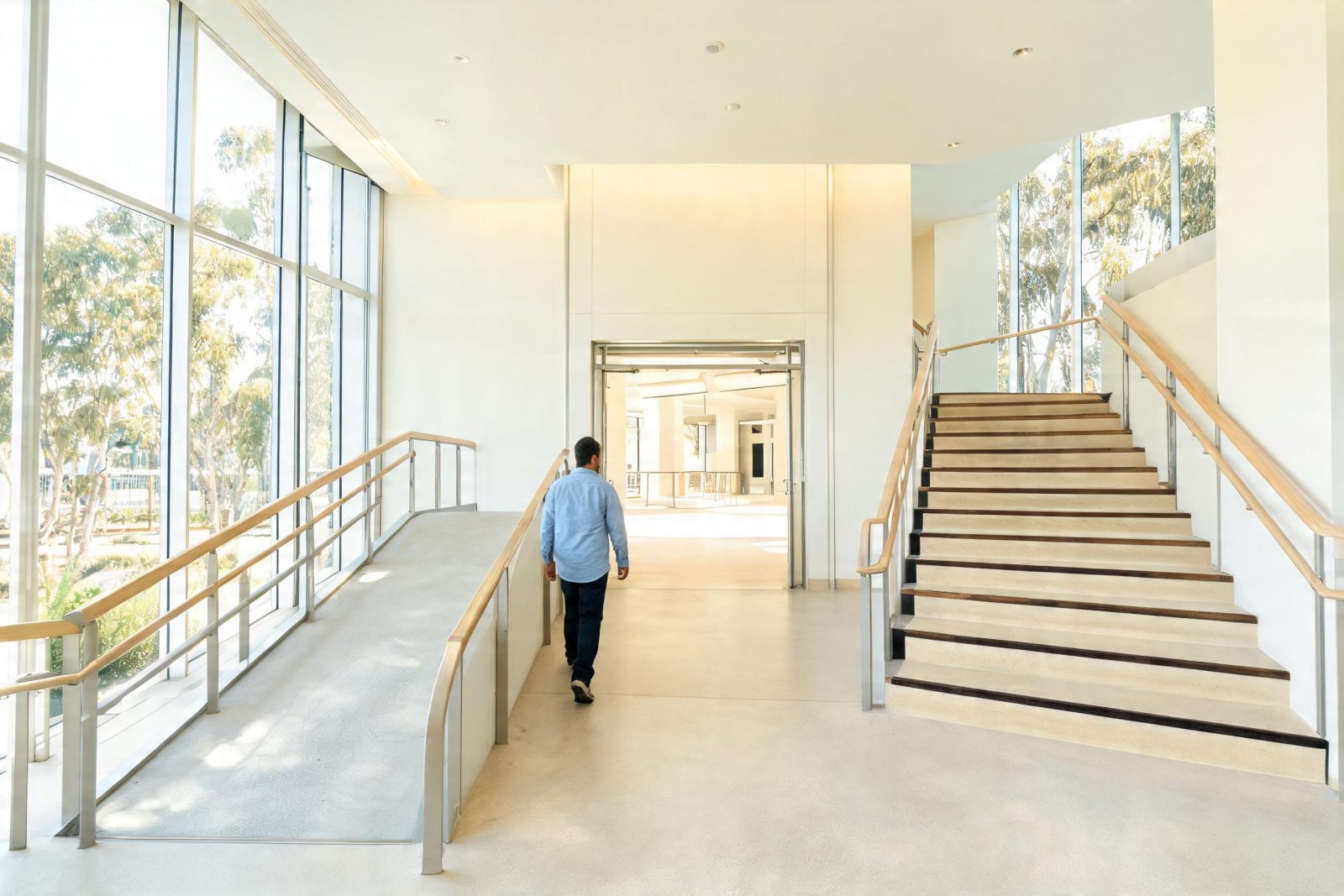
OVERVIEW
The design of doors, stairs and walkways matters because these are the elements people physically negotiate to move through a building, and small design decisions about them determine whether that movement is safe, comfortable and independent — or whether it becomes difficult, dangerous or impossible for some people. A doorway that is too narrow, a step that is a different height from the ones around it, a walkway with an unexpected trip hazard, or a ramp that is too steep can each turn ordinary movement into a source of injury or exclusion. Getting these elements right is therefore fundamental to both the safety of everyone who uses a building and the ability of people with a range of abilities to use it on equal terms.
The central idea to hold onto is that buildings are used by a diverse population, not by a single "average" person. The people moving through a building include older people whose strength, balance, vision and reaction times may have changed; people with disability, whether they use a wheelchair or other mobility aid, have low vision or are blind, are deaf or hard of hearing, or have reduced strength or dexterity; children, who are smaller, less predictable and still developing their coordination; parents pushing prams; delivery workers and staff carrying loads with both hands full; and people who are simply distracted, tired or unfamiliar with the building. A design that only works for a fit, unencumbered adult in good light is a design that fails a large proportion of its actual users. Good movement design starts from the recognition that the route must work for this whole range of people, in the ordinary conditions they will actually encounter.