What should aseptic technique training for nurses cover?
Aseptic technique training should help nurses identify where contamination could occur, explain how to protect the parts and sites involved in a procedure, and respond to a break in technique. Use workplace practice and assessment to demonstrate the procedure you perform in your role. Check your organisation’s policy for the equipment, method and competency assessment it uses.
On this page
- What should nurses learn about aseptic technique?
- What does a workplace competency assessment add?
- How can you prepare for an observed assessment?
- How do you choose the right course for your role?
- How does a service decide where aseptic technique applies?
- What should a risk assessment exercise include?
- How do you practise responding to a possible break in technique?
- What can an assessor look for during a simulated procedure?
- When should a nurse ask for refresher training?
- How do you record an aseptic technique learning activity?
- What questions should you ask before enrolling in a course?
- How can education teams plan training for different roles?
- What should a learner bring to a discussion with an educator?
- Frequently asked questions
What should nurses learn about aseptic technique?
Aseptic technique is a set of practices that reduces the risk of introducing infectious agents during clinical procedures. Training should help you spot where contamination could occur and explain why the precautions for one procedure can differ from those for another. The Australian infection prevention guidelines provide the national context for risk-based decisions. Australian Guidelines for the Prevention and Control of Infection in Healthcare
Ask for a scenario that lets you explain your decisions. For example, can you point out the parts of the equipment that need protection? Can you identify a point where an interruption might make it difficult to maintain the set-up? Can you explain where you would find the local instructions for dealing with a break in technique?
| Learning topic | What to ask a course or educator |
|---|---|
| Risk | How do we identify the risk of contamination for the procedure I perform? |
| Preparation | How do we account for the environment and equipment available in this setting? |
| Protecting parts and sites | Which parts of the equipment and which patient sites does the local policy identify? |
| Responding to a concern | How do we pause, explain the issue and seek guidance when technique may have been broken? |
| Assessment | Who observes the procedure and where do we record the result? |
What does a workplace competency assessment add?
Workplace assessment gives a qualified assessor a chance to see how you apply aseptic technique in a procedure your role actually involves. Under Action 3.11 of the National Safety and Quality Health Service Standards, health service organisations identify relevant procedures, assess staff competence, provide training for gaps and monitor compliance with their policies. Preventing and Controlling Infections Standard
An online course can help you learn the principles and prepare questions for an assessor. Check how your service records competency and what happens if your duties or the equipment change. A course certificate can support your CPD portfolio. Record any procedure-specific workplace assessment in the system your employer uses for it.
If you are arranging education for several staff, ask your infection prevention lead to list which procedures each role performs. Use that list to match staff with the right practice sessions and assessment checklists. Someone who changes roles may need a different assessment even if both teams completed the same online module.
After the session, record the learning needs the assessor observed and who will follow up. For example, a staff member might understand the principles but need more practice adapting their set-up to the room available. A brief note helps the educator plan the next session and shows the learner what to work on.
How can you prepare for an observed assessment?
Start by checking which procedure is being assessed and which policy the assessor will use. Set up a supervised practice session if there is a gap between the course examples and the equipment you work with. Ask the assessor to explain what they need to observe and how they will give feedback.
- Bring the current local checklist or policy to the practice session.
- Identify which areas and items the assessment asks you to protect.
- Ask to rehearse how you would raise a concern if the practice were interrupted.
- Record the assessor’s feedback and agree what to practise or review next.
- Keep any learning reflection alongside your CPD evidence. Follow the workplace process for the competency record.
Worked example. A nurse changing services completes a refresher and discovers that the new employer uses a different dressing pack. In a supervised simulation, the nurse explains where they see a contamination risk and asks the assessor how the local policy addresses that point. The assessor notes a learning gap. The nurse plans a second supervised session, records the learning and checks the service’s process for formal sign-off.
How do you choose the right course for your role?
Choose training that states who it is for, explains the principles and gives you a chance to apply them in a scenario. Compare the outline with the procedures you perform and the gaps your educator has identified. Ask what evidence the course provides so you know what you can keep in your CPD record. NMBA CPD guidance
Compare Infection Prevention and Control: Aseptic Technique with your local learning goals. If you want a wider introduction, see Infection Prevention and Control Awareness. For a separate learning goal about describing and documenting a wound, review the Wound Assessment course.
How does a service decide where aseptic technique applies?
Start with the procedures people actually perform and the risks those procedures present. Under Action 3.11 of the national Preventing and Controlling Infections Standard, the health service identifies where aseptic technique applies. It also assesses competence, addresses training gaps and monitors how staff follow local policies. The service’s procedure list helps educators match training to the roles that need it. Preventing and Controlling Infections Standard, Action 3.11
An educator can walk through a procedure list with the teams that use it. Ask where the work occurs, what equipment is available and which responsibilities sit with each role. Compare these answers with the training already offered. This can reveal a coverage gap, for example when people complete the same induction module but carry out different procedures after transferring between services.
If the local policy is unclear, raise the question with the relevant clinical educator or infection prevention lead. Record the policy version and the procedure you asked about. Clarify who owns the decision before updating a local training resource. The approved policy gives assessors a consistent reference when they explain what they will observe.
What should a risk assessment exercise include?
Give learners a fictional procedure and ask where contamination could occur, what changes if the setting or equipment differs, and which local instructions they would consult. Have them explain how a risk they have identified would affect preparation. The national infection prevention guidelines provide the broader context, while the workplace supplies the procedure and its required checks. Australian Guidelines for the Prevention and Control of Infection in Healthcare
| Change in the training scenario | What to ask the learner |
|---|---|
| The procedure will take place in an unfamiliar room. | What features of the room affect preparation and where can you check the local instructions? |
| An item in the practice pack differs from the usual equipment. | How will you confirm that the item is suitable and understand how it affects your planned approach? |
| A colleague interrupts partway through the scenario. | How will you recognise whether the interruption changes the status of the set-up? |
| The learner is unsure whether an item was contaminated. | What would you communicate to a supervisor or assessor, and which local guidance would you consult? |
| Another team uses a different checklist. | Which checklist applies to this procedure in this service, and who can confirm it? |
After the exercise, ask the learner to describe the decision they made and how they reached it. This gives the assessor a chance to distinguish an uncertainty about the policy from a misunderstanding of the underlying risk. Each requires a different follow-up.
How do you practise responding to a possible break in technique?
Use a supervised simulation with a planned interruption or a training item that the participant might reasonably question. Ask them to identify the concern, explain it out loud and describe how they would follow the service’s procedure. The scenario should let them ask for guidance before continuing and explain the concern to the person supervising.
In one fictional exercise, an assessor tells the learner that the training set-up may have been disturbed while the learner was turned away. The learner explains what they observed, identifies which part of their preparation they need to review, and tells the assessor where they would find the local policy. The assessor can ask how they would communicate the concern to a colleague taking over the task.
Debrief the decision and the communication separately. A learner might spot the problem promptly but use language that leaves their colleague unsure what happened. Have them repeat the explanation in plain terms. If the concern is about the local policy, agree who will clarify it and where the clarification will be recorded. Keep all examples fictional and free of patient identifiers.
What can an assessor look for during a simulated procedure?
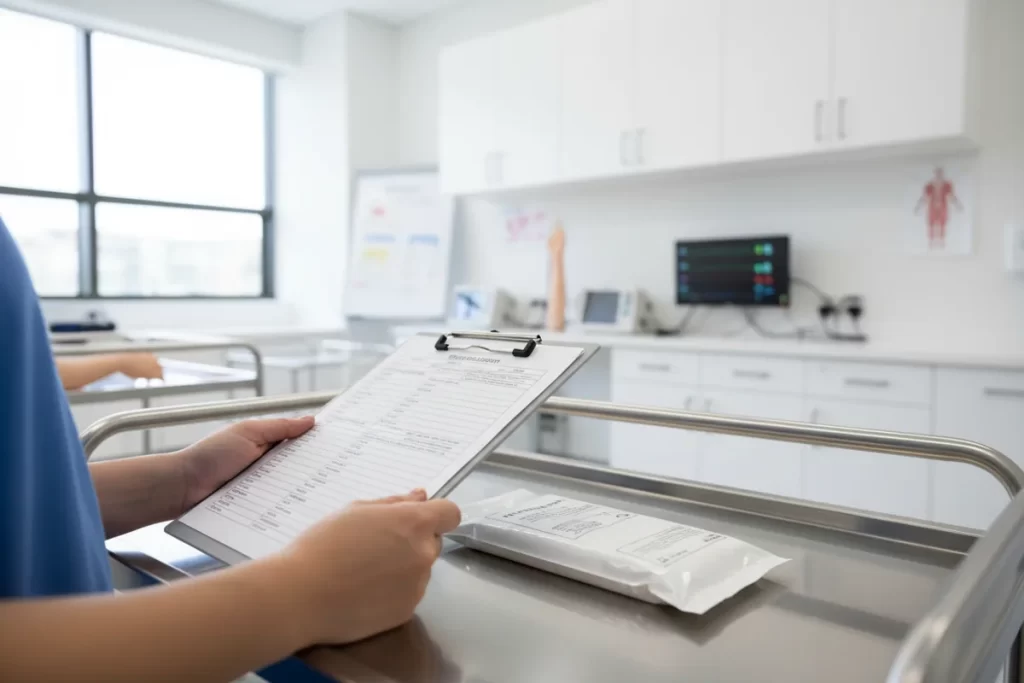
An assessor can observe how the learner prepares, identifies what needs protection, explains decisions and responds to an unexpected change. Use the checklist approved for the procedure and role. Agree how observations will be recorded and how the learner will get feedback. The examples below are prompts to adapt with the local educator.
- Can the learner find the policy and explain why it applies in the scenario?
- Can they identify the equipment and environment considerations they need to check?
- Can they explain which parts and sites they need to protect according to the approved procedure?
- Can they describe a possible concern to the assessor and explain the next step under the policy?
- Can they use the feedback to describe one thing they will practise before another assessment?
Record specific observations. “Needs more practice” gives the learner little direction. “Was unsure which local checklist covered the simulated procedure and needed help finding it” identifies something to work on. If the learner needs another practice session, agree which scenario will let them address the gap. The service decides who assesses competence and how it records the result. Preventing and Controlling Infections Standard
When should a nurse ask for refresher training?
Ask about refresher training when your role, equipment, practice setting or the local policy changes, or when feedback highlights a gap. Start by identifying the procedure and what you would like to practise. The educator can explain whether the next step is a policy walk-through, supervised practice, a formal assessment or another activity.
For example, a nurse moves to a service that uses a different pack for a familiar simulated procedure. They bring the previous learning record to their new educator and ask which local checklist applies and what practice they need. The educator identifies a difference in set-up. Together they plan a short supervised session to address that difference before the workplace records any assessment.
Services can also use observation or audit findings to choose refresher topics. If several staff have the same question, check whether the instruction is easy to find and consistent across teams. A shared learning need may signal a problem with access to the procedure as well as an opportunity for practice. Record which change the service will follow up and who is responsible.
How do you record an aseptic technique learning activity?
Keep a CPD entry with the learning goal, activity, date, time, evidence and a brief reflection. Explain what the activity helped you understand and name the follow-up you agreed with your educator. Record any workplace competency result in the system your service uses for it and follow its instructions for access to that record. NMBA CPD guidance
A useful entry might say, “I completed a refresher because I am moving to a setting that uses a different training pack. The exercise helped me recognise which questions to ask before supervised practice. I will compare the course example with the local checklist at my next education session.” Attach the course evidence and record the actual learning time. Add a dated follow-up when you have new feedback.
If you are the educator, keep programme documentation such as the scope of training, the checklist version and the record of any follow-up. That makes it easier to tell what the session addressed when a staff member changes teams. Keep personnel records and clinical records in the appropriate approved systems.
What questions should you ask before enrolling in a course?
Check what the course is designed to teach, whether its examples match your practice context and what evidence you get when you finish. Ask how the provider explains the link between general principles and the procedures your employer uses. These questions help you decide whether the activity fits your learning goal before you enrol.
- Is the course a general introduction or does it address a particular setting or role?
- Do the exercises ask you to explain a decision, recognise a concern or review an example?
- Does the course explain when to consult the local policy or seek supervised practice?
- Can you see what the completion record includes?
- Which parts of the learning would your educator like you to bring to a local practice session?
Before you start, write a question that reflects what you need to improve. Return to it when you finish. If the course answered only part of the question, record that progress and take the remaining question to your local educator.
How can education teams plan training for different roles?
Map training to the procedures each role performs and ask the relevant teams to check the map before you schedule sessions. A new starter, a staff member who changes units and someone who supervises others may have different learning needs. Use the map to decide which learning is shared and which needs a role-specific exercise or assessment.
For a new starter, the priority may be finding the policy and understanding how a practice session is organised. A staff member transferring units may know the principles and need familiarisation with the local equipment and checklist. An assessor may need to agree with other assessors on how observations are recorded and how feedback is given.
Think about access to the training as well as its content. A database may show that everyone received an invitation, but some people may have been unable to attend the supervised session. Ask how the service follows up on missed practice and how staff can find the current local procedure when they return to work. Record gaps at the level where they can be addressed. Preventing and Controlling Infections Standard
What should a learner bring to a discussion with an educator?
Bring the course outline, your learning goal and one question from the examples you studied. If you are preparing for an observed assessment, bring the local checklist version if you have access to it. Explain which tasks you already perform and which part of the procedure or setting is new to you.
An educator can use those details to decide whether to review a principle, arrange a supervised simulation or clarify a local requirement. Agree how you will know that the next activity answered your question. You might plan to explain your reasoning during another fictional scenario or to show the educator where the local checklist answers your question. Keep that learning outcome in your reflection.
Frequently asked questions
Are aseptic technique and ANTT the same thing?
Aseptic Non Touch Technique, or ANTT, is one framework for applying aseptic technique. Check which framework your employer uses and how it applies to the procedure you perform.
Does an online certificate demonstrate workplace competency?
An online certificate shows completion of the course. Workplace competency requires the evidence and assessment specified by your service for the procedure.
What if course examples use different equipment from my workplace?
Ask your local educator to walk through what carries across and which parts require supervised practice with the equipment available in your setting. Use the current local procedure for the assessment.