There is no single legal “stop work” temperature in Australia’s WHS or OHS laws. Instead, heat is a hazard like any other: the business must eliminate or minimise the risks of working in heat so far as is reasonably practicable, which can mean rescheduling, slowing or stopping work when conditions make it unsafe.
On a construction site that means planning the hottest work for cooler times, providing shade, cool drinking water and rest breaks, acclimatising new workers, watching each other for symptoms, and having a first aid plan for heat stroke, which is a medical emergency.
Is there a maximum temperature for working on site?
No. Safe Work Australia’s position is that there is no single stop-work temperature, because a single temperature cannot account for everything that makes working in heat hazardous — including humidity, air flow, how physically intense the work is and how long it lasts, and whether workers are fit and acclimatised.
The same applies in Victoria. WorkSafe Victoria says there is no maximum temperature set under the Occupational Health and Safety Act 2004 or the OHS Regulations 2017 for a worker to stop working, although some workplaces have their own policy.
What does the law require when it is hot?
Under the model WHS Act, a person conducting a business or undertaking (PCBU) has a primary duty of care (section 19) to ensure, so far as is reasonably practicable, the health and safety of workers and others affected by the work. Heat is one of the risks that duty covers.
The model WHS Regulations add specific requirements:
- Regulation 40(f) — so far as is reasonably practicable, workers carrying out work in extremes of heat or cold must be able to do so without risk to health and safety.
- Regulation 41 — adequate facilities for workers, including drinking water, must be provided and kept clean, safe and accessible.
The PCBU must also consult workers about how these risks are managed (section 47 of the WHS Act).
Under section 84 of the WHS Act, a worker may cease, or refuse to carry out, work if they have a reasonable concern that it would expose them to a serious risk to their health or safety from an immediate or imminent exposure to a hazard. Our guide to which WHS laws apply in your state explains how these laws are adopted around Australia.
Why is heat a particular risk on construction sites?
Building and civil work combines most of the factors that make heat dangerous:
- Direct sun and radiant heat from concrete slabs, steel, roofing, bitumen and glass.
- Heavy physical work, such as concreting, steel fixing, roofing and manual handling.
- Heat-trapping spaces — roof spaces, plant rooms, tanks, pits and enclosed formwork.
- Protective equipment and clothing that limit cooling, such as coveralls, respirators and welding gear.
- Hot processes such as welding, hot bitumen and torch-on membranes.
- Workers new to the job or the climate, or returning after time away, who are not yet acclimatised.
Heat does more than cause illness. Safe Work Australia notes risks such as dehydration, burns and reduced concentration — and a worker who is losing concentration near plant, edges or live services is at risk of other injuries.
Regulation 291 also lists construction work in an area with artificial extremes of temperature as high risk construction work, which needs a safe work method statement. The word “artificial” points to heat or cold created by plant or processes rather than hot weather, but hot weather still has to be managed under the general duties.
How do you manage heat risks on a construction site?
Safe Work Australia’s guide on managing the risks of working in heat sets out the risk management process: identify the heat hazards, assess the risks, control them, and review the controls. Practical controls include:
- Schedule the hottest work for cooler times. Do heavy or strenuous work early in the day or in cooler months, and reschedule, slow down or postpone tasks when conditions are extreme.
- Reduce heat at the source. Use shade structures over work areas, cover hot surfaces, insulate or ventilate enclosed spaces, and use fans or cooling where practicable.
- Reduce the physical load. Use mechanical aids and lifting equipment, rotate tasks, and add workers to share heavy jobs.
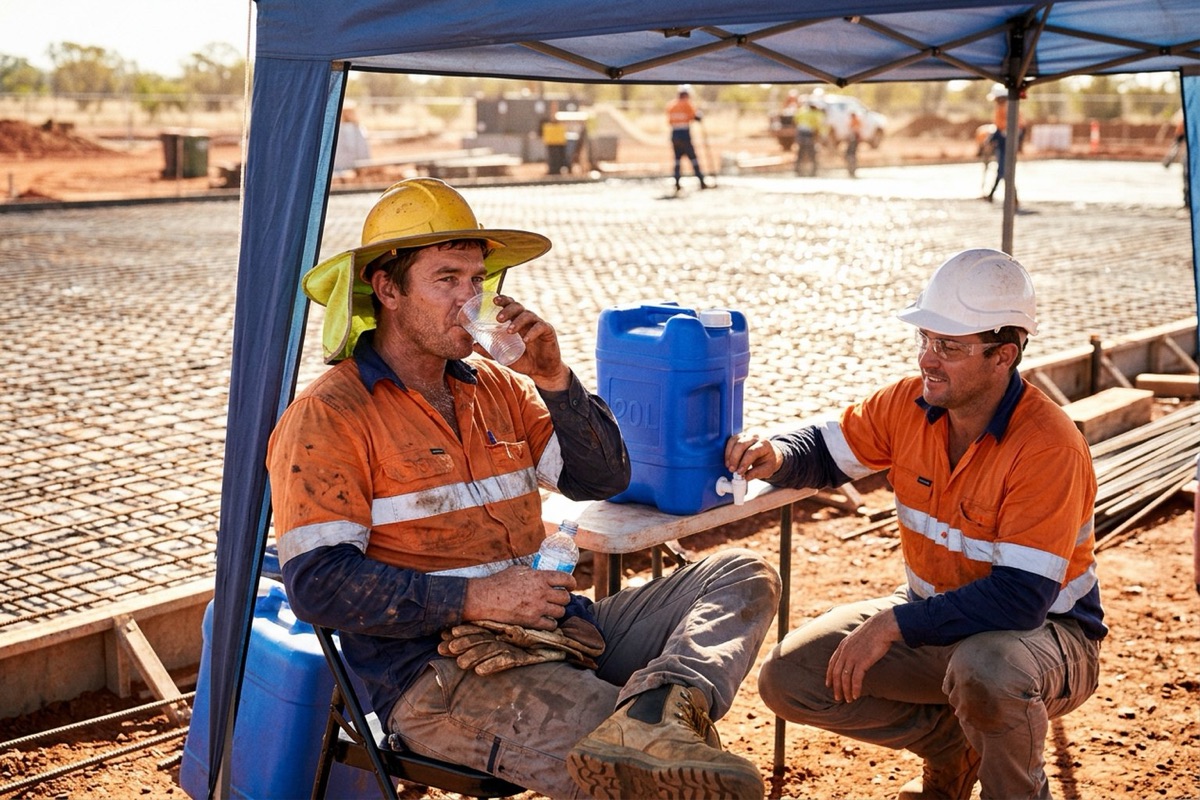
- Provide cool drinking water close to the work, and encourage workers to drink regularly.
- Build in rest breaks in shaded, cool or air-conditioned areas, using work-rest schedules that tighten as heat rises.
- Acclimatise workers. New and returning workers need time for their bodies to adapt to heat. For a formal acclimatisation program, Safe Work Australia suggests getting advice from a professional such as an occupational hygienist.
- Use a buddy system. Pair workers so they can watch each other for early signs of heat illness, and avoid people working alone in the heat.
- Choose suitable clothing and PPE. Light-coloured, loose, breathable clothing that still protects from the sun, with sun protection such as brim attachments and sunscreen.
- Monitor conditions through the day using forecasts and on-site readings, and act on them.
What are the signs of heat-related illness?
Heat-related illness ranges from cramps and heat exhaustion to heat stroke, which can kill. Safe Work Australia lists early signs such as:
- thirst, dehydration, and reduced or dark urine;
- heavy sweating and a rising body temperature;
- weakness, fatigue, headache and dizziness; and
- nausea and muscle cramps.
Severe signs that point to heat stroke include a worker who stops sweating, skin that is hot and dry or cool and blue, clumsiness or slowed reactions, disorientation, confusion or irritability, rapid breathing, a rapid weak or pounding pulse, vomiting or unwillingness to drink, and collapse, seizures or unconsciousness.
Brief everyone on these signs, especially supervisors and first aiders. A worker with heat illness may not recognise it in themselves, which is why the buddy system matters.
What first aid should you give for heat illness?
For milder symptoms, stop the worker from working, move them to a cool, shaded or air-conditioned area, and give them cool water to drink. WorkSafe Victoria advises seeking urgent medical help if symptoms do not improve quickly or the skin is very hot and dry to touch.
If heat stroke is suspected, call 000 immediately. While waiting, Safe Work Australia’s first aid advice is to:
- move the worker to a cool place with circulating air;
- cool them as fast as possible — where practicable, whole-body immersion in cold water is the most effective method;
- if immersion is not available, wet their skin with cool or cold water, fan them to increase airflow, and apply cold packs or wrapped ice to the neck, groin and armpits; and
- monitor them closely until help arrives.
Make sure first aiders know this procedure and that ice, cold packs and water are on site on hot days.
How do you plan ahead for a hot season?
Treat heat as part of normal site planning, not a reaction to a heatwave:
- Include heat in your WHS planning and site risk assessments, and in any SWMS where heat adds to the risk.
- Plan the program so heavy tasks such as concrete pours and roofing fall early in the day in summer.
- Set up facilities — shade, cool water and rest areas — before the hot weather arrives.
- Agree triggers with your workers. Decide in advance, through consultation, what you will do as conditions worsen: more breaks, earlier starts, task changes or stopping certain work.
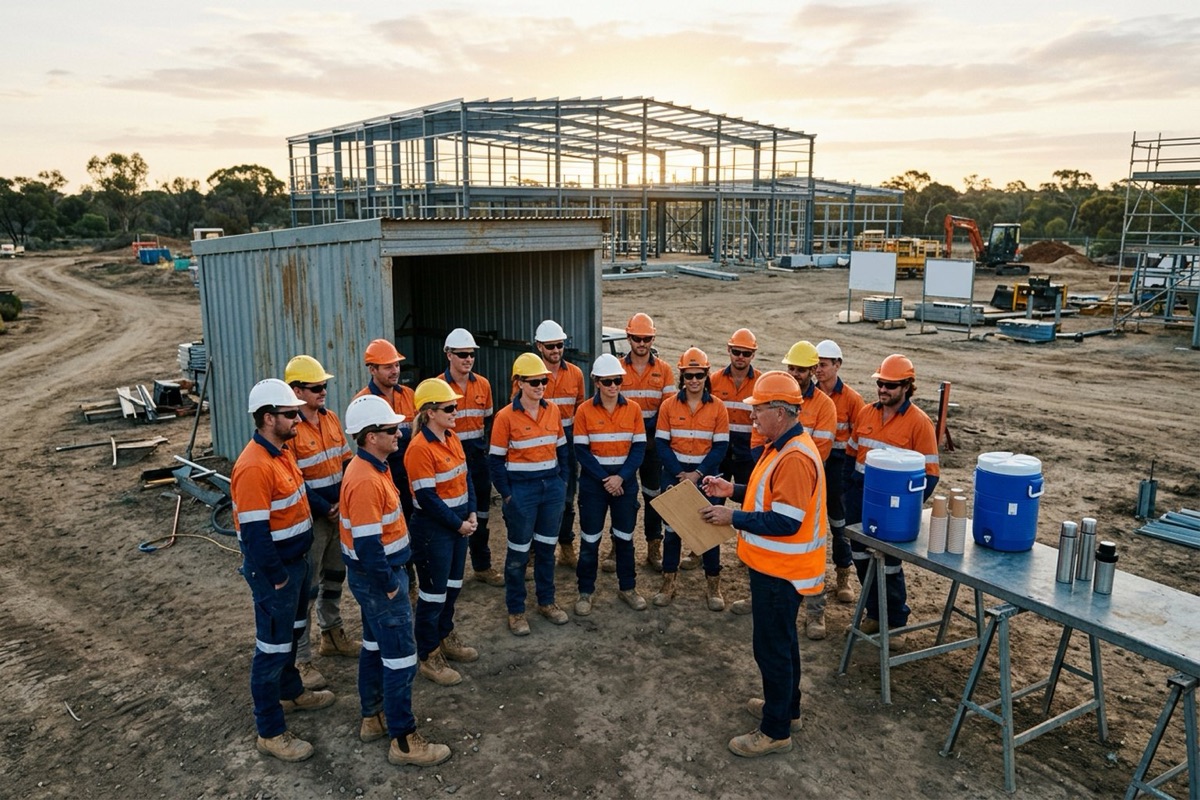
- Brief the crew at induction and in toolbox talks. Our guide to running a toolbox talk can help.
Heat is often one of several physical hazards on site. Our guide to noise and vibration covers two others.
Working in heat checklist
- Identify heat hazards: sun exposure, hot surfaces, enclosed spaces, heavy tasks and PPE.
- Consult workers on how heat will be managed and what will change as it gets hotter.
- Schedule heavy work for cooler times and reschedule when conditions are extreme.
- Provide shade over work and rest areas.
- Provide cool drinking water close to the work.
- Set work-rest schedules with breaks in cool areas.
- Acclimatise new and returning workers.
- Use a buddy system and avoid working alone in heat.
- Train everyone to recognise heat illness, and have first aiders ready with a heat stroke plan.
- Call 000 for suspected heat stroke and start cooling immediately.
Beat the heat on site
CPD-accredited online courses on heat, noise and vibration, first aid on construction sites, risk management and toolbox talks, each with an assessment and a certificate.
Frequently asked questions
At what temperature should construction work stop?
There is no single legal stop-work temperature under the WHS laws or Victoria's OHS laws. The business must manage the risk based on all the conditions, including humidity, sun, workload and acclimatisation, and that can mean stopping or rescheduling work. Some enterprise agreements and site policies have their own hot-weather provisions.
Can a worker refuse to work in extreme heat?
Under the model WHS Act, a worker may cease or refuse to carry out work if they have a reasonable concern that it would expose them to a serious risk to their health or safety from an immediate or imminent exposure to a hazard. Extreme heat can be such a hazard, depending on the circumstances.
Must employers provide drinking water on site?
Yes. The model WHS Regulations require the business to provide adequate facilities for workers, including drinking water, so far as is reasonably practicable, and to keep them clean, safe and accessible. In hot conditions the water should be cool and close to the work.
What is the difference between heat exhaustion and heat stroke?
Heat exhaustion causes symptoms such as heavy sweating, weakness, dizziness, headache, nausea and cramps, and usually improves with rest, cooling and fluids. Heat stroke is a medical emergency where the body cannot control its temperature; signs include confusion, collapse, and skin that may be hot and dry. Call 000 and cool the person immediately.
What is acclimatisation?
Acclimatisation is the body adapting to heat over time, so a worker sweats more efficiently and keeps a normal body temperature more easily. New workers, and those returning after a break, are not yet acclimatised and are at higher risk.
Is hot weather work high risk construction work?
Not in itself. The high risk construction work list includes work in an area with artificial extremes of temperature, which points to heat or cold created by plant or processes rather than the weather. Hot weather is still a hazard that must be managed under the general WHS duties.
Sources and further reading
- Federal Register of Legislation — Work Health and Safety Regulations 2011 (Cth), regs 40, 41 and 291 (model text)
- Federal Register of Legislation — Work Health and Safety Act 2011 (Cth), ss 19 and 84
- Safe Work Australia — Managing the risks of working in heat (guidance material)
- Safe Work Australia — Working in heat: frequently asked questions
- Safe Work Australia — First aid for heat-related illness
- WorkSafe Victoria — Prevention and protection from heat illness