A toolbox talk works when it is short, covers one hazard in the work your crew is actually doing, and is a real two-way conversation, not a script read out before everyone signs a sheet. Aim for about 10 minutes. Tie it to today’s tasks and the SWMS, use recent incidents and near misses, ask open questions, check understanding, and record what was raised and who will fix it.
Toolbox talks aren’t named in the WHS laws, but they are a practical way to meet two duties that are: giving workers the information, training, instruction and supervision they need, and consulting them on health and safety. Victoria’s OHS Act has equivalent duties.
What is a toolbox talk, and what isn't it?
A toolbox talk is a short meeting on site where a supervisor or leading hand and the crew discuss one specific health and safety issue. The Construction Work Code of Practice describes toolbox talks and pre-start meetings as a way for builders and subcontractors to give workers information and get their feedback.
A toolbox talk is not:
- Training. It can carry site-specific induction information, but it doesn’t replace general construction induction training (the white card) or the task training a worker needs to do the job competently.
- A SWMS. It is where you explain and discuss the safe work method statement, not a replacement for one.
- A lecture. The consultation Code of Practice is clear that consultation does not mean telling workers about a decision after it has been made.
Are toolbox talks a legal requirement?
Not by name: the model WHS Act and Regulations, and Victoria’s OHS Act, never mention them. But a good toolbox talk delivers what they do require. Every jurisdiction except Victoria has a WHS Act based on the national model (see which WHS laws apply in your state). In the model:
- Section 19, the primary duty of care, requires a PCBU to ensure, so far as is reasonably practicable, the provision of any information, training, instruction or supervision needed to protect people from risks arising from the work.
- Regulation 39 requires information, training and instruction to be suitable and adequate for the work, its risks and the controls, and readily understandable by the people receiving it, so far as is reasonably practicable.
- Part 5 requires a PCBU to consult affected workers (s 47), including when identifying hazards, deciding on controls and proposing changes (s 49). That means sharing information, giving workers a reasonable opportunity to express their views and contribute, taking those views into account and telling them the outcome in a timely manner (s 48). If workers have a health and safety representative (HSR), consultation must involve the HSR.
Details vary: Queensland’s Act also requires consultation to involve a worker’s representative if workers ask. In Victoria, section 21 of the OHS Act 2004 covers information, instruction, training and supervision, and section 35 covers consultation.
The Construction Work Code says workers must be consulted when a SWMS is prepared (or, if none were engaged then, when it is first made available to them, for example at a toolbox talk) and when it is reviewed. The principal contractor’s WHS management plan must also set out consultation arrangements between businesses on site.
How do you run a toolbox talk that works?
The Construction Work Code of Practice calls it best practice to record the topic, attendees and feedback, to run a program of talks that gives workers enough opportunity to have input into how risks are controlled, and to judge talks by outcomes such as controls put in place and near misses. On site, that means:
- One topic, kept short. Ten focused minutes on one hazard beats forty on six.
- This site, this week. The code’s examples include new high-risk construction activities, changes to site access and security, and changes that may affect the public.
- Link it to the SWMS. Check the controls for today’s task match how the job is really being done. High-risk construction work that isn’t being done in line with its SWMS must stop, and only resume in line with it.
- Use recent incidents and near misses to make the risk real, shared in a way that protects people’s confidentiality, as the consultation code recommends, and never to blame.
- Make it two-way. Ask open questions such as “What could go wrong here?”, let the crew suggest controls, and report back on last week’s issues.
- Show, don’t just tell. SafeWork NSW’s ready-made construction toolbox talks, such as its ladder talk, combine the facts, questions for the crew and a demonstration with the real equipment.
- Check understanding. Ask someone to explain the control back or show you, not “Everyone right?”
- Include everyone, in paid time, somewhere quiet, including subcontractors, labour hire workers and apprentices.
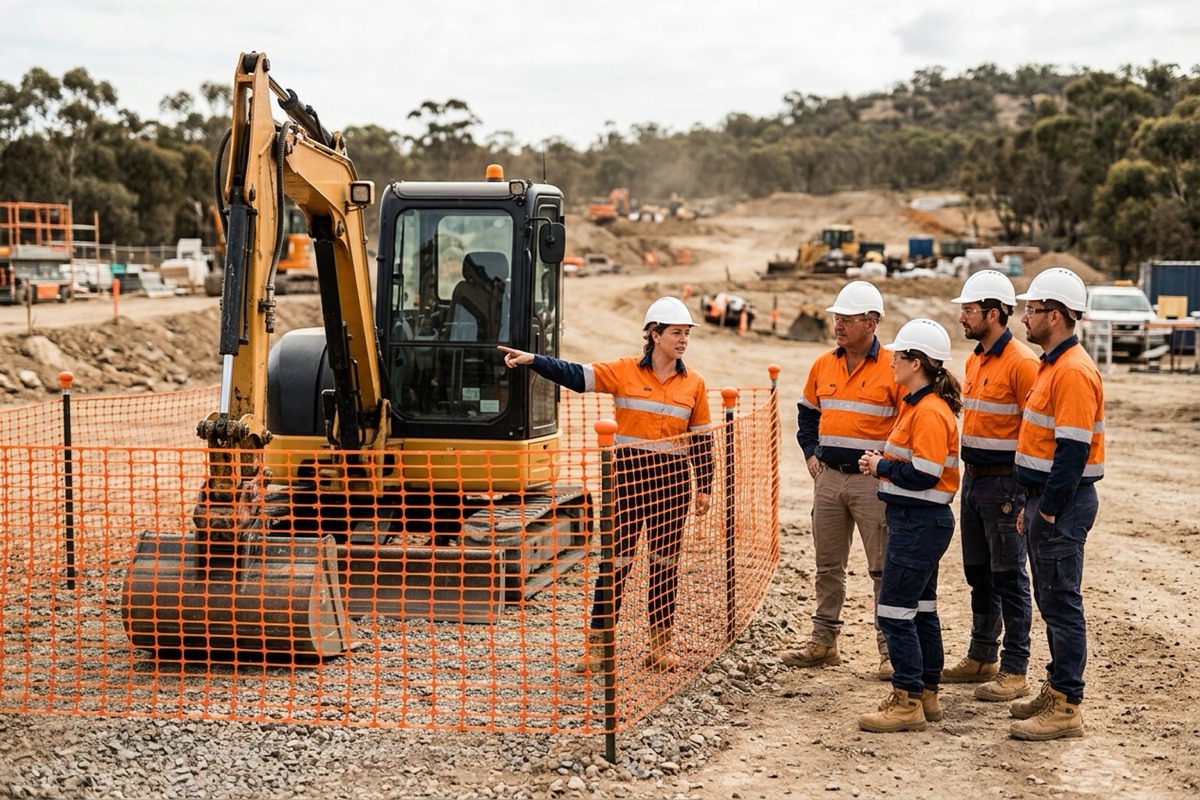
How do you run a toolbox talk for workers with limited English?
The consultation code says information should take account of literacy needs and workers’ cultural and linguistic backgrounds, and notes that workers with limited English may be less likely to speak up when unsure. Victoria’s OHS Act requires employers, so far as is reasonably practicable, to provide safety information in other languages as appropriate (s 22). WorkSafe Victoria’s compliance code on communicating OHS across languages sets out methods that work on any site:
- Face to face, with a demonstration, usually the most effective way to communicate. Don’t rely on handouts alone.
- Plain speech. Short, simple, complete sentences, with no slang or jargon. Speaking louder doesn’t make the meaning clearer.
- Pictures and diagrams to support what you say.
- Proper checks. Ask workers to do the task or restate it in their own words, and ask questions that need more than a yes or no.
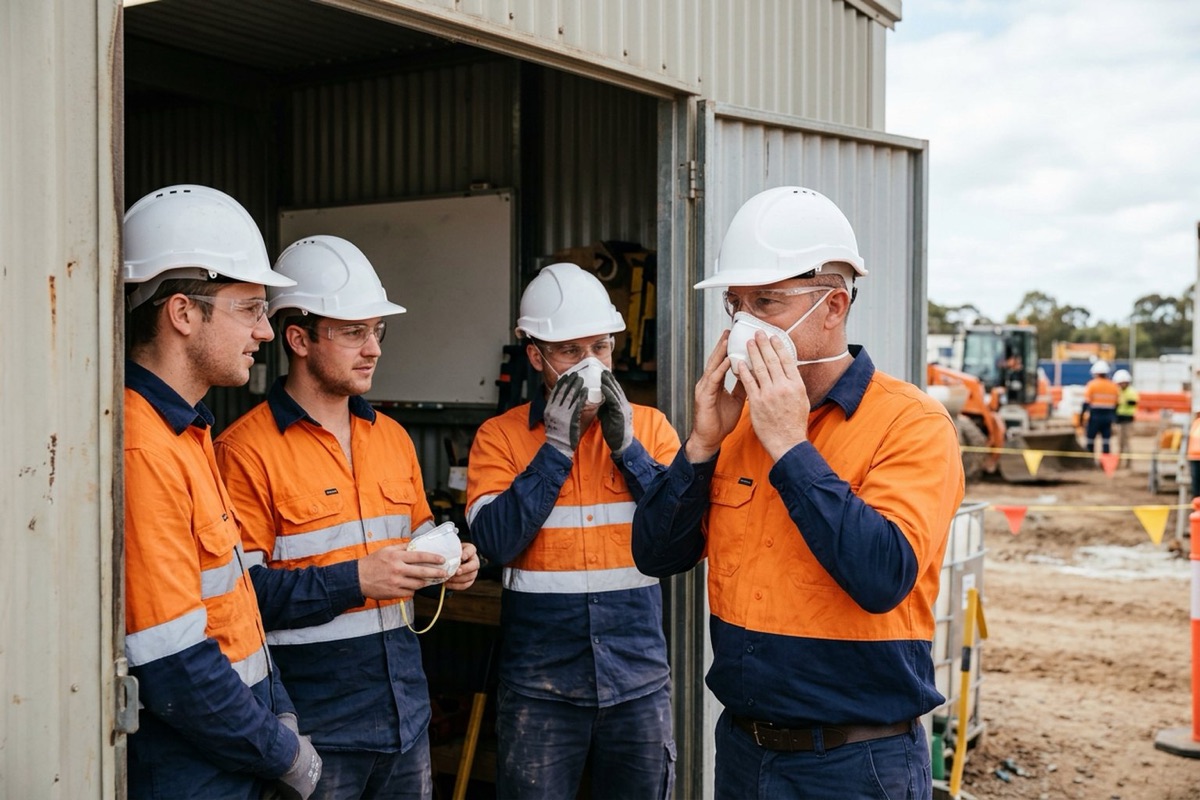
How should you run toolbox talks for young workers?
WorkSafe Victoria says young workers have the highest chance of being injured in their first six months in a new job, are less likely to ask questions for fear of negative consequences, and often worry about losing shifts if they raise a safety concern. Don’t wait for them to ask.
- Ask them directly. “What would you do if a guardrail was missing?” works better than “Any questions?”
- Tell me, show me, watch me. This is WorkSafe Victoria’s approach: explain the task, demonstrate it, then watch them do it and give feedback.
- Pair them with a buddy, an experienced worker, as SafeWork NSW suggests.
- Follow up. SafeWork NSW suggests re-checking understanding within a few days and periodically over the next month or two.
- Make speaking up normal. WorkSafe Victoria suggests short daily stand-ups at the start of shifts to encourage open discussion. Thank people who raise issues, and fix them.
What records should you keep for a toolbox talk?
The consultation code says consultation doesn’t have to be documented unless a regulation specifically requires it, but that records are good practice: they help show you met your consultation duties and make disputes less likely. Record:
- the date, location and who ran the talk;
- who attended, including subcontractors and labour hire workers;
- the topic and the SWMS or procedure discussed;
- issues raised by the crew;
- what was decided, who will act and by when; and
- when it was done, and how the crew was told.
SafeWork NSW’s toolbox talk guide adds that the manager or owner should check the record, and that everyone should be told how to work safely if a decision changes the way work is done.
What are the most common toolbox talk mistakes?
- Reading a generic script about a hazard the crew won’t face this week.
- Talking at people. No questions and no input is a briefing, not consultation.
- Never closing the loop. Workers must be told the outcome of consultation in a timely manner, and unanswered issues stop people raising them.
- Leaving people out, such as subcontractors, labour hire workers, late starters and other shifts.
- Bypassing the HSR, where workers have one.
- Too long, too many topics, too noisy.
- Blaming. Singling someone out over an incident makes the next near miss less likely to be reported.
What are good toolbox talk topics for construction?
Start with this week’s work. SafeWork NSW’s toolbox talk record form suggests topics such as site-specific risk assessment, SWMS, vehicle loading and unloading, traffic management, overhead powerlines, underground services, falls, deliveries and site security. Others that suit most sites:
- ladders, scaffolds and edge protection;
- mobile plant, exclusion zones and spotters;
- silica dust from cutting, grinding and drilling;
- what to do if you find suspected asbestos;
- excavations and trenches;
- electrical leads, tools and RCDs;
- working in heat, and hazardous manual tasks;
- hazardous chemicals and safety data sheets;
- emergency procedures and first aid;
- fatigue, mental health and where to get support; and
- respectful behaviour, and how to report bullying or harassment.
What does a good 10-minute toolbox talk look like?
- Before you start. Pick one topic tied to today’s work. Bring the SWMS, any recent incident or near-miss report, and the equipment to demonstrate.
- Open (1 minute). Who’s here, the topic and why it matters today. Is anyone new to the site?
- Close the loop (1 minute). What was raised last time, and what has been done about it.
- The hazard (3 minutes). What could go wrong on this job, anything that happened recently, and the SWMS controls. Show the equipment or walk to the work area.
- The crew’s turn (3 minutes). What’s different today? What would make this safer? Is the SWMS still right?
- Check understanding (1 minute). Ask one or two people to explain a control back or show you.
- Wrap up (1 minute). Agree actions, owners and dates, record attendance and issues, and thank people for speaking up.
Run toolbox talks your crew actually listens to
CPD-accredited online courses on toolbox talks, site supervision and communicating safety on Australian construction sites, each with an assessment and a certificate.
- Running Effective Toolbox Talks View course →
- Effective Communication in the Workplace View course →
- Supervising and Communicating with Young Workers View course →
- Effective Site Supervision on Construction Projects View course →
- Safe Work Method Statements for High-Risk Construction Work View course →
- Following Workplace Health and Safety Requirements on Site View course →
Frequently asked questions
Is a toolbox talk a legal requirement in Australia?
Not by name. The WHS laws require PCBUs to give workers the information, training, instruction and supervision they need and to consult them, and toolbox talks are a practical way to do both. Victoria's OHS Act has equivalent duties.
How long should a toolbox talk be?
The law sets no length. About 10 minutes on one topic is usually enough to explain the hazard, hear from the crew and check understanding. If talks keep running long, split the content.
How often should you hold toolbox talks?
The law doesn't set a frequency. The Construction Work Code of Practice treats a regular program of talks as best practice, and SafeWork NSW's guide suggests something like weekly or monthly. Hold an extra talk whenever the work, the site or the risks change.
Who should run a toolbox talk?
A supervisor, leading hand or foreman who knows the work is usually best placed. Subcontractors can run talks for their own crews, and the builder should follow up to check the information has reached every worker.
Do workers have to sign a toolbox talk record?
The WHS laws don't generally require toolbox talks to be documented, so there is no general requirement for signatures. Signing is a simple way to record attendance, but it doesn't prove anyone understood.
What is the difference between a toolbox talk and a pre-start meeting?
Neither term is defined in the WHS laws, and the Construction Work Code of Practice mentions them together. A useful distinction is that a pre-start covers the day's tasks and hazards, while a toolbox talk goes deeper into one safety topic.
Sources and further reading
- Federal Register of Legislation — Work Health and Safety Act 2011 (Cth)
- Federal Register of Legislation — Work Health and Safety Regulations 2011 (Cth)
- Queensland Legislation — Work Health and Safety Act 2011 (Qld)
- Victorian Legislation — Occupational Health and Safety Act 2004 (Vic)
- SafeWork NSW — Code of Practice: Work health and safety consultation, cooperation and coordination
- SafeWork NSW — Code of Practice: Construction work
- SafeWork NSW — Toolbox talks: communicating with workers
- SafeWork NSW — WHS Form 06: Record of tool box talk
- SafeWork NSW — Using ladders in construction: toolbox talk
- SafeWork NSW — Checklist for training young workers
- WorkSafe Victoria — Summary of the OHS Act 2004: general OHS duties
- WorkSafe Victoria — Compliance code: Communicating occupational health and safety across languages
- WorkSafe Victoria — Young workers: information for employers