A safe work method statement (SWMS) is a document that sets out high risk construction work, its hazards and risks, and the measures that will control them, and it must be prepared before that work starts. It is only required for high risk construction work: 18 categories under the model WHS Regulations, including a risk of a fall of more than 2 metres.
The business doing the work prepares it with its workers, and the work must then follow it. The Northern Territory uses more than 3 metres for residential construction, and Victoria has its own list of 19.
What is a safe work method statement?
A SWMS records how high risk construction work will be done safely: the hazards, the controls, and how the controls will be put in place and checked. Two points are often misunderstood:
- Not the control itself. Safe Work Australia classes a SWMS as an administrative control that supports higher-order controls, such as engineering controls. Under the hierarchy of control, administrative controls and PPE come only after elimination, substitution, isolation and engineering controls, so far as is reasonably practicable.
- Not a procedure or a JSA. Safe Work Australia says a SWMS is generally different from task-focused documents such as a job safety analysis (JSA) or safe operating procedure. It is a tool for supervisors and workers to confirm and monitor the controls on site.
Other construction work needs no SWMS, but its risks must still be managed. Which WHS laws apply in your state explains where that duty comes from.
What counts as high risk construction work?
Regulation 291 of the model WHS Regulations lists 18 categories. Construction work is high risk construction work if it involves:
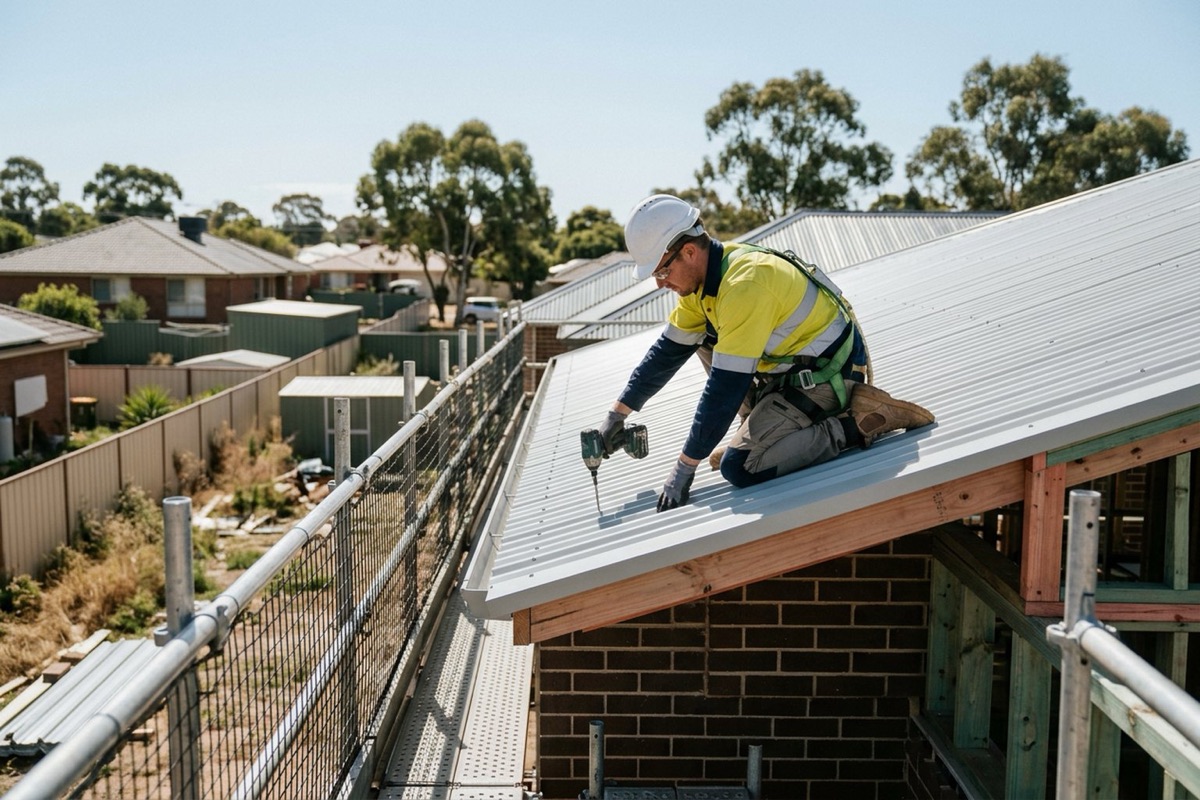
- a risk of a person falling more than 2 metres (see the state differences below);
- work on a telecommunication tower;
- demolition of an element of a structure that is load-bearing or otherwise related to the physical integrity of the structure;
- the disturbance, or likely disturbance, of asbestos;
- structural alterations or repairs that require temporary support to prevent collapse;
- work in or near a confined space;
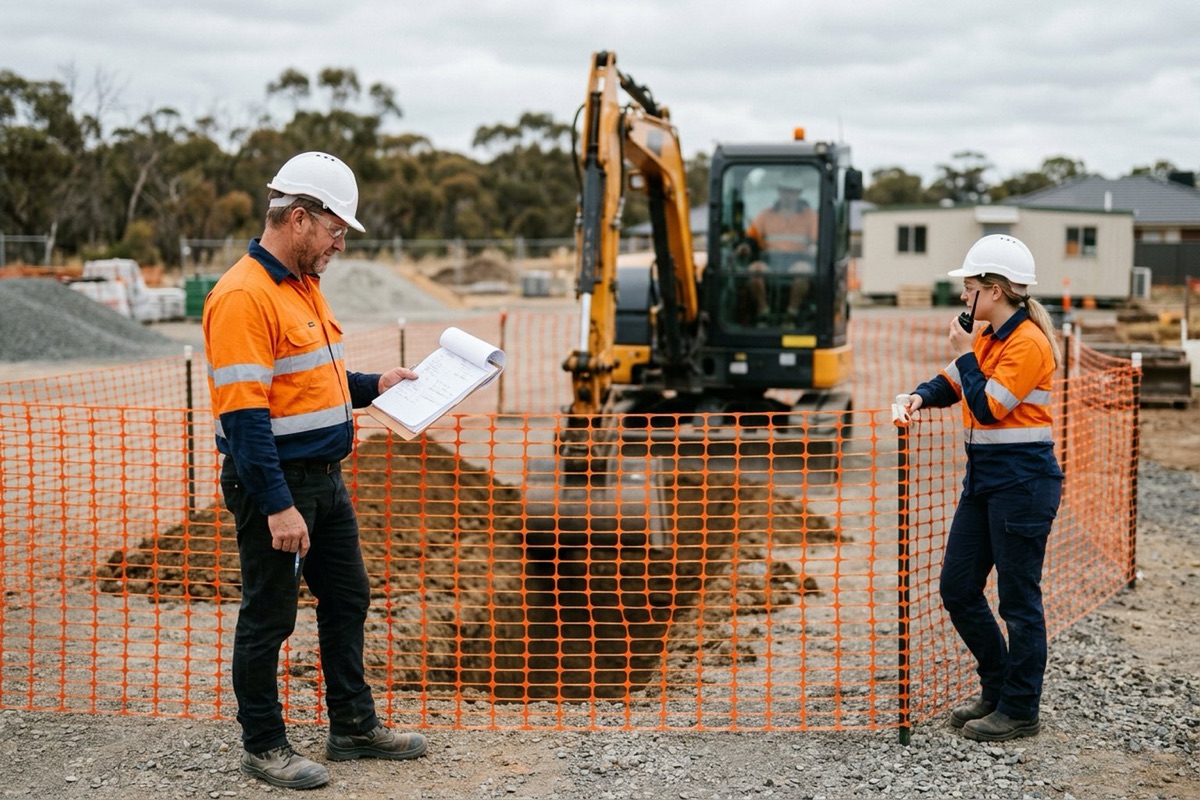
- work in or near a shaft or trench with an excavated depth greater than 1.5 metres, or a tunnel;
- the use of explosives;
- work on or near pressurised gas distribution mains or piping;
- work on or near chemical, fuel or refrigerant lines;
- work on or near energised electrical installations or services;
- work in an area that may have a contaminated or flammable atmosphere;
- tilt-up or precast concrete;
- work on, in or adjacent to a road, railway, shipping lane or other traffic corridor in use by traffic other than pedestrians;
- work in an area where there is any movement of powered mobile plant;
- work in an area with artificial extremes of temperature;
- work in or near water or other liquid that involves a risk of drowning; or
- diving work.
One category is enough. A single SWMS can cover several, provided it considers how the activities interact.
Two jurisdictions change the list. The ACT adds processing crystalline silica material with a power tool or other mechanical method. Victoria’s list of 19 (regulation 322 of the OHS Regulations 2017) makes a tunnel a separate item and covers demolition generally, and there an asbestos control plan counts as the SWMS for asbestos removal or disturbance work.
What is the fall-height trigger in each state?
This is where the jurisdictions differ most. As at September 2026, the trigger is a risk of a person falling:
- more than 2 metres in the Commonwealth, NSW, Queensland, Western Australia, Tasmania, the ACT and Victoria;
- more than 2 metres in South Australia from 1 July 2026, down from more than 3 metres;
- in the Northern Territory since 17 July 2026, more than 3 metres for residential construction work as defined in the NT Regulations (broadly, houses and their associated structures such as garages, carports and sheds), and more than 2 metres for everything else.
Western Australia’s separate falls rule also changed: from 1 October 2026, reg 79 of the WHS (General) Regulations 2022 replaced the old OSH reg 3.55 heights, and it prescribes no height.
Who prepares a SWMS, and who must be consulted?
The person conducting a business or undertaking (PCBU) whose work includes the high risk construction work must ensure a SWMS is prepared, or has already been prepared by someone else, before the work starts. In Victoria the duty sits with the employer or self-employed person doing the work.
Safe Work Australia says whoever carries out the work is best placed to prepare it: generally the builder for its own workers, or the subcontractor for its workers and itself. Businesses that share the duty must consult, cooperate and coordinate on who writes it.
Consult the workers likely to be directly affected when identifying hazards and deciding controls, involving their health and safety representative if they have one. If no workers are engaged yet, the Construction Work Code of Practice says to consult them when the SWMS is first made available, for example at a toolbox talk.
What does the principal contractor have to do?
Every construction project has a principal contractor, but the threshold for a construction project varies:
- $250,000 or more: the model regulations, NSW, Queensland, Tasmania and the ACT (which also includes demolition or refurbishment of structures containing loose-fill asbestos insulation);
- $450,000 or more: South Australia, according to SafeWork SA;
- $1,000,000 or more: the Northern Territory;
- 5 or more persons working, or likely to be working, at the same time: Western Australia;
- $350,000 or more: Victoria, where the principal contractor duties apply from that cost.
Under the model regulations, the principal contractor’s WHS management plan must set out how SWMS are collected, assessed, monitored and reviewed, and the principal contractor must take all reasonable steps to obtain each SWMS before the high risk work starts; the business doing the work must provide it. In Victoria, WorkSafe says a principal contractor should ensure no high risk construction work goes ahead without one. More in a principal contractor’s WHS duties.
What must a SWMS contain?
Under the model regulations, a SWMS must:
- identify the high risk construction work;
- specify its hazards and the associated risks to health and safety;
- describe the control measures, and how they will be implemented, monitored and reviewed;
- take into account the circumstances at the workplace and, on a construction project, the WHS management plan; and
- be readily accessible and understandable to the people who use it.
Victoria’s regulation 324 also requires the control measures to be “sufficiently” described.
Write controls as instructions: the Code of Practice says a SWMS should leave no decisions to supervisors or workers, and “use appropriate PPE” does not specify a control. Safe Work Australia’s template also records who is responsible for compliance, how it will be checked and reviewed, and who received the SWMS. Pictures or diagrams may help workers from non-English speaking backgrounds.
Why do generic SWMS fail?
Safe Work Australia warns that a generic SWMS used at different workplaces may not meet the WHS laws unless it is first reviewed for the hazards and risks of the specific workplace and amended as necessary. Watch for these failings:
- No site in it. Nothing on this site’s access, edges, services or neighbouring trades.
- Controls that are really decisions. “As required”, “take care”.
- The wrong order. Signs, training or PPE where edge protection or other engineering controls were reasonably practicable.
- Too long to use. Safe Work Australia says a SWMS should be short and focused on the high risk work; NT WorkSafe suggests no more than six pages.
- Signed, never discussed. A signature sheet is not consultation.
- Never updated. The work changed and the SWMS did not.
How do you follow, review and keep a SWMS?
Follow it. The PCBU must have arrangements to ensure the work is done in accordance with the SWMS, such as inspections and supervision by a leading hand. If it isn’t, the work must stop immediately or as soon as it is safe to do so, and resume only in accordance with the SWMS.
Review it. The SWMS must be reviewed, and revised as necessary, whenever the relevant controls are revised: for example, when a control isn’t working, before a change that may create a new risk, when a new hazard is identified, or when a health and safety representative asks. Victoria requires a review whenever the work changes or the controls may be inadequate, including after any incident. The principal contractor needs the revised version.
Keep it until the high risk construction work is completed, or for at least 2 years after a notifiable incident connected with the work, readily accessible to the workers and available for inspection. Keep it on site or where it can be delivered quickly; electronic copies are fine, and keep every version. Victoria requires a copy for the duration of the work.
A practical SWMS checklist
Before the high risk work starts:
- Check the job against every category, not just heights, using your jurisdiction’s fall trigger.
- Make it specific to this site, crew and sequence of work.
- Apply the hierarchy of control before you write anything down.
- Write each control as an instruction, with a named person responsible.
- Say how compliance will be checked and when it will be reviewed.
- Consult the workers and any health and safety representative.
- Give the principal contractor a copy and keep one on site.
- Stop work that departs from it; update it when anything changes.
Write SWMS that work on site, not just on paper
CPD-accredited online courses on safe work method statements, WHS risk management and working at heights, each with an assessment and a certificate.
- Safe Work Method Statements for High-Risk Construction Work View course →
- Managing Work Health and Safety Risks: A Practical Framework View course →
- Following Workplace Health and Safety Requirements on Site View course →
- Building a Work Health and Safety Management System on Site View course →
- Managing the Risk of Falls: Working at Heights in Construction View course →
- Understanding Work Health and Safety Law in Australia View course →
Frequently asked questions
Is a SWMS a legal requirement?
Yes, for high risk construction work. In every jurisdiction with the model WHS laws, a PCBU carrying out that work must ensure a SWMS is prepared before it starts; in Victoria, regulation 327 of the OHS Regulations 2017 places the equivalent duty on employers and self-employed persons. Other construction work does not need one.
Is a SWMS the same as a JSA?
No. Safe Work Australia describes a SWMS as generally different from task-focused documents such as a job safety analysis or safe operating procedure. A JSA can inform a SWMS, but it does not change what a SWMS must contain.
Do you need a SWMS for work below 2 metres?
Not for the fall risk alone. The fall category applies to a risk of falling more than 2 metres, or more than 3 metres for residential construction work in the Northern Territory. You still need one if any other high risk category applies, and the fall risk must be managed whatever the height.
Can you reuse a generic SWMS?
You can start from one, but Safe Work Australia warns it may not meet the WHS laws unless it is first reviewed for the specific workplace and amended as necessary. On a construction project it must also take into account the principal contractor's WHS management plan.
Who writes the SWMS on a construction project?
Usually the business doing the high risk work, such as a subcontractor for its own workers, in consultation with those workers. The principal contractor must take all reasonable steps to obtain a copy before the work starts.
How long must you keep a SWMS?
Under the model WHS Regulations, until the high risk construction work is completed, or for at least 2 years after a notifiable incident connected with the work. In Victoria, a copy must be kept for the duration of the high risk construction work.
Sources and further reading
- Federal Register of Legislation — Work Health and Safety Regulations 2011 (Cth), regs 36, 38, 78, 291–303 and 309–312
- Federal Register of Legislation — Work Health and Safety Act 2011 (Cth), ss 46–49 (consultation)
- Safe Work Australia — Safe work method statement for high risk construction work: information sheet
- SafeWork NSW — Code of Practice: Construction work (based on the Safe Work Australia model code)
- Victorian Legislation — Occupational Health and Safety Regulations 2017, regs 322–332
- WorkSafe Victoria — Safe Work Method Statements (SWMS)
- SafeWork SA — High-risk construction work changes from 1 July
- SafeWork SA — Principal contractors and construction projects
- NT Legislation — Work Health and Safety (National Uniform Legislation) Further Amendment Regulations 2026
- NT WorkSafe — Safe work method statement for high risk construction work
- ACT Legislation Register — Work Health and Safety Regulation 2011, ss 291–292
- WorkSafe ACT — Silica in safe work method statements
- WA Legislation — Work Health and Safety (General) Regulations 2022, regs 291–292
- WorkSafe WA — Managing the risk of falls at workplaces