The National Construction Code (NCC) is Australia’s single set of minimum technical requirements for designing, building and plumbing work. It is written by the Australian Building Codes Board (ABCB) on behalf of the Commonwealth, state and territory governments — but it only carries legal force once a state or territory adopts it through its own building and plumbing laws. That is why the edition of the NCC that applies to your project depends on where you are building and when your approval was lodged.
Who writes the NCC, and who enforces it?
The NCC is produced and maintained by the Australian Building Codes Board (ABCB), a joint initiative of the Australian Government and each state and territory government, working with the building and plumbing industries.
The ABCB writes the Code. It does not enforce it. Enforcement sits with each state and territory, through its own building Act, plumbing Act and regulations, and is administered on the ground by building surveyors, certifiers, plumbing inspectors and the relevant regulator.
This two-step structure — national drafting, local adoption — is the single most misunderstood thing about the NCC, and it is the reason two identical houses built in different states in the same month can legitimately be held to different rules.
What do NCC Volume One, Volume Two and Volume Three cover?
The NCC is published in three volumes, plus a separate ABCB Housing Provisions Standard that forms part of the Code.
- Volume One — Class 2 to Class 9 buildings. Apartment buildings, hotels and motels, offices, shops, warehouses and factories, public buildings, schools, hospitals and aged care.
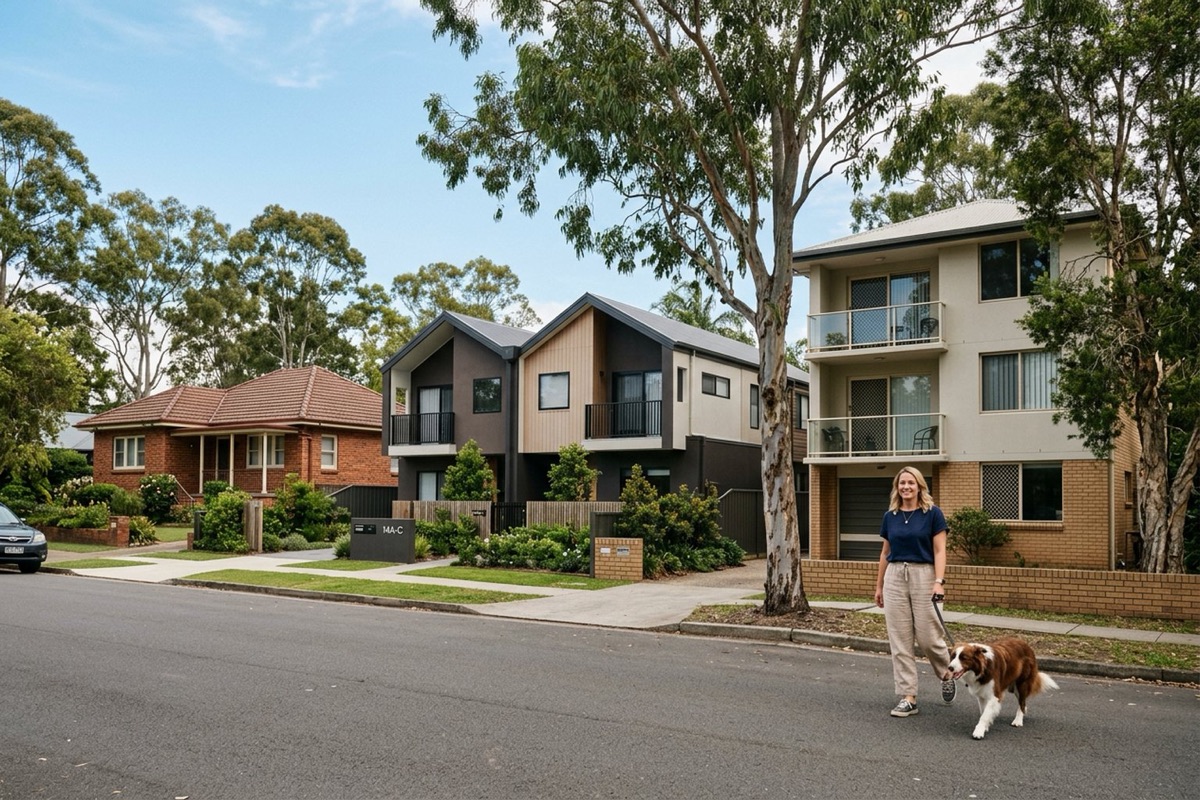
- Volume Two — Class 1 and Class 10 buildings. Houses and townhouses, plus ancillary structures such as garages, carports, sheds, fences and swimming pool barriers.
- Volume Three — the Plumbing Code of Australia (PCA). Plumbing and drainage work across all building classes.
Volumes One and Two together are still commonly called the Building Code of Australia (BCA); Volume Three is the PCA. You will see all of these names used interchangeably on drawings, in contracts and in council correspondence.
Which edition of the NCC applies to my project?
The ABCB publishes a new edition roughly every three years. NCC 2025 was published on 1 May 2026 and is the current edition — but adoption is not uniform, and for this cycle it is unusually split.
As at September 2026, the position is:
- Adopted NCC 2025 from 1 May 2026: Victoria, Western Australia (12-month transition), Australian Capital Territory (12-month transition), and South Australia for the Plumbing Code only.
- Deferred to 1 May 2027: New South Wales, Queensland, and South Australia for the Building Code.
- Tasmania: a temporary adoption ran 1 May to 4 June 2026, with a transition period from 5 June 2026 to 1 May 2027.
- Northern Territory: has not adopted NCC 2025 and continues under NCC 2022.
That means that for most of 2026 and into 2027, a national builder or designer is working to two different editions of the Code at the same time, depending on the state.
NCC 2022 remains in force where NCC 2025 has not been adopted. It was adopted from 1 May 2023, with Amendment 1 adopted from 1 May 2025 and Amendment 2 — which supersedes Amendment 1 — from 29 July 2025.
Building Ministers have also agreed that there will be no further residential changes to the NCC until mid-2029, other than essential safety and quality measures. NCC 2025 reflects that: planned residential energy efficiency and EV-charging changes were deferred, and embodied carbon provisions were released as voluntary guidance instead.
As a rule of thumb, the edition that applies is the one in force in that jurisdiction when the building approval application was lodged, not when work starts on site. Transition arrangements differ, so confirm with the relevant state regulator or your certifier before you rely on it.
How do you actually comply with the NCC?
The NCC is a performance-based code. The legally binding parts are the Performance Requirements — statements of the outcome a building or plumbing system must achieve, such as resisting the spread of fire or safely carrying the loads applied to it.
There are two ways to meet a Performance Requirement, and you can mix them on the same project:
- A Deemed-to-Satisfy (DTS) Solution. Follow the prescriptive DTS Provisions — the materials, dimensions, components and construction methods set out in the Code. Get them right and compliance is deemed to be achieved. The ABCB describes the DTS Provisions as working like a recipe book: they tell you how, what and where.
- A Performance Solution. Meet the Performance Requirement directly by some other means, demonstrated using the NCC’s Assessment Methods. This is the pathway for innovation, for unusual buildings, and for existing buildings where a DTS answer is impossible.
Sitting above both is a set of Governing Requirements — the rules about how the Code itself must be used, including evidence, documentation and the classification of buildings.
What are the four Assessment Methods?
The NCC contains four Assessment Methods, and any combination of them can be used to show that a building or plumbing solution complies:
- Evidence of Suitability — documentary evidence that a material, product, form of construction or design does what is claimed.
- A Verification Method — a test, calculation or procedure set out in the NCC that determines whether a Performance Requirement is met.
- Expert Judgement — the judgement of a person qualified by training and experience to make it, based on their expertise.
- Comparison with the DTS Provisions — demonstrating that the proposed solution performs at least as well as a DTS Solution would.
A Performance Solution may use all four. A DTS Solution can use only two of them: Evidence of Suitability and Expert Judgement.
When would you use a Performance Solution?
A Performance Solution is unique to the situation it was designed for. Typical triggers are:
- A design the DTS Provisions simply do not contemplate — an atrium, an unusual facade, a heritage fabric that cannot be altered.
- A new product or system without an established DTS pathway.
- A refurbishment where bringing an existing building fully to DTS is not practicable.
- A commercial driver — removing a fire-isolated stair, extending travel distances, reducing structure — where the outcome can still be demonstrated.
The trade-off is documentation. A Performance Solution has to be developed through a performance-based design brief, agreed with the relevant stakeholders, and evidenced. That record is what a certifier, an insurer, a purchaser’s lawyer or a regulator will ask for — sometimes years later. A Performance Solution that was never properly documented is one of the most expensive defects a project can carry.
Why do building classifications matter so much?
Almost every requirement in the NCC is keyed to the classification of the building or the part of the building — Class 1a through Class 10. Classification determines which volume applies, which fire safety provisions bite, what access requirements exist, and what energy efficiency standard must be met.
A building can also have more than one classification. A shop with two apartments above it is Class 6 at ground level and Class 2 above. Each part is assessed on its own classification.
Getting classification wrong at concept stage is expensive, because it invalidates every downstream assumption — fire resistance levels, egress, sanitary facilities, energy provisions and access.
Where do state and territory variations fit in?
Even once an edition is adopted, jurisdictions can and do vary it. Variations and additions appear in the NCC itself, marked by jurisdiction, and cover things a state wants handled differently — bushfire, cyclonic regions, termite management, swimming pool barriers, energy provisions and plumbing.
Some requirements also commence on different dates within the same jurisdiction, or are excluded altogether. The ABCB’s own guidance is explicit that some NCC requirements may apply at different times, or not at all, because of state and territory variations.
Practically, that means: never quote a clause number to a client from the national Code alone without checking the variation for the state you are building in.
Who needs to understand the NCC?
The NCC is not just for certifiers. In practice it is working knowledge for:
- Builders, site supervisors and project managers — who have to build what was approved.
- Architects, building designers and drafters — whose documentation has to be capable of approval.
- Engineers — structural, fire, hydraulic, mechanical and civil.
- Building surveyors and certifiers — who assess and certify against it.
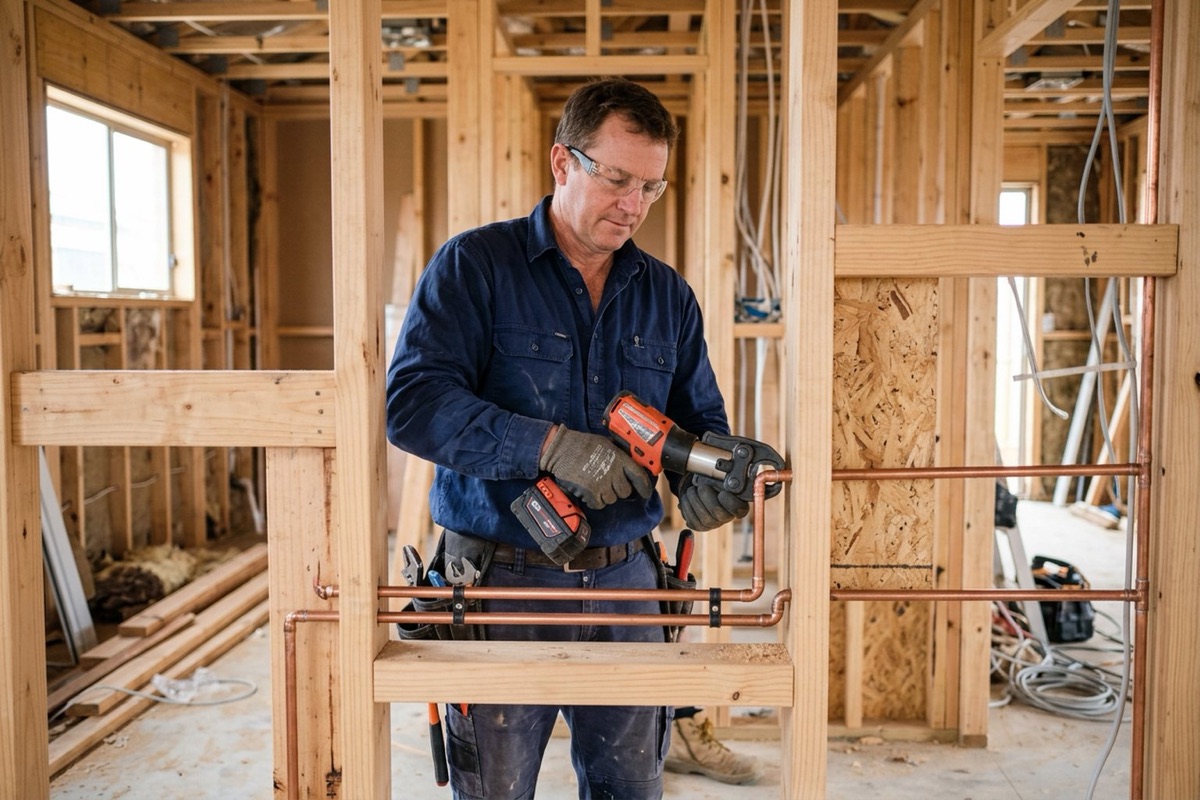
- Plumbers and hydraulic designers — working to Volume Three.
- Trades carrying out work that has a Code consequence — waterproofing, cladding, fire-stopping, glazing, insulation.
For most registered practitioners, keeping current with the Code is also a formal CPD obligation, and the change of edition is exactly when registration boards look closely.
Get current on the NCC
CPD-accredited online courses on the Code, written for Australian practitioners. Each includes an assessment and a certificate.
- Understanding and Applying the National Construction Code View course →
- NCC 2025: Key Changes and Managing the Transition View course →
- NCC Volume One: Multi-Residential, Commercial and Public Buildings View course →
- NCC Volume Two: Housing Provisions for Homes and Outbuildings View course →
- Performance Solutions and the Performance-Based Code View course →
- The Plumbing Code of Australia: NCC Volume Three View course →
Frequently asked questions
Is the National Construction Code law?
Not by itself. The ABCB publishes the NCC, and it becomes legally enforceable only when a state or territory adopts it through its own building and plumbing legislation. Once adopted, compliance is mandatory for the building work it covers.
What is the current edition of the NCC?
NCC 2025, published on 1 May 2026. However, it is not yet in force everywhere: Victoria, Western Australia and the ACT adopted it from 1 May 2026, New South Wales, Queensland and South Australia's Building Code follow on 1 May 2027, and the Northern Territory has not adopted it and remains on NCC 2022.
What is the difference between the NCC and the BCA?
The Building Code of Australia (BCA) is NCC Volumes One and Two. The NCC is the wider publication that also includes Volume Three, the Plumbing Code of Australia. The BCA name is still in everyday use, so the two terms are often mixed.
What is the difference between a Deemed-to-Satisfy Solution and a Performance Solution?
A Deemed-to-Satisfy Solution follows the prescriptive provisions written in the Code and is deemed to comply. A Performance Solution meets the Performance Requirement by another route, demonstrated using the NCC's Assessment Methods and supported by documented evidence. Both are equally valid ways to comply.
Which NCC volume applies to a house?
Volume Two, which covers Class 1 and Class 10 buildings — houses, townhouses, garages, carports, sheds and swimming pool barriers. Apartment buildings are Class 2 and fall under Volume One.
How often does the NCC change?
A new edition is published roughly every three years, with amendments in between. NCC 2022 was adopted from 1 May 2023 and received two amendments; NCC 2025 was published on 1 May 2026 with staggered adoption running into 2027. Building Ministers have paused further residential changes until mid-2029, except for essential safety and quality measures.
Sources and further reading
- Australian Building Codes Board — NCC editions and adoption
- ABCB — NCC 2025 state and territory adoption information
- ABCB — NCC Part A2 Compliance with the NCC (A2G1–A2G4)
- ABCB — Compliance with the NCC
- Building Ministers' Meeting communiqué, October 2025 — pause on residential NCC changes
- ABCB — Building classifications