NCC 2025 is a commercial-heavy update with very little change for houses. Its headline changes are stronger condensation controls, mandatory on-site solar for Class 3 and Class 5 to 9 buildings, sprinkler protection for open-deck carparks, clearer water management rules for apartments, an optional pathway for all-gender toilets, and tighter assessment rules for Performance Solutions.
Just as important is what it left out. Building Ministers paused further residential changes to the NCC until mid-2029, except for essential safety and quality measures. The residential energy efficiency and EV-charging changes that had been planned were deferred, and embodied carbon became voluntary guidance.
What is NCC 2025, and when does it apply?
NCC 2025 is the latest edition of the National Construction Code, published by the Australian Building Codes Board (ABCB) on 1 May 2026. States and territories adopt it progressively from that date, each on its own timetable.
That timetable matters more than usual for this edition. Victoria, Western Australia and the ACT adopted it from 1 May 2026, while New South Wales, Queensland and South Australia’s building provisions follow on 1 May 2027, and the Northern Territory has not adopted it. Until NCC 2025 applies in your jurisdiction, NCC 2022 still governs your work. The full state-by-state position is in our guide to NCC 2025 adoption dates.
What did NCC 2025 not change?
Start here, because it is the part most people get wrong.
In October 2025, Building Ministers agreed that there will be no further residential changes to the NCC until mid-2029, except for essential quality and safety measures. The exception is narrow: it covers serious issues and changes that could not wait for the next edition of the Code.
For NCC 2025, that meant:
- Residential energy efficiency changes were deferred. New homes are not facing a new round of energy stringency in this edition.
- EV-charging requirements were deferred.
- Embodied carbon provisions were not made mandatory. They were released as voluntary guidance documents instead.
If you design or build houses, NCC 2025 is mostly a watching brief. The significant exception is condensation.
Condensation: the change that reaches homes and apartments
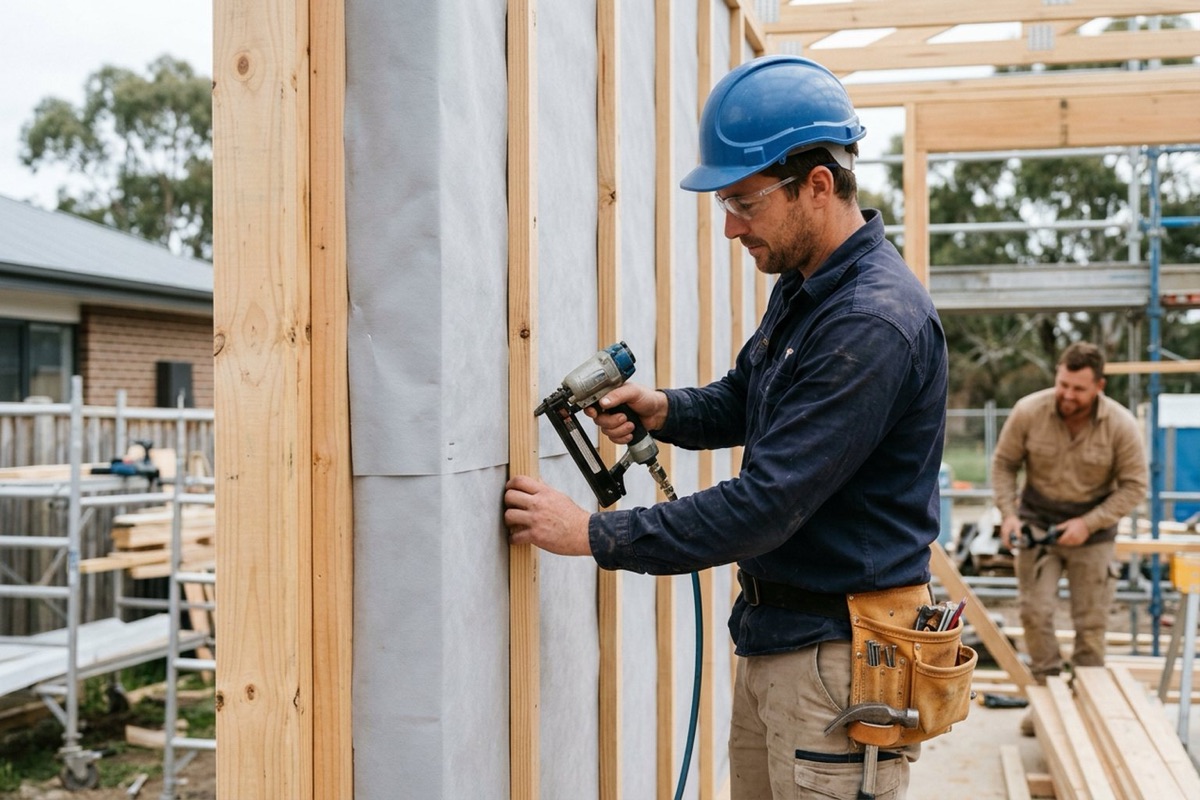
Condensation management is the change with the widest reach. It applies to Volume One (Part F8) and, in the same form, to the ABCB Housing Provisions (Part 10.8) — which is consistent with the Ministers’ exception for essential quality measures, given the link between condensation, mould and occupant health.
According to the ABCB, the condensation changes include:
- a further specification for the vapour permeance of control layers in the building envelope;
- mandatory wall cavities in colder climates; and
- more detailed ventilation specifications.
For designers, this means wall build-ups need checking against the new permeance settings, not just carried over from the last job. For builders in colder climate zones, it can mean a change to the wall system itself. Our guide to condensation in new homes explains the underlying physics and the practical detailing.
On-site solar for commercial buildings
The biggest change for commercial work is in energy efficiency. NCC 2025 introduces new requirements for renewable energy generation for Class 3 and Class 5 to 9 buildings, through mandatory on-site solar photovoltaic systems, alongside tighter building fabric and services requirements.
Class 3 covers shared and short-term residential accommodation such as hotels, motels and hostels; Class 5 to 9 covers offices, shops, carparks, storage, factories, health care and assembly buildings. Houses (Class 1) and apartment buildings (Class 2) are not in this group.
The detail — how much PV, which buildings are exempt, and how the requirement interacts with roof space and shading — sits in the Volume One energy efficiency provisions. Check them against your project early: roof-mounted PV competes for the same space as plant, access and future expansion, and it is far cheaper to plan for at concept stage than to retrofit into a finished design.
Fire safety: carparks and combined sprinkler and hydrant systems
Two fire safety changes stand out:
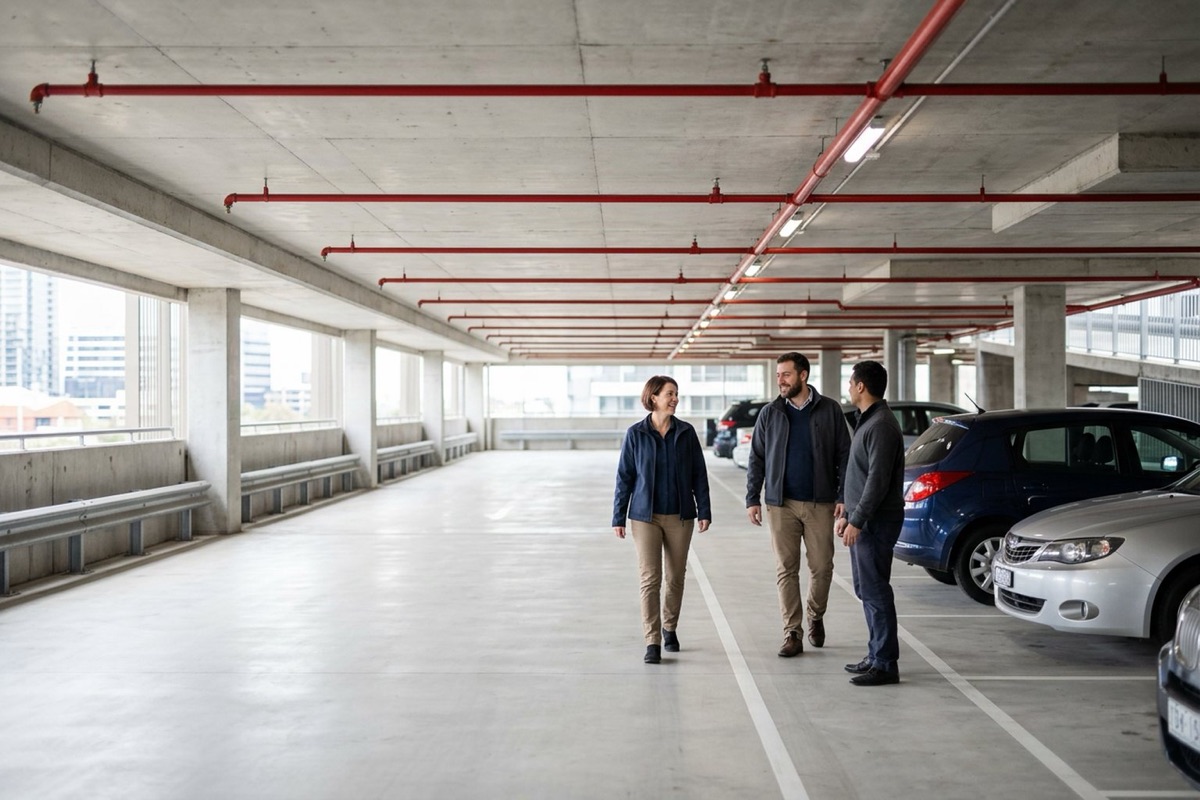
- Carparks. NCC 2025 reduces the fire-resistance concessions that carparks previously enjoyed, and introduces sprinkler protection for open-deck carparks, subject to exceptions set out in the provisions.
- Combined sprinkler and hydrant systems. New restrictions apply to the materials that can be used in combined systems.
If you are designing a building with an open-deck carpark in a jurisdiction that has adopted NCC 2025, assume sprinklers are in scope until you have confirmed an exception applies.
Water management in apartments and complex buildings
Volume One’s Section F water management provisions were strengthened, particularly for apartments and larger, more complex buildings, and updated to clarify requirements and reduce ambiguity.
Water ingress is a common and costly apartment defect, and the ABCB’s stated aim of reducing ambiguity should make the standard more consistent to apply. Expect closer scrutiny of how external walls, roofs, balconies and wet areas manage water, and of the documentation that shows it.
All-gender sanitary facilities
NCC 2025 adds an optional pathway for all-gender sanitary facilities alongside male and female facilities in commercial buildings, allowing up to 50% of facilities to be all-gender.
It is optional, not mandatory. Clients who want all-gender facilities now have a Deemed-to-Satisfy route to provide them, rather than needing a Performance Solution to justify departing from the traditional male and female split.
Tighter rules for Performance Solutions
Amendments to A2G2 (the Performance Solution clause) and to B1P1 and H1P1 (the structural reliability Performance Requirements in Volume One and Volume Two) specify means of assessment intended to ensure robust Performance Solutions, including minimum levels of reliability for structural components whose compliance is shown through a Performance Solution.
In practice, it will be harder to rely on thin or poorly evidenced Performance Solutions, particularly for structure. If your practice regularly uses Performance Solutions, review your templates and evidence standards against the new clauses. Our guide to Performance Solutions sets out the process the NCC requires.
How to prepare for NCC 2025
- Confirm which edition governs each project. In NSW, Queensland and South Australia, work lodged before 1 May 2027 generally remains under NCC 2022 — but confirm the rule for your jurisdiction with your certifier.
- Review standard wall details for condensation, especially in colder climate zones, before the edition applies to you.
- Plan PV early on commercial projects where NCC 2025 applies, including roof space, structure and grid connection.
- Check open-deck carpark designs for the new sprinkler requirement.
- Update Performance Solution templates to meet the tightened assessment clauses.
- Update your product evidence. NCC 2025 also aligns with updated Australian Standards, so documentation that cites an older version of a standard may need refreshing.
- Record your NCC 2025 training. A code transition is exactly when registration boards look closely at CPD.
Get across NCC 2025 properly
CPD-accredited online courses on the new edition and the provisions it touched, each with an assessment and a certificate.
- NCC 2025: Key Changes and Managing the Transition View course →
- Understanding and Applying the National Construction Code View course →
- NCC Volume One: Multi-Residential, Commercial and Public Buildings View course →
- Managing Condensation and Indoor Air Quality View course →
- Commercial Building Energy Efficiency Essentials View course →
- Performance Solutions and the Performance-Based Code View course →
Frequently asked questions
Does NCC 2025 change the energy rules for new houses?
No. Building Ministers deferred the residential energy efficiency changes that had been planned, and agreed there will be no further residential changes to the NCC until mid-2029, except for essential safety and quality measures.
Does NCC 2025 require solar panels?
For Class 3 and Class 5 to 9 buildings, yes: NCC 2025 introduces mandatory on-site solar photovoltaic systems for those buildings, subject to the detail and exceptions in the Volume One energy efficiency provisions. It does not require solar on houses or apartment buildings.
Are EV-charging requirements in NCC 2025?
No. EV-charging changes were deferred when Building Ministers decided NCC 2025 would contain no further residential changes outside essential safety and quality measures.
Is embodied carbon mandatory under NCC 2025?
No. The embodied carbon provisions that had been proposed were released as voluntary guidance documents rather than mandatory requirements.
What changed in NCC 2025 for condensation?
NCC 2025 adds a further specification for the vapour permeance of control layers, makes wall cavities mandatory in colder climates, and adds more detailed ventilation specifications. The changes apply in Volume One and in the Housing Provisions.
When does NCC 2025 start in my state?
Victoria, Western Australia and the ACT adopted NCC 2025 from 1 May 2026. New South Wales, Queensland and South Australia's building provisions follow on 1 May 2027. The Northern Territory has not adopted NCC 2025 and remains on NCC 2022.