WELS is the national scheme that makes certain water-using products carry a star rating and a water consumption figure before they can be supplied in Australia. It is set up by the Commonwealth Water Efficiency Labelling and Standards Act 2005 and covers taps, showers, toilets, urinals, household dishwashers and washing machines, and separately sold flow controllers. The more stars, the more water efficient the product.
The duty falls on anyone who supplies a covered product, and the Act counts supplying it as a fitting or fixture in a building. So builders and plumbers who install taps, showers and toilets need products that are registered, labelled and, for plumbing products, WaterMark certified.
What is the WELS scheme?
WELS stands for Water Efficiency Labelling and Standards. It is a national cooperative scheme between the Commonwealth, states and territories, set up by the Water Efficiency Labelling and Standards Act 2005 (Cth). The Act’s stated objects are to conserve water supplies by reducing water consumption, to give purchasers information about water-use and water-saving products, and to promote efficient water-use technology.
The scheme is run by the WELS Regulator, a position within the Commonwealth department that administers the Act, currently the Department of Climate Change, Energy, the Environment and Water.
The detail sits in a legislative instrument, the Water Efficiency Labelling and Standards Determination 2013 (No. 2). It lists which products are “WELS products”, adopts the WELS standard, and sets out how products are registered. The Determination has been amended several times, most recently in February 2025.
Which products must be WELS registered and labelled?
Section 6 of the WELS Determination lists the products covered. In plain terms:
- Taps. Tap equipment for use over a fixed basin, sink or laundry trough. Bath and spa taps, thermostatic mixing taps, bidet taps, taps that only deliver filtered, chilled or boiled water, and certified drinking fountains and bottle fillers are excluded.
- Showers. Fixed showers used only for personal bathing. Drench showers and safety showers are excluded.
- Dishwashers. Electric dishwashers intended for household use that can connect to a potable water supply.
- Washing machines. Electric household clothes washing machines that can connect to potable water, including cold-wash-only models and combination washer-dryers.
- Toilets. Lavatory equipment that uses water, including toilets, cisterns, pans and flushing devices.
- Urinals. Urinal equipment that uses water, including flushing devices.
- Flow controllers. Flow controllers for use in a covered tap, shower, dishwasher or washing machine that are offered for supply separately from that product.
Under section 8 of the Determination, each of these must be registered before it is supplied as a new product, and a registered product must be WELS-labelled when supplied. Waterless urinals fall outside the definition because they do not use water.
What do the stars and the litres figure mean?
The WELS label shows two things: a star rating and a water consumption figure.
The stars give a quick comparison. More stars means a more water efficient product. Most product types can be rated up to six stars. Showers have a lower ceiling: the 2022 amendments to the WELS standard added a five-star category for high-pressure showers only. Taps and showers with a flow rate above 16 litres per minute receive a zero-star rating.
The consumption figure is what lets you estimate actual water use. Its unit depends on the product:
- Taps, showers and flow controllers show a flow rate in litres per minute.
- Toilets show litres per average flush, and for dual-flush models the full and half flush volumes.
- Dishwashers and washing machines show litres per wash, along with the load capacity.
Two products with the same star rating can use different amounts of water, so check the litres figure too when an approval sets a maximum flow rate.
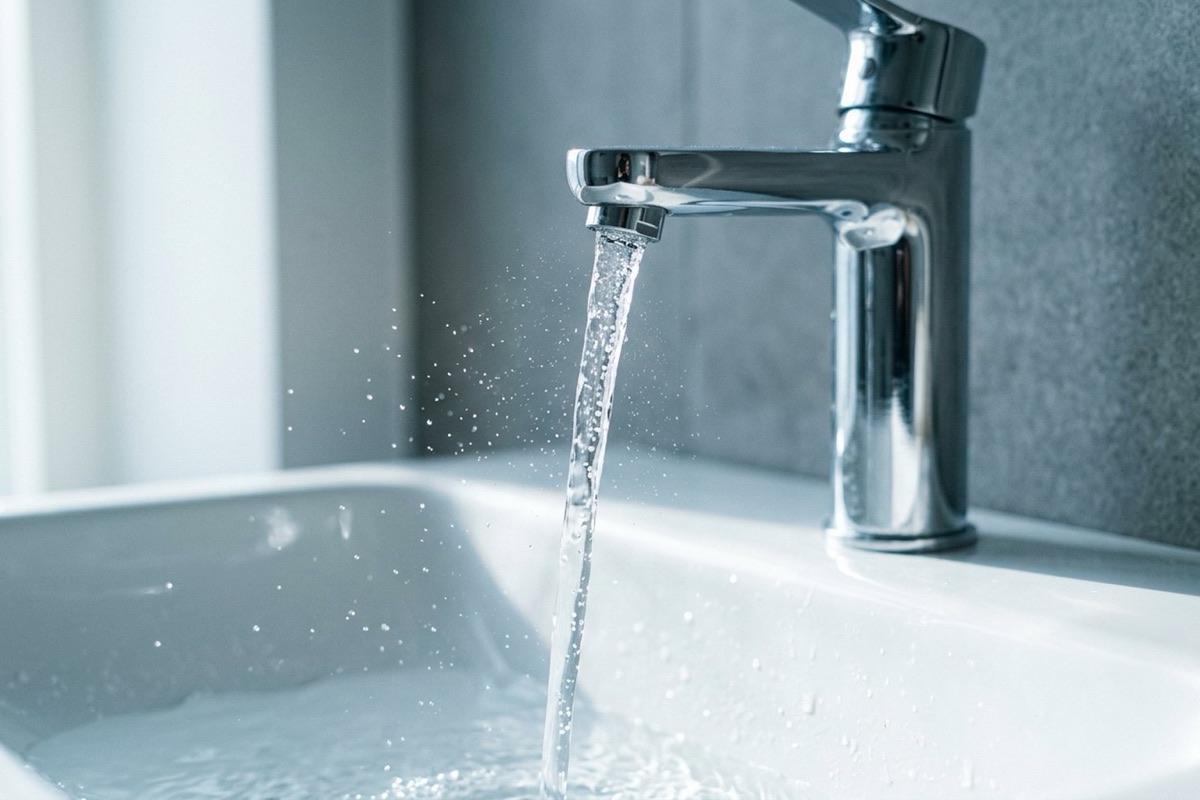
What is AS/NZS 6400 and the WELS standard?
The technical rules come from AS/NZS 6400:2016 Water efficient products — Rating and labelling. Section 7 of the WELS Determination says the WELS standard for each product consists of the performance, testing and labelling requirements in AS/NZS 6400:2016, plus the requirements in section 8 of the Determination.
AS/NZS 6400 sets how each product type is tested, how its star rating is calculated, and what the label must look like. It also sets minimum water efficiency requirements for some products. Amendments published in 2022 added the five-star high-pressure shower category, a minimum water efficiency measure for dishwashers, and a requirement to show the WELS registration number in product text advice.
The Act makes it an offence, and a civil penalty contravention, to supply a WELS product that is not registered when it must be (section 33), that is not WELS-labelled when it must be (section 34), or that fails a minimum water efficiency requirement (section 35). These are strict liability offences, so intention is not required.
Who must comply with WELS, including builders and plumbers?
The obligations attach to “supply”, and the Act defines supply broadly. Under section 7A, supply means supply in the course of trading or commercial activities, and includes:
- an offer to supply, which includes making available, displaying or advertising the product
- a supply by sale, exchange, gift, lease, loan or hire
- a supply as part of the supply of another thing, including as a fitting or fixture
That last limb is why WELS matters on building sites. A builder who hands over a new home with taps, showers and toilets installed has supplied those products as fixtures. The Victorian Building and Plumbing Commission’s guidance makes the same point, listing new buildings, display suites, renovations, inclusions lists and advertising among the places where WELS requirements apply.
In practice, the manufacturer or importer registers and labels the product. Builders and plumbers should check that what they buy and install is registered and labelled, and should not substitute an unregistered product at installation.
How does WELS fit with WaterMark and the Plumbing Code?
WELS and WaterMark answer different questions. WELS is about water efficiency. WaterMark is about whether a plumbing product is fit for purpose and safe to install.
The two are linked in the WELS Determination. Section 8(2) requires a WELS tap, shower, toilet, urinal or flow controller that may be used or installed in a plumbing installation to comply with clause A5G4 of the Plumbing Code of Australia, which is NCC Volume Three. A5G4 deals with evidence of suitability: a product of a type listed on the WaterMark Schedule of Products is deemed fit for its intended purpose if it has a WaterMark Licence. A5G4 also sets requirements for products in contact with drinking water, including a lead limit for copper alloy products. Dishwashers and washing machines are not in that subsection.
Clause A5G4 has the same number in NCC 2022 and NCC 2025. NCC 2025 Volume Three applies in Victoria, Western Australia, the ACT and South Australia (for plumbing) from 1 May 2026; New South Wales and Queensland move to NCC 2025 on 1 May 2027, Tasmania is transitioning to 1 May 2027, and the Northern Territory has not adopted it. Our guide to the Plumbing Code of Australia explains how Volume Three is structured and adopted.
Do new buildings need minimum WELS star ratings?
Yes. WELS itself only labels products, but the Plumbing Code of Australia uses WELS ratings to set minimums for fixtures installed in a plumbing installation. The Deemed-to-Satisfy Provisions are the same in NCC 2022 and NCC 2025 Volume Three:
- Taps and showers. A tap or outlet for a shower, basin, kitchen sink or laundry trough must be at least 3-star WELS rated and discharge no more than 9 litres per minute (B1D2 for cold water outlets, B2D4 for heated or mixed outlets). Emergency drench showers are exempt.
- Toilets. Cisterns and flushing devices must have a dual flush mechanism and be at least 3-star WELS rated, with a full flush of no more than 6 or 4.5 litres (B1D2(2)).
- Urinals. Flushing devices must be at least 2-star WELS rated, discharge no more than 2.5 litres per stall or per 600 mm of urinal wall, and not be set-cycled (B1D2(3)).
Some states go further or take a different route:
- Queensland. A Queensland variation to B1D2 requires toilet cisterns in new Class 1 and Class 2 buildings in areas with a water utility supply to be at least 4-star WELS rated, with a full flush of no more than 4.5 litres.
- Western Australia. WA Part H9 of NCC Volume Two applies to Class 1 buildings, associated Class 10a buildings and their swimming pools. Under WA H9D2, tap fittings other than bath outlets and garden taps must be at least 4-star WELS rated, showerheads at least 3-star, and sanitary flushing systems at least 4-star dual flush. The same clause appears in NCC 2022 and NCC 2025.
- New South Wales. BASIX sets water saving targets for new homes and many alterations. The BASIX certificate records the commitments made to meet the target, often including the star ratings of showerheads, toilets and taps and an alternative water source such as a rainwater tank. Those commitments become conditions of the approval. See our guide to BASIX and NatHERS.
- Everywhere else. Check the state’s NCC variations, planning conditions and the project specification, which can set higher ratings than the Plumbing Code minimum.
Where rainwater supplies toilets or laundries, see our guide to rainwater tank plumbing rules.
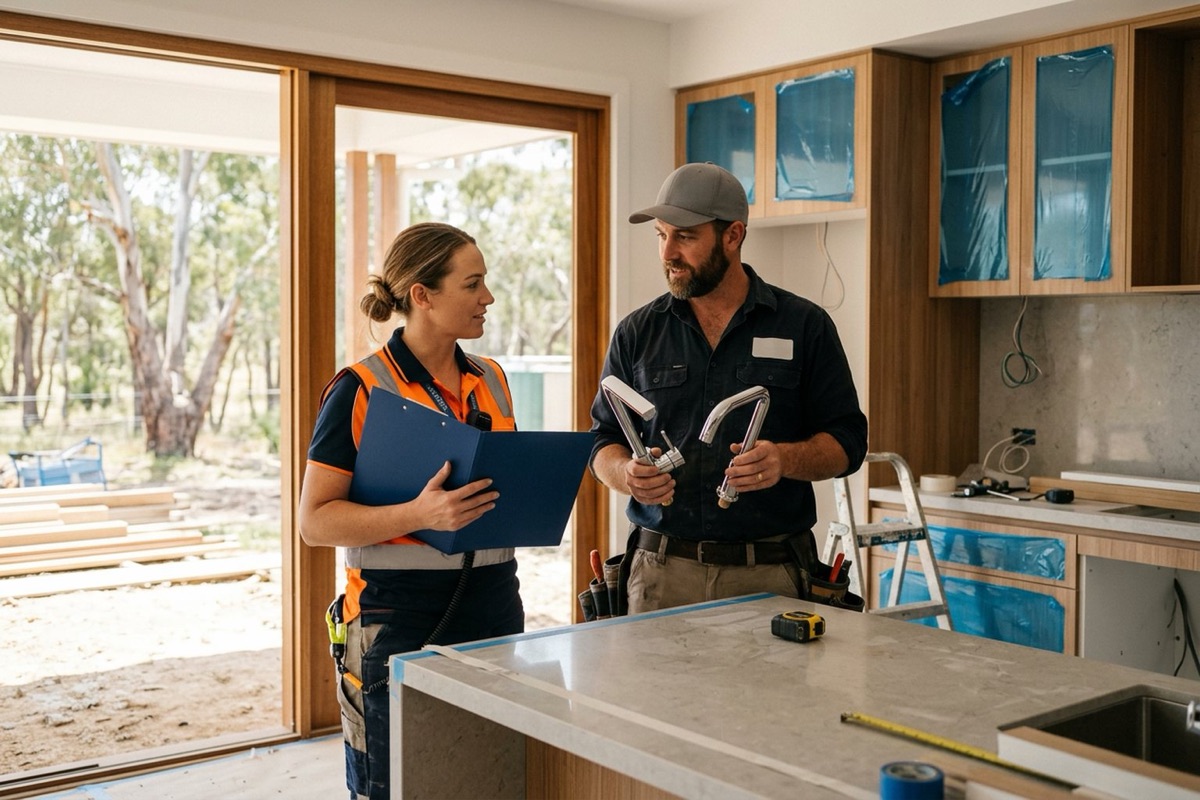
WELS compliance checklist for builders and plumbers
- Know the minimums. Apply the Plumbing Code minimums, then any higher ratings set by BASIX, a state variation or the specification.
- Check the register. Confirm each tap, shower, toilet, urinal and separately sold flow controller is WELS registered.
- Check the label. Make sure the product or its packaging carries the WELS label and registration number.
- Check WaterMark. Confirm plumbing products have a current WaterMark Licence where A5G4 requires one.
- Watch substitutions. Approve any product change against the same ratings and certification before it goes in.
- Check display homes. Make sure fixtures in display suites and inclusions lists meet WELS labelling requirements.
- Keep records. File model numbers, WELS registration details and WaterMark licence numbers with the job.
- Hand over. Give the owner product details so replacements can match the approved ratings.
Specify and install WELS-compliant fixtures
CPD-accredited online courses on the WELS scheme, the Plumbing Code of Australia and plumbing legislation, each with an assessment and a certificate.
Frequently asked questions
What does WELS stand for?
WELS stands for Water Efficiency Labelling and Standards. It is the national scheme, set up under the Water Efficiency Labelling and Standards Act 2005, that requires certain water-using products to be registered and to carry a water rating label.
What is the highest WELS star rating?
Most product types can be rated up to six stars. Showers have a lower ceiling, with the top five-star category available only for high-pressure showers since the 2022 amendments to AS/NZS 6400. Taps and showers that flow above 16 litres per minute are rated zero stars.
Do bath taps need a WELS rating?
No. The WELS Determination excludes tap equipment for use exclusively over a bath or spa bath. Thermostatic mixing taps, bidet taps and taps that only deliver filtered, chilled or boiled water are also excluded.
Is a WELS rating the same as WaterMark?
No. WELS rates water efficiency, while WaterMark certifies that a plumbing product is fit for purpose. Covered plumbing products such as taps, showers and toilets need both, because the WELS Determination requires them to comply with clause A5G4 of the Plumbing Code of Australia.
Does a builder have WELS obligations?
Yes, potentially. The Act's definition of supply includes supplying a product as part of something else, including as a fitting or fixture. A builder who installs and hands over covered products should make sure they are registered and labelled.
Are there minimum star ratings for new homes?
Yes. The Plumbing Code of Australia requires shower, basin, sink and laundry outlets of at least 3 stars and no more than 9 litres per minute, and dual flush toilets of at least 3 stars. Queensland, Western Australia and New South Wales, through BASIX, can require more, so check the rules where you build.
Sources and further reading
- Federal Register of Legislation — Water Efficiency Labelling and Standards Act 2005 (No. 4, 2005)
- Federal Register of Legislation — Water Efficiency Labelling and Standards Determination 2013 (No. 2)
- Federal Register of Legislation — WELS Amendment (2025 Measures No. 1) Determination 2025
- WELS scheme — Products that must be registered
- WELS scheme — Water rating label
- ABCB — NCC 2025 Volume Three (PCA), Part A5 Documentation of design and construction (A5G4)
- ABCB — NCC 2025 Volume Three (PCA), Part B1 Cold water services (B1D2 Water efficiency)
- ABCB — NCC 2022 Volume Three (PCA), Part B1 Cold water services (B1D2 Water efficiency)
- ABCB — NCC 2025 Volume Two, WA Part H9 Water use
- Standards Australia — AS/NZS 6400:2016 Amd 2:2022 Water efficient products — Rating and labelling
- Building and Plumbing Commission (Vic) — Water Efficiency Labelling and Standards scheme