In NSW, new homes meet energy and water standards through BASIX, not the NCC’s energy efficiency provisions — and NatHERS is one of the tools BASIX uses. BASIX (the Building Sustainability Index) is a NSW planning requirement that sets targets for water use, thermal performance and energy use. NatHERS is the national rating scheme whose software can be used to model a home’s heating and cooling loads, and those results are entered into BASIX.
Since 1 October 2023, BASIX thermal performance standards have aligned with the national 7-star level, energy standards have increased, and new homes must report the embodied emissions of their materials. You need a BASIX certificate for new dwellings, alterations and additions of $50,000 or more, and larger pools and spas.
Why does NSW use BASIX instead of the NCC energy rules?
NSW has run BASIX since 2004, and it chose to keep it when NCC 2022 introduced the 7-star and whole-of-home requirements nationally. So instead of applying the NCC’s energy Performance Requirements for houses and apartments, NSW varies the Code.
You can see this in the NCC itself:
- For houses (Volume Two), NSW replaces Part H6 with NSW Part H6. The NSW notes explain that BASIX commitments become conditions of the development consent or complying development certificate, and that NSW Part H6 is “designed to complement” BASIX.
- For apartments (Volume One), the thermal performance Performance Requirement for sole-occupancy units of Class 2 buildings does not apply in NSW, because, in the Code’s words, it is regulated by BASIX.
The practical result is that a NSW house is not assessed against the NCC’s 7-star rule and whole-of-home score of 60. It is assessed against BASIX targets, which deliver a broadly similar outcome by a different route.
What does BASIX cover?
BASIX applies to all residential dwelling types and is part of the development application process in NSW. A BASIX assessment has three main sections, plus a newer reporting requirement:
- Water. Targets for reducing potable water use, ranging from 0% to 40% below a pre-BASIX benchmark depending on location. The 40% standard applies to most new residential development.
- Thermal performance. Limits on how much heating and cooling the home’s design will need, expressed as heating and cooling caps.
- Energy. Targets for reducing greenhouse gas emissions from the home’s energy use, compared with a pre-BASIX benchmark of 3,292 kg CO2-e per person per year. Hot water, heating and cooling, ventilation, lighting, pools and spas, and on-site generation such as solar all count.
- Materials index. A calculation and record of the embodied emissions of the home’s building materials (see below).
The standards are set by the State Environmental Planning Policy (Sustainable Buildings) 2022, and they vary by climate zone and development type.
How do BASIX and NatHERS fit together?
NatHERS is a rating scheme and software standard. BASIX is a regulatory target. They meet in the BASIX thermal performance section.
To complete that section, you choose one of three methods:
- DIY method. A simplified assessment for single dwelling houses using common materials and construction. BASIX estimates the heating and cooling loads itself, so no NatHERS assessor is needed.
- Simulation method. An accredited assessor models the home in NatHERS accredited software, and the heating and cooling loads from the NatHERS certificate are entered into BASIX. It handles a wider range of designs and materials, and it is the method used for multi-dwelling developments such as townhouses and apartments.
- Passive House standard method. For single dwelling houses designed and built to the Passive House standard, entered by a Certified Passive House Designer.
When the Simulation method is used, the loads must be below the maximum loads BASIX sets for the climate zone. The NatHERS certificate is lodged together with the BASIX certificate.
The whole-of-home idea also crosses over. BASIX’s energy calculations now incorporate the NatHERS whole-of-home calculation to align with the national requirements, but the BASIX energy result is still expressed as a reduction in carbon emissions, not as a score out of 100. Our guide to 7-star NatHERS and whole-of-home explains how the national system works outside NSW.
What changed in BASIX on 1 October 2023?
Higher BASIX standards took effect on 1 October 2023, introduced through the Sustainable Buildings SEPP. A 12-month transition for eligible applicants with a building contract signed before 1 October 2023 ended on 30 September 2024.
The changes were:
- Thermal performance up to 7 stars. The standard rose from an average of 5.5 to 6 NatHERS stars to 7 stars, to align with NCC 2022. For houses this is delivered through revised heating and cooling caps.
- Apartments: 7-star average, 6-star minimum. Apartment buildings must average 7 NatHERS stars across the building, with a minimum of 6 stars for individual apartments.
- Higher energy standards. These reflect both tougher energy performance and the lower emissions of grid electricity. Standards for detached houses now vary with floor area, and high-rise apartments have separate standards for 6 to 20 storeys and 21 storeys and above.
- A new materials index for embodied emissions.
- Dark roofs limited in the DIY method. In coastal areas north of Wollongong, including Greater Sydney, and inland areas west of the Great Dividing Range, roofs with a solar absorptance above 0.7 cannot be selected in the DIY method. They can still be modelled with the Simulation or Passive House methods.
The increase did not apply everywhere. The standards were raised for all new residential buildings except homes in climate zones 9, 10 and 11 in north-eastern NSW and apartment buildings up to 5 storeys.
The BASIX tool continues to be updated. On 1 May 2026 the standards version moved from v4.03 to v4.04; one change is that bathroom, kitchen and laundry exhaust can no longer be directed into the roof space. Projects already in progress were not affected.
What is the BASIX materials index?
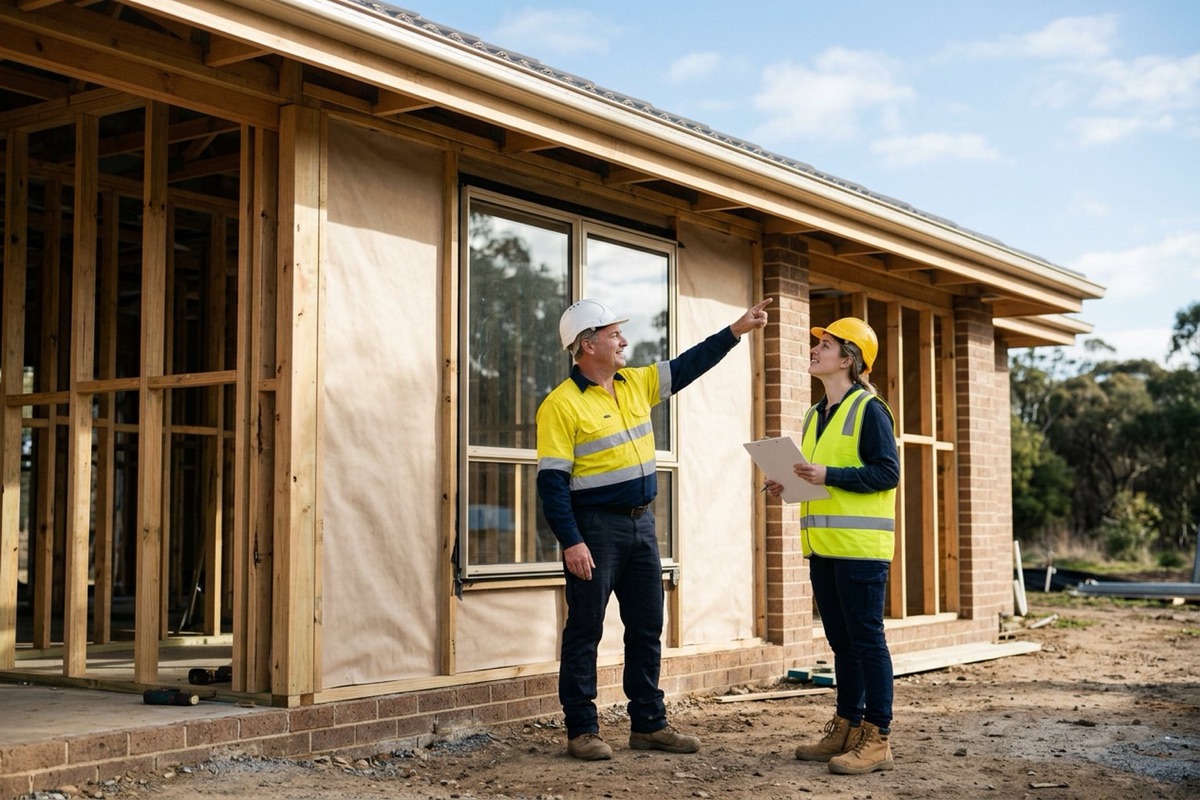
The materials index calculates and reports the embodied emissions of a new home — the emissions from producing its building materials. It estimates the quantity of each material used and applies emissions factors, with defaults drawn from the EPiC database.
Three points matter for builders:
- It is a reporting requirement, not a limit. There is currently no cap on embodied emissions. The NSW Government has said it will consider setting one in the future.
- It applies to new residential development only. In late 2025 the Sustainable Buildings SEPP was amended to clarify that alterations and additions do not need to calculate embodied emissions.
- It needs real quantities. Wall, roof, floor and glazing areas have to be entered, so the materials section is easiest to complete from finalised drawings.
When do you need a BASIX certificate?
BASIX applies to:
- All new residential dwellings, from single houses to multi-dwelling developments such as townhouses and apartments, and some secondary dwellings.
- Alterations and additions to a residential dwelling valued at $50,000 or more.
- A swimming pool or spa with a volume of 40,000 litres or more.
The certificate follows the project through approval and construction:
- Development application or CDC. Generate the certificate once the design is complete and lodge it with the development application or complying development certificate application.
- Validity. A BASIX certificate is valid for 3 months before it is lodged. Once lodged with the council or certifier, it remains valid for the life of the application.
- Changes. If the design changes, the BASIX certificate must be revised. Revising a valid certificate for the same project costs nothing.
- Construction certificate. The BASIX certificate goes with the construction certificate application, and every BASIX commitment must be shown on the plans.
- Occupation. Before issuing the occupation certificate, the certifier must issue a BASIX completion receipt confirming the home was built to the BASIX certificate.
Does the NCC still apply to energy efficiency in NSW?
Yes, but in a narrower way. NSW Part H6 sits alongside BASIX and picks up the construction detail BASIX does not cover. It includes Performance Requirements for:
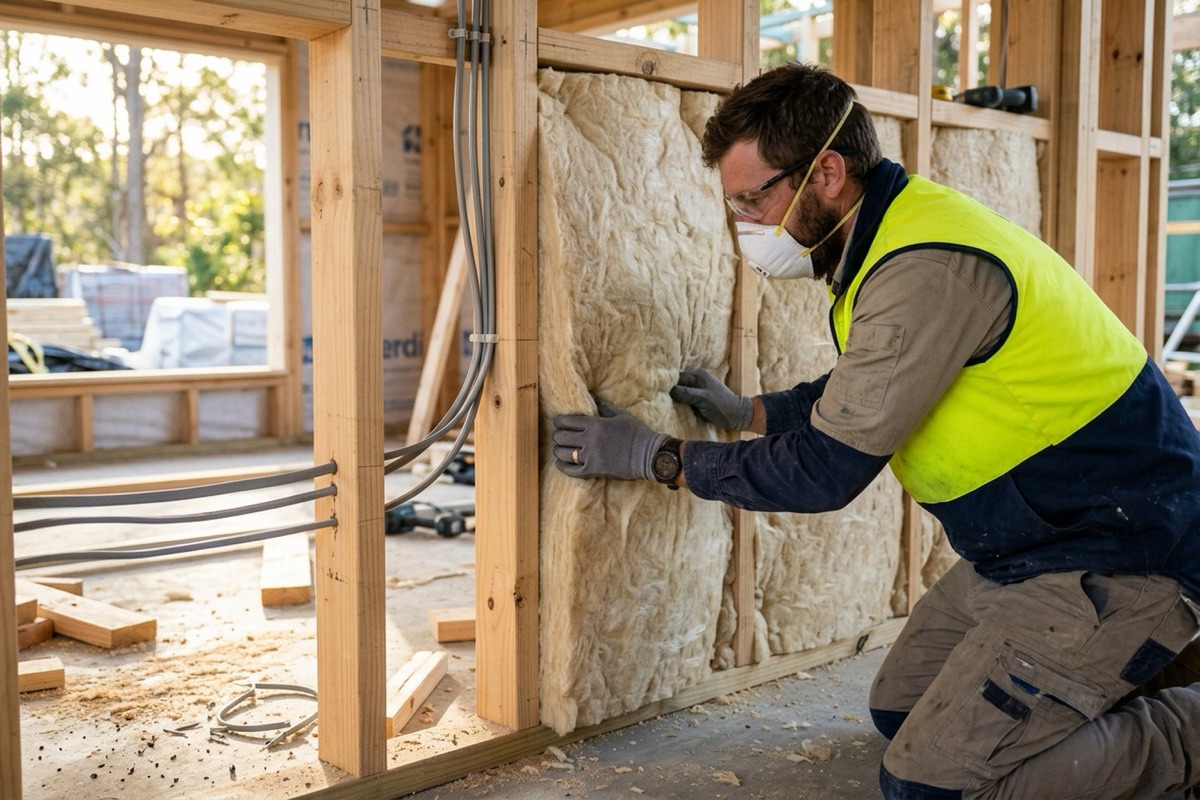
- Building fabric. Thermal insulation must be installed so it works, where the development consent requires it, and thermal breaks are needed between metal framing and external cladding to the degree necessary.
- Building sealing against air leakage.
- Services, so that domestic services use energy efficiently.
This matters on site. A BASIX certificate can commit a home to R-values and glazing, but whether the insulation is installed without gaps, and whether a steel-framed wall has its thermal breaks, is a construction and certification question. Our guide to thermal bridging covers the thermal break detail.
Checklist: managing BASIX on a NSW project
- Confirm BASIX applies. New dwelling, alterations of $50,000 or more, or a pool or spa of 40,000 litres or more.
- Pick the thermal method early. DIY for simple houses, Simulation with an accredited assessor for complex designs and all multi-dwelling projects, or the Passive House method.
- Brief your assessor on the BASIX protocol, not just the NatHERS Technical Note.
- Avoid dark roofs in the DIY method in the restricted areas, or model them through Simulation.
- Finalise materials and areas before completing the materials index.
- Lodge within 3 months of generating the certificate, and revise it whenever the design changes.
- Show every BASIX commitment on the construction certificate plans.
- Build what was committed, including insulation, glazing, hot water, lighting, ventilation and solar, so the BASIX completion receipt can be issued.
For the wider picture of where these standards are heading, see what a net zero home is.
Get BASIX and NatHERS right first time
CPD-accredited online courses on residential energy efficiency, insulation, glazing and Passive House, each with an assessment and a certificate.
- Residential Energy Efficiency: 7-Star, Whole-of-Home and BASIX View course →
- Thermal Insulation for Buildings View course →
- High-Performance Windows and Glazing View course →
- An Introduction to Passive House Principles View course →
- Building Electrification: Moving Homes from Gas to Electric View course →
- Solar PV, Home Batteries and Virtual Power Plants View course →
Frequently asked questions
Does the NCC 7-star rule apply in NSW?
Not directly. NSW replaces the NCC's energy efficiency Performance Requirements for houses and apartments with BASIX. Since 1 October 2023, BASIX thermal performance standards have been set to align with the 7-star NatHERS level in most of the state.
Is a NatHERS certificate the same as a BASIX certificate?
No. A NatHERS certificate reports a home's modelled thermal performance. A BASIX certificate shows that a development meets the NSW water, thermal performance and energy standards. If you use the Simulation method, the NatHERS certificate is lodged together with the BASIX certificate.
Do I need a NatHERS assessor for BASIX?
Only if you use the Simulation method, which is required for multi-dwelling developments and is often used for complex houses. Simple single dwellings can use the DIY method, which does not need an assessor.
Do BASIX standards apply to apartments?
Yes. Since October 2023, apartment buildings must average 7 NatHERS stars across the building with a minimum of 6 stars per apartment, although the increase did not apply to apartment buildings of up to 5 storeys. High-rise buildings have separate energy standards.
Is there a limit on embodied emissions in BASIX?
No. The materials index requires new homes to calculate and report embodied emissions, but there is currently no limit. Alterations and additions do not need to calculate embodied emissions.
How long is a BASIX certificate valid?
A BASIX certificate is valid for 3 months before it is lodged with the council or certifier. Once lodged, it remains valid for the life of the application, and it must be revised if the design changes.
Sources and further reading
- NSW Planning Portal — Increase to BASIX standards (1 October 2023)
- NSW Planning Portal — About BASIX
- NSW Planning Portal — BASIX thermal performance section
- NSW Planning Portal — BASIX simulation method
- NSW Planning Portal — BASIX and planning approvals
- NSW Planning Portal — BASIX certificate validity and changes to the project
- NSW Planning Portal — BASIX tool upgrades now live (May 2026)
- ABCB — NCC 2022 Volume Two, NSW Part H6 Energy efficiency