A net zero home is generally one that produces, over a year, at least as much renewable energy as it uses, but there is no single legal definition in Australia. Some people mean net zero energy, others net zero operational emissions, and others net zero carbon across the home’s whole life, including the embodied carbon in its materials. Always ask which one a client or scheme means.
The NCC does not require net zero. NCC 2022 requires most new homes to reach 7 stars and a whole-of-home score of at least 60 out of 100, where 100 represents a net zero energy home. Getting from 60 to 100 or more is voluntary, and is usually done with a good fabric, efficient all-electric services and enough rooftop solar.
What does "net zero home" actually mean?
The phrase is used loosely, so it pays to pin down which version is on the table. Three are common:
- Net zero energy. Over a typical year, the energy the home generates on site, usually from rooftop solar, at least matches the energy it uses. The home still draws from the grid at night and in winter; it exports a surplus at other times.
- Net zero operational emissions. The greenhouse gas emissions from running the home are zero or offset. An all-electric home on 100% renewable electricity can reach this without exporting more than it uses.
- Net zero carbon, whole of life. This adds embodied carbon: the emissions from making, transporting and installing the materials, and eventually demolishing the building. It is far harder to reach and usually depends on low-carbon materials and offsets.
None of these is defined in the NCC, and no national law sets a net zero standard for homes. A marketing claim of “net zero” therefore needs a stated basis: which definition, which scheme or calculation, and what evidence. That matters for consumer law as well as reputation, so put the definition in writing.
How does net zero relate to the 7-star and whole-of-home rules?
The NCC 2022 residential energy rules are the closest thing to a national yardstick. A new house in most states must achieve a 7-star NatHERS thermal rating and a whole-of-home rating of at least 60 out of 100 under Specification 42. Our guide to 7-star NatHERS and whole-of-home explains both in detail.
The whole-of-home scale is useful here because it is built around net zero. According to the Queensland Government’s guidance on the scale, a score of 100 is a net zero energy home, and a score over 100 is possible where the home produces more energy than it uses, for example with a large solar PV system. The rating covers lighting, heating and cooling, hot water, pool and spa pumps and cooking appliances, and on-site generation and storage such as solar and batteries can be included where they are in the design documentation.
Note one difference: whole-of-home measures energy value, which weights energy by its cost to society, including emissions and network impacts, rather than raw kilowatt-hours. A score of 100 is a good indicator of a net zero energy home, but a scheme or client may use a different calculation.
What are the building blocks of a net zero home?
Net zero homes are built from the same components in roughly the same order. The cheapest kilowatt-hour is the one the home never needs, so fabric comes first:
- Passive design and orientation. Living areas facing north, eaves sized to shade summer sun but admit winter sun, and glazing placed and sized for the climate.
- An efficient building fabric. Continuous insulation, high-performance windows and frames, and attention to cold spots. Gaps and steel framing can undo good insulation, as our guide to thermal bridging explains.
- Airtightness with controlled ventilation. A well-sealed envelope stops heat leaking out, but it must be paired with planned ventilation so moisture and stale air are removed. Very airtight homes often use mechanical ventilation with heat recovery.
- Efficient all-electric services. Reverse-cycle air conditioning for heating and cooling, heat pump hot water, induction cooking and LED lighting. Removing gas avoids on-site combustion and lets the home run entirely on electricity that solar can offset.
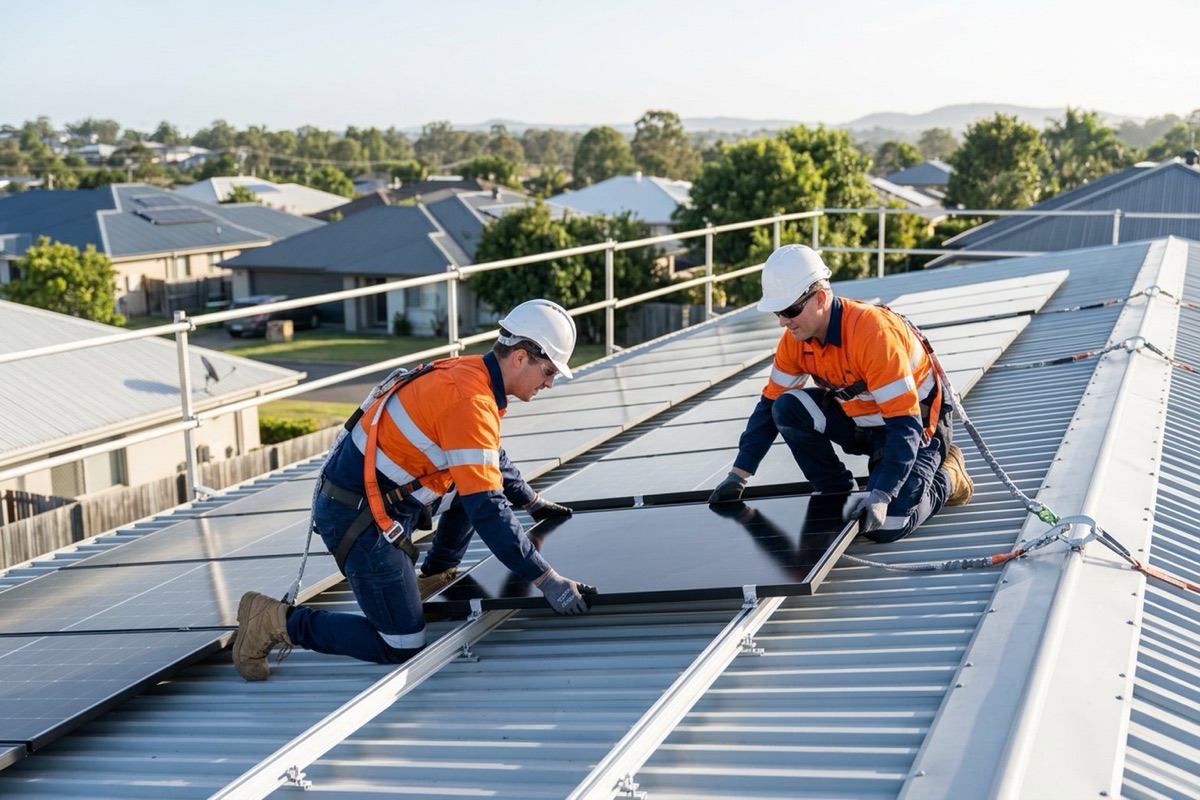
- Rooftop solar PV. Sized to cover the home’s annual consumption, or more. Roof orientation, pitch and overshadowing matter, so plan the array at concept design.
- Batteries and smart controls (optional). A battery shifts daytime solar into the evening. It does not by itself make a home net zero, but it increases self-consumption and resilience.
Are any states pushing homes towards all-electric?
Yes, and builders in two jurisdictions already work under it.
- Victoria: from 1 January 2024, planning permits for new homes, apartment developments and residential subdivisions can no longer be granted to connect to the reticulated gas network. The Victorian Government states this applies to new homes requiring a planning permit and does not cover bottled LPG or renovations of existing homes.
- Australian Capital Territory: from 8 December 2023, new gas network connections are prevented in residential, commercial and community facility zones, including residential buildings (Class 1 to 4) in other zones, after a short transition period.
Other states have not banned new gas connections for homes, but all-electric design is the standard route to a high whole-of-home score anywhere.
Does the NCC require embodied carbon to be counted?
No. When finalising NCC 2025, Building Ministers agreed that voluntary embodied carbon provisions would be published as an ABCB guidance document, rather than as a mandatory requirement. They also agreed there would be no further residential changes to the NCC until mid-2029, except essential quality and safety measures, and that residential energy efficiency changes would not be introduced at this time.
For builders, that means two things. Operational energy is regulated through 7 stars and whole-of-home, but embodied carbon is not. If a client asks for a whole-of-life net zero carbon home, that is a voluntary target, and you will need a recognised calculation method and product data, such as environmental product declarations, to support it.
Which voluntary schemes certify high-performance homes?
Several schemes are used in Australia. They measure different things, so check what each actually certifies before quoting it.
- Green Star Homes (Green Building Council of Australia). A certification for new homes built around being energy positive, healthy and resilient. The GBCA describes Green Star homes as fully electric, draught sealed, efficient and powered by renewables, and lists features including a minimum 7.5-star NatHERS rating, an airtightness target, heat pump hot water, no gas appliances and heat recovery ventilation.
- Passive House (Passive House Institute). A performance standard focused on comfort and very low energy demand. The Passive House Institute states that annual space heating demand must not exceed 15 kWh per square metre per year, and the standard also sets a strict airtightness limit checked by an on-site pressure test. Its Classic class has no renewable generation; Plus means generation equals consumption on an annual average, and Premium means significantly more is generated than consumed.
- NABERS (for apartment buildings). NABERS does not rate individual houses. Its apartment building rating measures the energy and water performance of an existing building’s shared services, such as car parks, lobbies and gyms, on a scale up to 6 stars, using 12 months of actual consumption data.
None of these is a legal requirement for homes, and none is the same as a whole-of-home score of 100. A Passive House or Green Star home without enough solar is not necessarily net zero, and a net zero energy home with poor fabric may be uncomfortable and expensive to run if the solar underperforms.
What should builders watch for on site?
A net zero design only performs if it is built as modelled. The weak points are usually the same:
- Insulation gaps and compression in walls and ceilings, especially around downlights, services and framing junctions.
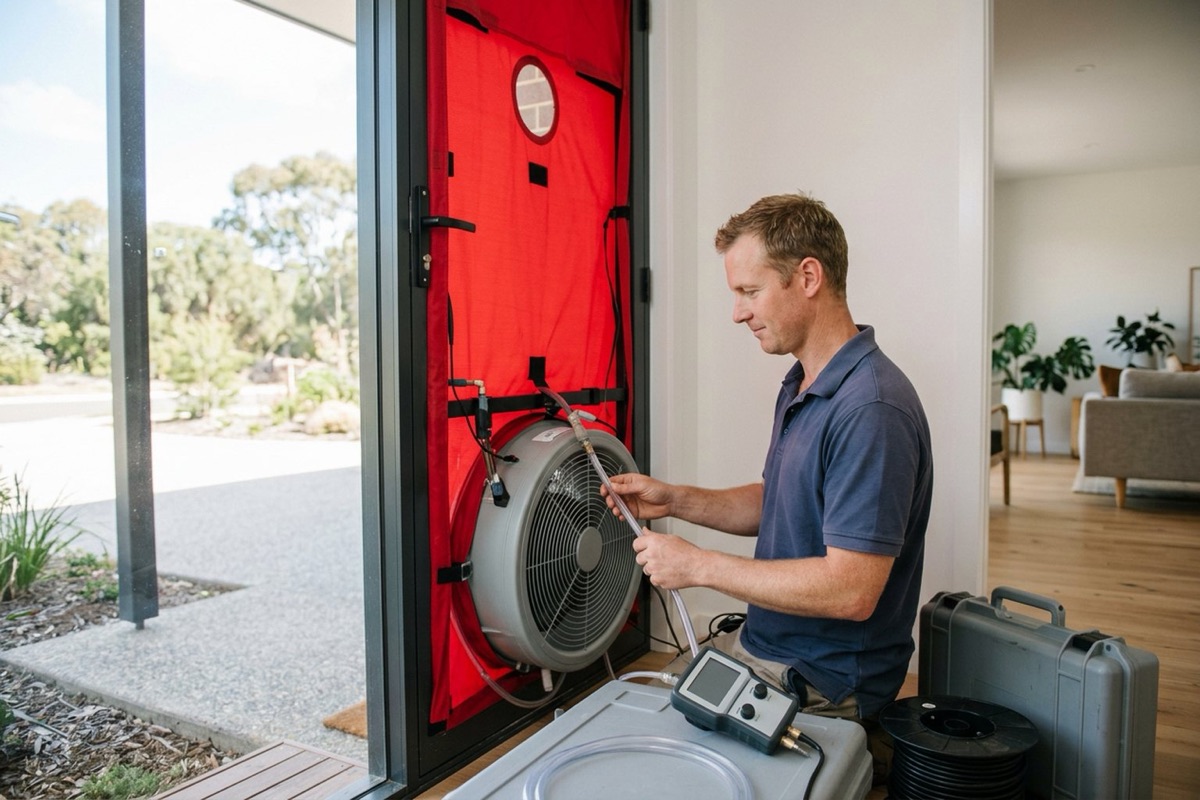
- Air leaks at window and door frames, service penetrations, top plates and ceiling access hatches. A blower door test before linings go on catches them while they are cheap to fix.
- Ventilation and condensation. Tighter homes need exhaust fans ducted to outdoor air and, in colder climates, walls and roofs that let moisture dry out. Our guide to condensation in new homes covers the NCC rules.
- Substituted equipment. Swapping the specified heat pump, air conditioner or solar inverter for a cheaper model can push the home below the modelled score.
- Roof space for solar. Flues, vents and roof plant placed carelessly can take the area the array needed.
Net zero home checklist
- Agree the definition in writing: net zero energy, net zero operational emissions or whole-of-life net zero carbon.
- Confirm the minimum that applies: 7 stars and whole-of-home 60 in most states, BASIX in NSW.
- Set a target score, such as a whole-of-home rating of 100 or more, and model it at concept stage.
- Design the fabric first: orientation, shading, insulation, glazing and thermal bridges.
- Specify all-electric services and lock them into the plans and the NatHERS Certificate.
- Size and locate the solar array early, keeping roof areas clear of other plant.
- Plan ventilation to match the airtightness, and check condensation risk.
- Test airtightness before linings go on where a target applies.
- Hand over the evidence: certificates, test results, equipment specifications and operating guidance for the owner.
Build net zero homes with confidence
CPD-accredited online courses on net zero design, electrification, solar and batteries, airtightness and Passive House principles, each with an assessment and a certificate.
- An Overview of Net Zero Homes View course →
- Designing Net Zero Homes for High Performance View course →
- Building Electrification: Moving Homes from Gas to Electric View course →
- Solar PV, Home Batteries and Virtual Power Plants View course →
- Airtightness in Buildings View course →
- An Introduction to Passive House Principles View course →
- Residential Energy Efficiency: 7-Star, Whole-of-Home and BASIX View course →
Frequently asked questions
Is there a legal definition of a net zero home in Australia?
No. The NCC does not define or require a net zero home. The term can mean net zero energy, net zero operational emissions or whole-of-life net zero carbon, so any claim should state which definition and scheme it relies on.
What whole-of-home score is a net zero home?
On the NatHERS whole-of-home scale, a score of 100 represents a net zero energy home, and a score over 100 is possible when the home produces more energy than it uses. The NCC 2022 minimum for a house is 60.
Does a net zero home need a battery?
No. A battery is not essential to reach net zero energy over a year, because solar exports during the day can balance grid use at night. A battery increases the share of solar used on site and can add resilience during outages.
Can a net zero home have gas appliances?
It is difficult. Gas use has to be offset by additional solar, and on-site combustion means operational emissions. In Victoria, new homes that require a planning permit can no longer connect to mains gas, the ACT prevents new gas network connections in residential zones, and most net zero designs are all-electric.
Is embodied carbon regulated for new homes?
No. Building Ministers agreed that embodied carbon provisions would be published as voluntary ABCB guidance rather than mandatory NCC requirements. Whole-of-life net zero carbon remains a voluntary goal.
Is a Passive House the same as a net zero home?
Not necessarily. Passive House certifies very low energy demand, comfort and airtightness, which makes net zero much easier to reach. A home only becomes net zero energy when on-site renewable generation also covers its remaining annual use.
Sources and further reading
- Queensland Government — Whole of Home assessment and score
- ABCB — NCC 2022 Volume Two, Specification 42 House energy rating software
- Building Ministers' Meeting communiqué, October 2025
- Green Building Council of Australia — Build a Green Star home
- Passive House Institute — Passive House requirements (Classic, Plus, Premium)
- Passive House Institute — What is a Passive House?
- NABERS — Apartment buildings
- Victorian Government — New Victorian homes to go all electric from 2024
- ACT Government — Preventing new gas network connections