Under NCC 2022, most new homes must achieve a 7-star NatHERS thermal rating and stay within a whole-of-home annual energy budget. The 7 stars cover the building shell — how much heating and cooling it needs. The whole-of-home budget covers the fixed appliances: heating and cooling equipment, hot water, lighting and pool or spa pumps, offset by any rooftop solar. Houses need a whole-of-home rating of at least 60 out of 100, and apartments at least 50.
The rules did not start everywhere on the same day. Most states adopted them between October 2023 and May 2025, NSW applies its own BASIX scheme instead, and Tasmania and the Northern Territory have not adopted the 7-star standard. NCC 2025 made no further changes to residential energy efficiency.
What changed for new homes under NCC 2022?
NCC 2022 made two changes to the energy efficiency rules for new homes, and they work together.
- The thermal standard rose from 6 stars to 7 stars on the Nationwide House Energy Rating Scheme (NatHERS) scale. This is about the building fabric: insulation, glazing, orientation, shading and air sealing.
- A new whole-of-home requirement was added. For the first time, the energy used by the home’s major fixed appliances is regulated, not just the shell that houses them.
In the Code itself these appear in NCC Volume Two as two Performance Requirements: H6P1 Thermal performance, which caps the heating and cooling loads, and H6P2 Energy usage, which limits the energy value of the home’s domestic services. Most projects meet them through the Deemed-to-Satisfy (DTS) Provisions rather than tackling the Performance Requirements head-on.
NCC 2022 was adopted from 1 May 2023, but the national Code itself allowed the older NCC 2019 energy provisions to be used until 30 September 2023. On top of that, most states set their own, later start dates for the new energy rules.
What does a 7-star NatHERS rating actually measure?
A NatHERS star rating is a score out of 10 that estimates how much heating and cooling a home’s design will need to stay comfortable in its climate zone. The more stars, the less energy the building shell needs.
The rating is produced by NatHERS accredited software, which models the home’s floor plan, construction, windows, orientation and local climate data. To pass under NCC 2022, a house must achieve at least 7 stars and stay within the separate heating and cooling load limits set in the ABCB Standard for NatHERS Heating and Cooling Load Limits. A design can reach 7 stars overall and still fail if, for example, its cooling load is too high.
There are concessions for the warmest climates. In climate zones 1 and 2, Specification 42 accepts:
- 6.5 stars where the house has a qualifying outdoor living area fully covered by an impervious roof with a Total R-Value of at least R1.5.
- 6 stars where that covered outdoor living area also has at least one permanently installed ceiling fan.
Queensland applies the standard through Queensland Development Code 4.1 and states its own concessions: 7 stars for most houses and townhouses, 5 stars for eligible small homes of 50 m² or less, 6 stars for eligible houses with raised floor construction, and an optional credit of up to 1 star for a compliant outdoor living area.
What is the whole-of-home energy budget?
The whole-of-home requirement is an annual energy use budget for the home’s fixed appliances. The ABCB describes it as covering the efficiency of heating and cooling equipment, water heating, lighting, and pool and spa pumps, with on-site renewable energy such as rooftop solar counted as an offset.
It is measured by “energy value”, which the ABCB defines as the societal cost of energy: the energy cost to the household, the cost of greenhouse gas emissions, and the time-of-use impact on energy networks.
Two features make it flexible:
- You can trade between appliances. A more efficient heat pump hot water system can make up for a less efficient heating choice.
- Solar counts. Rooftop PV can offset the energy used by the appliances, which is often the simplest way to close a gap.
NatHERS reports the result as a Whole of Home rating out of 100, alongside the star rating. A score of 100 represents a net zero energy home. The minimums are:
- Houses (Class 1): at least 60 (Specification 42, S42C3).
- Apartments (Class 2 sole-occupancy units): at least 50 (Volume One, J3D15).
Which buildings do the 7-star and whole-of-home rules apply to?
The rules apply to residential buildings, split across the two building volumes of the NCC.
- Class 1 buildings (houses, townhouses and terraces) under Volume Two, Part H6 and the ABCB Housing Provisions Section 13. The Part 13.2 fabric requirements also reach a Class 10a building with a conditioned space, such as a heated or cooled garage or studio.
- Sole-occupancy units of Class 2 buildings (apartments), plus a Class 4 part of a building, under Volume One, Part J3.
Apartments are treated differently. Instead of every unit meeting 7 stars, the units must collectively average at least 7 stars, and no individual unit can be below 6 stars, each including the separate heating and cooling load limits. Each unit must also achieve a whole-of-home rating of at least 50.
When did the rules start in each state and territory?
This is where most confusion sits, because the start dates were genuinely different. Based on the ABCB’s adoption table and state government information:
- New South Wales: enhanced BASIX standards from 1 October 2023, in place of the NCC energy provisions.
- Australian Capital Territory: from 15 January 2024.
- Queensland: from 1 May 2024, through Queensland Development Code 4.1.
- Victoria: from 1 May 2024.
- South Australia: from 1 October 2024.
- Western Australia: from 1 May 2025.
- Northern Territory: NCC 2022 housing energy efficiency is varied and limited to 5-star requirements, from 1 October 2023. The NT has not adopted the whole-of-home minimum.
- Tasmania: the NCC 2022 housing energy efficiency requirements have not been adopted, and new homes continue to meet a 6-star standard.
The date that matters for a particular project is usually tied to when the building approval or permit was applied for, not when work starts on site. Transition rules differed between jurisdictions, so confirm with your building surveyor or certifier which standard applies to a project lodged near a changeover date.
How can a new home comply with the energy rules?
There are three broad routes, and the choice usually comes down to the design and how much flexibility you need.
1. The NatHERS energy rating pathway (DTS). This is the most common route. An accredited assessor models the design to show it achieves the required star rating and load limits (S42C2) and the whole-of-home rating (S42C3). The design must also meet a short list of additional DTS clauses that the rating does not cover, including insulation installation, thermal breaks in metal-framed roofs and walls, compensation for lost ceiling insulation, slab-edge insulation, building sealing and the services requirements of Part 13.7.
2. The elemental DTS pathway. Instead of a rating, the design follows the prescriptive “recipe” in Section 13 of the ABCB Housing Provisions: Part 13.2 building fabric, Part 13.3 external glazing and shading, Part 13.4 building sealing and Part 13.5 ceiling fans. For the energy usage side, Parts 13.6 and 13.7 calculate the home’s net equivalent energy usage against an allowance, using factors from the ABCB Standard for Whole-of-Home Efficiency Factors. The ABCB publishes a calculator to help. This elemental energy usage option is limited to homes with a total floor area of not more than 500 m².
3. Verification Methods and Performance Solutions. Volume Two includes H6V2, which compares the proposed house against a reference building using a calculation method other than house energy rating software, and H6V3, which verifies building sealing by an air permeability test of not more than 10 m³/hr.m² at 50 Pa. A Performance Solution can also be developed against H6P1 and H6P2 directly, with the documentation that requires.
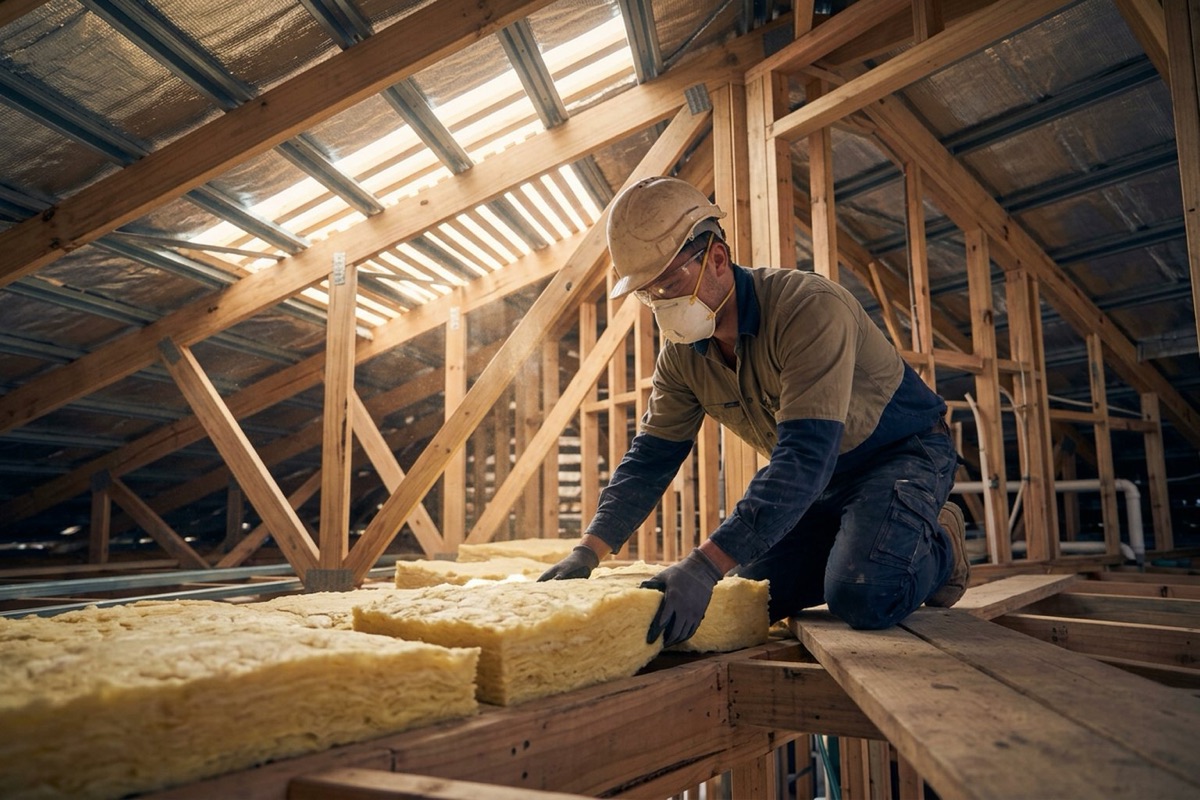
Whichever route you take, the result is only as good as what is built. A 7-star design with gaps in its insulation, poorly sealed openings or uninsulated steel framing will not perform as modelled. Our guide to thermal bridging covers one of the most common gaps.
What does a NatHERS assessor do?
A NatHERS assessor models the design in NatHERS accredited software and produces a NatHERS Certificate showing both the star rating out of 10 and the Whole of Home rating out of 100. That certificate is the evidence most building surveyors and certifiers rely on for the energy rating pathway.
NatHERS advises using an accredited assessor. Accredited assessors are trained, follow quality assurance requirements and a code of conduct, and are accredited through one of the Assessor Accrediting Organisations recognised by NatHERS.
To get the most from an assessment:
- Bring the assessor in at concept stage, not after the plans are finished. Orientation, window size and shading are cheap to change on paper.
- Confirm the appliances early. The whole-of-home rating depends on the actual heating and cooling system, hot water system and any solar, so these need to be decided before the final assessment.
- Make sure the plans match the certificate. The insulation, glazing specification, appliances and solar shown on the NatHERS Certificate are commitments, and they need to appear on the approved drawings and be built.

Did NCC 2025 change the residential energy rules?
No. In October 2025 Building Ministers agreed there would be no further residential changes to the NCC until mid-2029, other than essential safety and quality measures. The residential energy efficiency and EV-charging changes that had been planned for NCC 2025 were deferred.
NCC 2025 carries the same residential energy settings forward. Its Specification 42 still requires 7 stars with the same climate zone 1 and 2 concessions, and a whole-of-home rating of not less than 60. If you design or build houses, the energy targets are stable, but other residential changes did arrive, notably stronger condensation management. Our guides to what changed in NCC 2025 and condensation in new homes cover them.
Checklist: getting a new home through the energy requirements
- Confirm the jurisdiction’s standard. 7 stars and whole-of-home in most states, BASIX in NSW, 5 stars in the NT and 6 stars in Tasmania.
- Choose the compliance pathway early: NatHERS rating, elemental DTS, or a Verification Method or Performance Solution.
- Engage an accredited NatHERS assessor at concept design and test orientation, glazing and shading options before plans are fixed.
- Lock in the appliances and solar before the final assessment, so the whole-of-home rating reflects what will be installed.
- Check the additional DTS items that a rating does not cover: insulation installation, thermal breaks, ceiling insulation compensation, slab-edge insulation and building sealing.
- Make the plans match the certificate, including insulation R-Values, glazing performance and appliance types.
- Inspect before linings go on. Gaps, compressed batts and missing thermal breaks are hard to fix later.
- Keep the NatHERS Certificate and evidence with the project records for the certifier and the owner.
Design and certify 7-star homes with confidence
CPD-accredited online courses on residential energy efficiency, insulation, glazing and airtightness, each with an assessment and a certificate.
- Residential Energy Efficiency: 7-Star, Whole-of-Home and BASIX View course →
- Thermal Insulation for Buildings View course →
- High-Performance Windows and Glazing View course →
- Airtightness in Buildings View course →
- Thermal Bridging in Buildings View course →
- Building Electrification: Moving Homes from Gas to Electric View course →
- Solar PV, Home Batteries and Virtual Power Plants View course →
Frequently asked questions
What is the minimum NatHERS star rating for a new house?
In most states and territories, a new house must achieve at least 7 stars under NCC 2022, including separate heating and cooling load limits. Concessions down to 6.5 or 6 stars apply in climate zones 1 and 2 for homes with a qualifying covered outdoor living area. Tasmania and the Northern Territory have not adopted the 7-star standard.
What whole-of-home rating does a new home need?
A house needs a whole-of-home rating of at least 60 out of 100, and each apartment in a Class 2 building needs at least 50. The rating covers heating and cooling equipment, hot water, lighting and pool or spa pumps, offset by any on-site solar.
Do apartments have to achieve 7 stars?
The apartments in a Class 2 building must average at least 7 stars across the building, and no individual apartment can be rated below 6 stars. Each apartment must also meet the separate heating and cooling load limits.
Can I comply without a NatHERS rating?
Yes. The elemental Deemed-to-Satisfy Provisions in Section 13 of the ABCB Housing Provisions set prescriptive requirements for the fabric, glazing, sealing and ceiling fans, with a calculation for whole-of-home energy usage for homes up to 500 square metres. Verification Methods and Performance Solutions are also available.
Does solar count towards the whole-of-home requirement?
Yes. On-site renewable energy such as rooftop solar offsets the energy used by the home's fixed appliances, which is why adding or upsizing a solar system is a common way to reach the required whole-of-home score.
Did NCC 2025 increase the energy requirements for new homes?
No. Building Ministers paused residential changes to the NCC until mid-2029 except for essential safety and quality measures, and the planned residential energy efficiency changes were deferred. NCC 2025 keeps the 7-star and whole-of-home 60 settings.
Sources and further reading
- ABCB — NCC 2022 Volume Two, Part H6 Energy efficiency
- ABCB — NCC 2022 Volume Two, Specification 42 House energy rating software
- ABCB — NCC 2022 Volume One, Part J3 Elemental provisions for a sole-occupancy unit of a Class 2 building
- ABCB — NCC 2022 state and territory adoption dates
- ABCB — New whole-of-home energy efficiency: what's it all about?
- ABCB — NCC 2025 Volume Two, Specification 42 House energy rating software
- NatHERS — Energy assessments for new homes
- Queensland Government — Energy equivalence building standards (star and Whole of Home ratings)
- Building Ministers' Meeting communiqué, October 2025