Manufacturing, supplying, processing or installing engineered stone benchtops, panels and slabs has been banned across Australia since 1 July 2024 (the last transitional exceptions ended on 31 December 2024), and since 1 September 2024 the model WHS Regulations have required every business to control the processing of any material containing 1% or more crystalline silica — concrete, brick, tiles, stone and more. “Controlled” means using at least one engineering control such as wet cutting, on-tool extraction or local exhaust ventilation, plus respirators for anyone still at risk.
Businesses must also assess whether each silica process is high risk. If it is, they need a written silica risk control plan (or a SWMS that covers the same ground), accredited or regulator-approved training, air monitoring and health monitoring. Victoria applies its own equivalent rules under its Occupational Health and Safety Regulations 2017.
What is respirable crystalline silica and why does it matter on site?
Crystalline silica is a mineral found in most of the materials a building site cuts, drills and grinds. The model WHS Regulations define it to include quartz, cristobalite, tridymite and tripoli, and they treat any material containing at least 1% crystalline silica (by weight) as a crystalline silica substance, or CSS. That includes concrete, bricks, pavers, mortar, tiles, natural stone and fibre cement.
The hazard is the fine, often invisible dust — respirable crystalline silica (RCS) — that power tools release deep into the lungs. It causes:
- Silicosis — scarring of the lung that is incurable and, as SafeWork NSW notes, keeps developing after exposure stops. It can be chronic (after 10 or more years), accelerated (1 to 10 years) or acute (less than a year of very high exposure).
- Lung cancer, associated with significant long-term exposure.
- Kidney disease.
Engineered stone workers have been badly over-represented in recent silicosis cases, which drove the ban — but the rest of construction’s silica exposure did not go away with it.
Is engineered stone banned in Australia?
Yes. Regulation 529D of the model WHS Regulations prohibits a business from carrying out, or directing or allowing a worker to carry out, work that involves manufacturing, supplying, processing or installing engineered stone benchtops, panels or slabs. It took effect on 1 July 2024, and Victoria introduced its own ban from the same date.
“Engineered stone” means an artificial CSS made by combining natural stone materials with other constituents such as water, resins or pigments, which then hardens. The definition expressly excludes:
- concrete and cement products;
- bricks, pavers and similar blocks;
- ceramic wall and floor tiles;
- grout, mortar and render;
- plasterboard;
- porcelain products;
- sintered stone; and
- roof tiles.
Excluded does not mean safe: those materials can still contain plenty of crystalline silica, so cutting them is covered by the general silica rules below.
The Regulations allowed a short transition for installation under contracts entered into on or before 31 December 2023, but only for work done by 31 December 2024 — that window has closed. Since 1 January 2025, engineered stone benchtops, panels and slabs have also been a prohibited import under the Customs (Prohibited Imports) Regulations 1956, enforced by the Australian Border Force.
Already-installed (“legacy”) engineered stone. Regulation 529F still allows processing installed engineered stone to remove, repair or make minor modifications to it, or to dispose of it — but only if the processing is controlled. Under regulation 529G, the business doing that work must give the regulator written notice, in the approved form, before the work starts. If it only discovers mid-job that the material is engineered stone, it must notify as soon as practicable afterwards. Victoria does not require notification for legacy work, but its existing controls still apply.
What do the crystalline silica rules require of every business?
Chapter 8A of the model WHS Regulations commenced on 1 September 2024 in the Commonwealth, New South Wales, Queensland, South Australia, Tasmania and Western Australia; the ACT and the Northern Territory have their own silica provisions, and Victoria has its own regime. The core duty, in regulation 529C, is simple: a business must not process a CSS, or let a worker do it, unless the processing is controlled.
“Processing” means using power tools or mechanical plant to crush, cut, grind, trim, sand, abrasive-polish or drill a CSS, as well as tunnelling, quarrying, roadheader excavation and mechanical screening. Under regulation 529B, processing is controlled only if:
- control measures are in place to eliminate or minimise the risk so far as is reasonably practicable; and
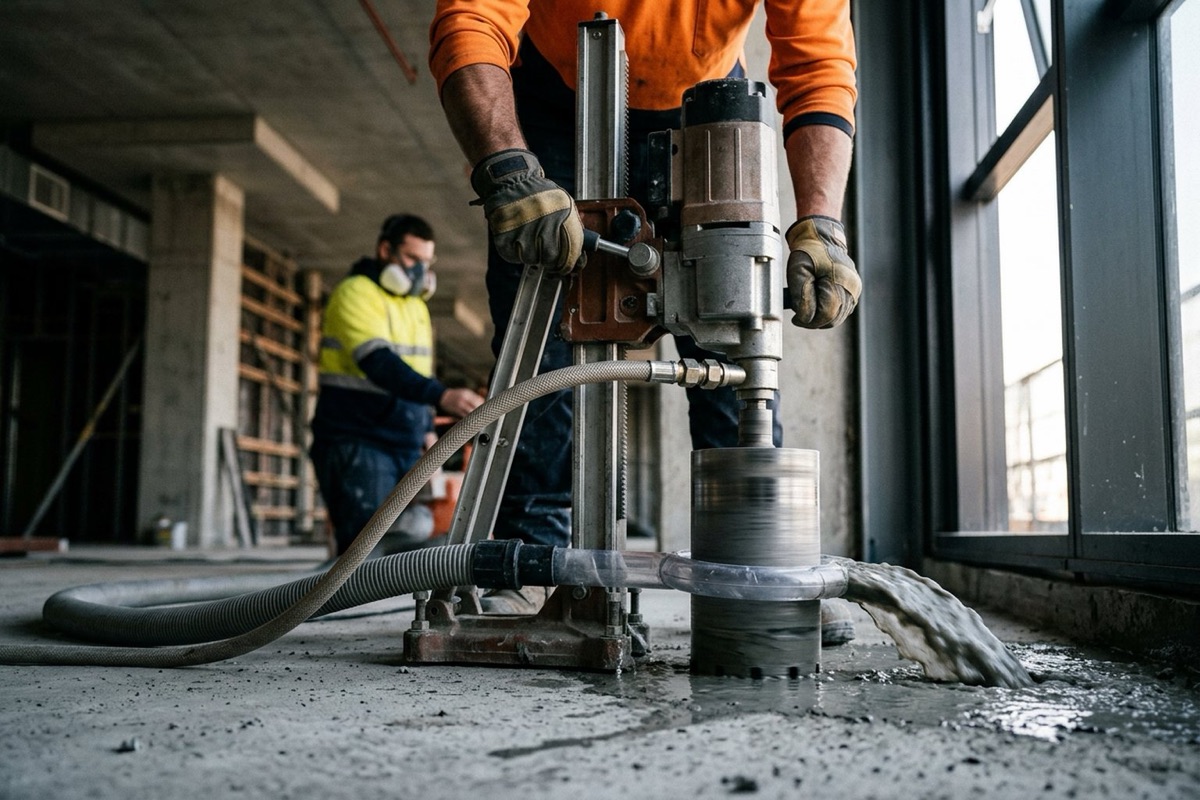
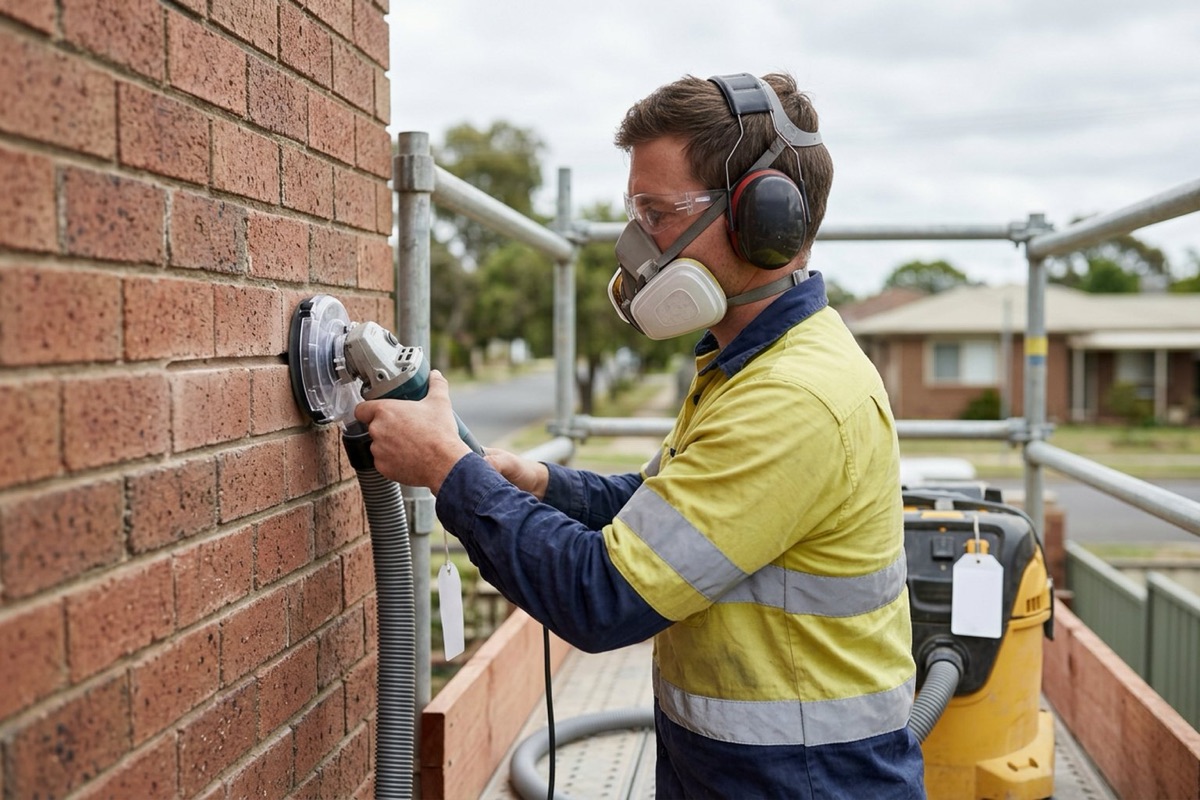
- at least one of these is used: isolating people from the dust, a fully enclosed operator cabin with high-efficiency air filtration, effective wet dust suppression, effective on-tool extraction, or effective local exhaust ventilation; and
- anyone still at risk of exposure is given, and wears, respiratory protective equipment that complies with AS/NZS 1716 and is selected and used in line with AS/NZS 1715.
Respirators alone are acceptable only where none of the engineering controls is reasonably practicable — dry-cutting a paver with a bare grinder and a disposable mask does not comply. The general duties in our guide to hazardous chemicals on site apply on top.
When is silica work high risk, and what is a silica risk control plan?
Under regulation 529CA, a business must assess each CSS process it carries out to decide whether it is high risk, and record that assessment in writing. It must consider the specific process, the form and proportion of crystalline silica in the material, how often and how long people will be exposed, previous air and health monitoring, any past incidents or illness — and whether airborne RCS is reasonably likely to exceed half the exposure standard.
The assessment must be made without relying on the engineering controls in regulation 529B, PPE or administrative controls — and if the business can’t tell, the process is taken to be high risk.
If a process is high risk, the business must:
- Prepare a silica risk control plan before work starts (regulation 529CB). It must identify every high-risk process, include the risk assessment, set out the controls and how they will be implemented, monitored and reviewed, and be easy for workers to understand.
- Give the plan to workers before they start, make it available to them, and stop the work if it isn’t being followed (regulation 529CC).
- Train workers with accredited or regulator-approved crystalline silica training, and keep training records for 5 years after the worker leaves (regulation 529CD).
- Carry out air monitoring, and report any result above the exposure standard to the regulator within 14 days of receiving it (regulation 529CE).
- Provide health monitoring for every worker carrying out the high-risk processing. For crystalline silica, Schedule 14 lists a medical and work history, a respiratory questionnaire, lung function testing and a chest X-ray.
On a building site there is a useful shortcut. If the high-risk silica process is also high risk construction work, a separate plan is not needed when a safe work method statement prepared before the work covers everything the plan would.
What is the workplace exposure standard for silica?
The workplace exposure standard for respirable crystalline silica is 0.05 mg/m³ as an 8-hour time-weighted average. Regulation 49 requires that no one at a workplace is exposed above it, and regulation 50 requires air monitoring where a business isn’t certain on reasonable grounds that exposure is below the standard — with the results kept for 30 years.
Two things are changing around that number:
- The name. The Workplace Exposure Standards are being renamed Workplace Exposure Limits (WEL), with the new list applying from 1 December 2026 as each jurisdiction implements it.
- Not the silica value — yet. Ministers did not agree to proposed lower limits for nine substances, including RCS, and asked for further analysis, so RCS is expected to stay at 0.05 mg/m³.
WorkSafe Victoria’s guidance recommends keeping exposure below 0.02 mg/m³. At these levels the dust is invisible; only air monitoring shows whether controls work.
Which dust controls actually work on a building site?
Follow the hierarchy of control, and expect to use several measures at once:
- Eliminate or substitute. Order materials cut to size, choose lower-silica products where fit for purpose, and design out chasing and coring.
- Wet cutting. Use tools with an integrated water feed at the manufacturer’s flow rate, and don’t let slurry dry into fresh dust.
- On-tool extraction. Fit a shroud matched to the tool, connected to an industrial vacuum suitable for hazardous dust; check airflow and filters before use.
- Local exhaust ventilation and isolation for fixed workstations or enclosed areas.
- Clean up without raising dust. Use wet methods or a suitable industrial vacuum — never dry sweeping or compressed air.
- Separate other people with exclusion zones and scheduling.
- Respiratory protection. At minimum a properly selected P2 respirator for most short tasks; higher-protection respirators such as a P3 full-face or powered air-purifying respirator where exposure is higher. Tight-fitting respirators must fit the wearer — fit testing and a clean-shaven seal are part of AS/NZS 1715.
Queensland’s approved silica dust code for construction, in force since 1 May 2023, is a practical reference anywhere.
How do the rules differ in Victoria and the ACT?
Victoria has not adopted the model WHS laws; silica is covered by Part 4.5 of the Occupational Health and Safety Regulations 2017 and the OHS Act 2004. Its rules run parallel to the national ones:
- High risk crystalline silica work includes work reasonably likely to produce airborne RCS above half the exposure standard. Before it starts, the employer must prepare a crystalline silica hazard control statement — unless a SWMS already covers the same matters.
- Employers must train workers and provide health monitoring under a registered medical practitioner where exposure is reasonably likely to harm health.
- Effective controls such as on-tool water suppression or extraction are required when cutting, grinding, drilling or demolishing silica-containing materials.
- The engineered stone ban applies from 1 July 2024. Legacy removal, repair or modification is allowed under the existing controls and does not need notification to WorkSafe. Victoria’s former engineered stone licensing scheme ended with the ban.
The ACT has had its own crystalline silica chapter in its WHS Regulation since 2022, and it goes further than the model laws on paperwork: WorkSafe ACT requires a SWMS for processing crystalline silica with power tools as high risk construction work. Check the detail with WorkSafe ACT, and see which WHS laws apply in your state for the bigger picture.
Silica dust checklist
- List every silica process: cutting, chasing, coring, grinding, drilling, demolition and legacy stone work.
- Check the material — 1% or more crystalline silica is covered, including products excluded from the ban.
- Install no new engineered stone, and notify the regulator before legacy stone work where required.
- Assess each process for high risk in writing, ignoring controls and PPE.
- Prepare a silica risk control plan or SWMS before high-risk work starts, and give it to the workers.
- Use at least one engineering control — wet cutting, on-tool extraction or local exhaust — on every powered process.
- Issue and fit-test respirators for anyone still at risk, and keep them maintained.
- Train workers with accredited or approved silica training and keep the records.
- Arrange air and health monitoring for high-risk work, and report exceedances to the regulator within 14 days.
- Clean up wet or by suitable vacuum, never by dry sweeping or compressed air.
Control silica dust on every job
CPD-accredited online courses on dust and occupational lung disease, asbestos, hazardous chemicals and site health hazards, each with an assessment and a certificate.
- Dust and Occupational Lung Disease: Awareness and Prevention View course →
- Asbestos Awareness and Management in Construction View course →
- Managing Hazardous Chemicals and Dangerous Goods on Site View course →
- Managing Heat, Noise and Vibration on Site View course →
- Contaminated Land and Site Remediation View course →
Frequently asked questions
Is it illegal to cut engineered stone in Australia?
Cutting new engineered stone benchtops, panels or slabs has been banned since 1 July 2024. Removing, repairing, making minor modifications to or disposing of engineered stone that was already installed is still allowed if the processing is controlled, and in most jurisdictions the regulator must be notified first.
Does the silica ban apply to porcelain and sintered stone?
No. Porcelain products, sintered stone, ceramic tiles, concrete, bricks, pavers and roof tiles are excluded from the engineered stone ban. They can still contain crystalline silica, so cutting them must be controlled under the crystalline silica regulations.
What is the exposure standard for silica in Australia?
It is 0.05 milligrams per cubic metre of respirable crystalline silica, averaged over an 8-hour shift. Exposure standards are being renamed workplace exposure limits from 1 December 2026, but ministers did not agree to lower the silica value, so it is expected to stay the same.
Do I need a silica risk control plan if I already have a SWMS?
Not if the high-risk silica process is also high risk construction work and the SWMS, prepared before the work starts, covers everything a silica risk control plan must contain. In Victoria the equivalent document is a crystalline silica hazard control statement, which a SWMS can also replace.
Is a P2 mask enough for silica dust?
Not on its own. The regulations require at least one engineering control such as wet cutting or on-tool extraction first, with respirators for anyone still at risk. A P2 respirator may suit some short tasks, but it must be correctly selected and fit tested, and higher exposures need higher-protection respirators.
Do workers cutting concrete need health monitoring?
Health monitoring is mandatory for workers carrying out crystalline silica processing that has been assessed as high risk. It includes a work and medical history, a respiratory questionnaire, lung function testing and a chest X-ray, supervised by a registered medical practitioner.
Sources and further reading
- Federal Register of Legislation — Work Health and Safety Regulations 2011 (Cth), Chapter 8A and regs 49–50 (model text)
- Safe Work Australia — Changes to the regulation of work with crystalline silica substances (September 2024)
- SafeWork NSW — Crystalline silica technical fact sheet
- Australian Border Force — Engineered stone import prohibition
- WorkSafe Victoria — Engineered stone ban now in force
- WorkSafe Victoria — Crystalline silica in construction work
- WorkSafe ACT — Silica in safe work method statements
- WorkSafe Queensland — Managing respirable crystalline silica dust exposure in construction Code of Practice 2022
- Government of Western Australia — New regulations on silica to come into effect on 1 September