Before any digging, the person in control of the workplace must take all reasonable steps to obtain current information about underground services and give it to whoever does the excavating. The business doing the work must then manage the risks of falls into the excavation, collapse, falling objects and airborne contaminants — and any trench at least 1.5 metres deep must be secured from unauthorised access and have its sides supported by shoring, benching or battering, unless a geotechnical engineer advises in writing that they are safe.
Work in or near a trench or shaft deeper than 1.5 metres, or a tunnel, is also high risk construction work, so it needs a safe work method statement (SWMS).
What do the WHS Regulations require for excavation work?
Excavation has its own Division in the model WHS Regulations — three regulations that apply on top of the general duty to manage risk:
- Regulation 304 — finding out about underground essential services before digging.
- Regulation 305 — managing the risks of excavation work.
- Regulation 306 — additional controls for trenches at least 1.5 metres deep.
Safe Work Australia’s model Code of Practice: Excavation work explains how to meet them. It covers bulk excavations more than 1.5 metres deep, trenches, shafts and tunnels. Victoria has its own regulations — see the section on Victoria below.
Who must find out where the underground services are?
The duty sits with the person with management or control of the workplace — on a construction project, usually the principal contractor. Under regulation 304, before directing or allowing excavation work to start, they must:
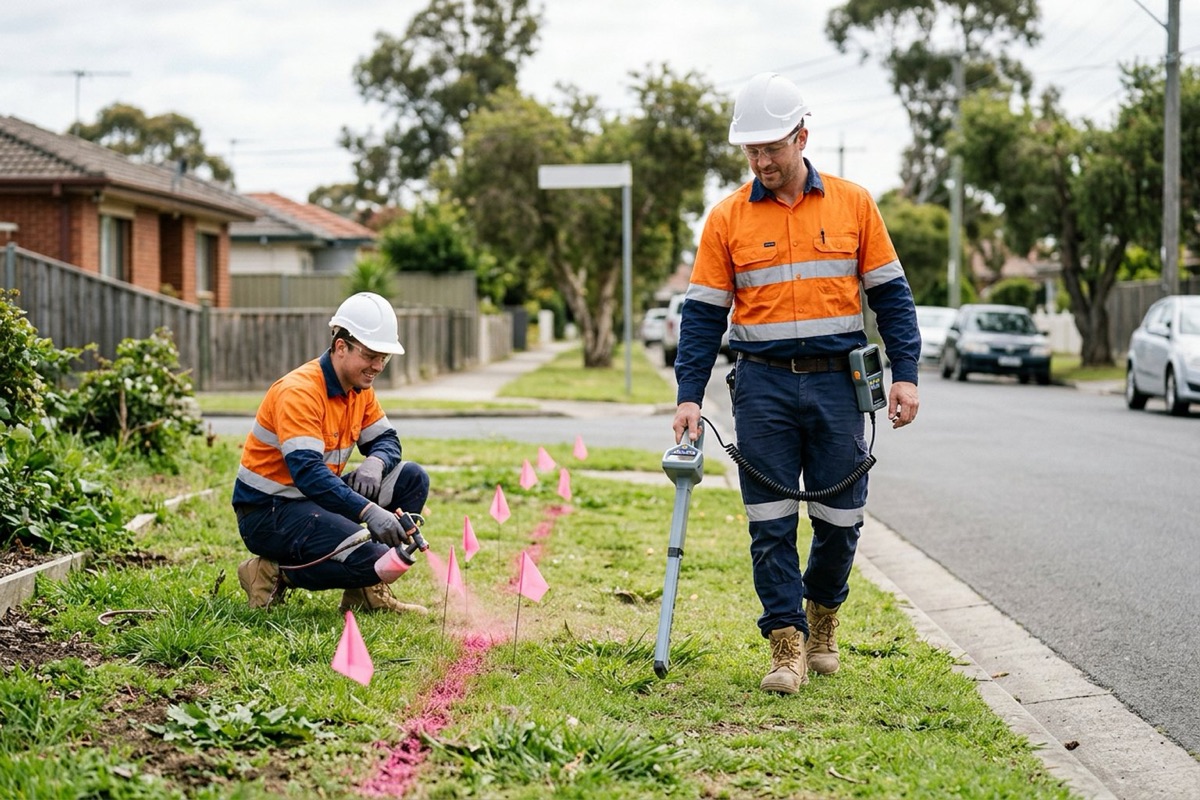
- take all reasonable steps to obtain current underground essential services information for the area being excavated and any adjacent areas;
- give that information to anyone they engage to carry out the excavation; and
- keep it available for inspection until the excavation work is completed, or for at least 2 years after a notifiable incident connected with the work.
“Underground essential services information” means the services that may be affected, the location, including the depth, of their pipes, cables and other plant, and any conditions on the proposed work. Everyone who receives it must have regard to it when carrying out or directing the work.
The usual first step is Before You Dig Australia (BYDA), formerly Dial Before You Dig: a free referral service that passes your enquiry to the registered asset owners, who send back plans of their underground assets. Lodge it well before work starts.
What risks must every excavation manage?
Regulation 305 requires the business carrying out excavation work to manage its risks. Those risks include:
- a person falling into an excavation;
- a person being trapped by the collapse of an excavation;
- a person working in an excavation being struck by a falling thing; and
- a person working in an excavation being exposed to an airborne contaminant.
In deciding how, the business must consider the nature of the excavation, the nature of the work including the range of possible methods, and the means of getting in and out.
That duty applies to every excavation, at any depth. A shallow trench in unstable ground can still collapse on someone who is kneeling or lying in it, and a deep pit can trap fumes or gas.
When does a trench need shoring, benching or battering?
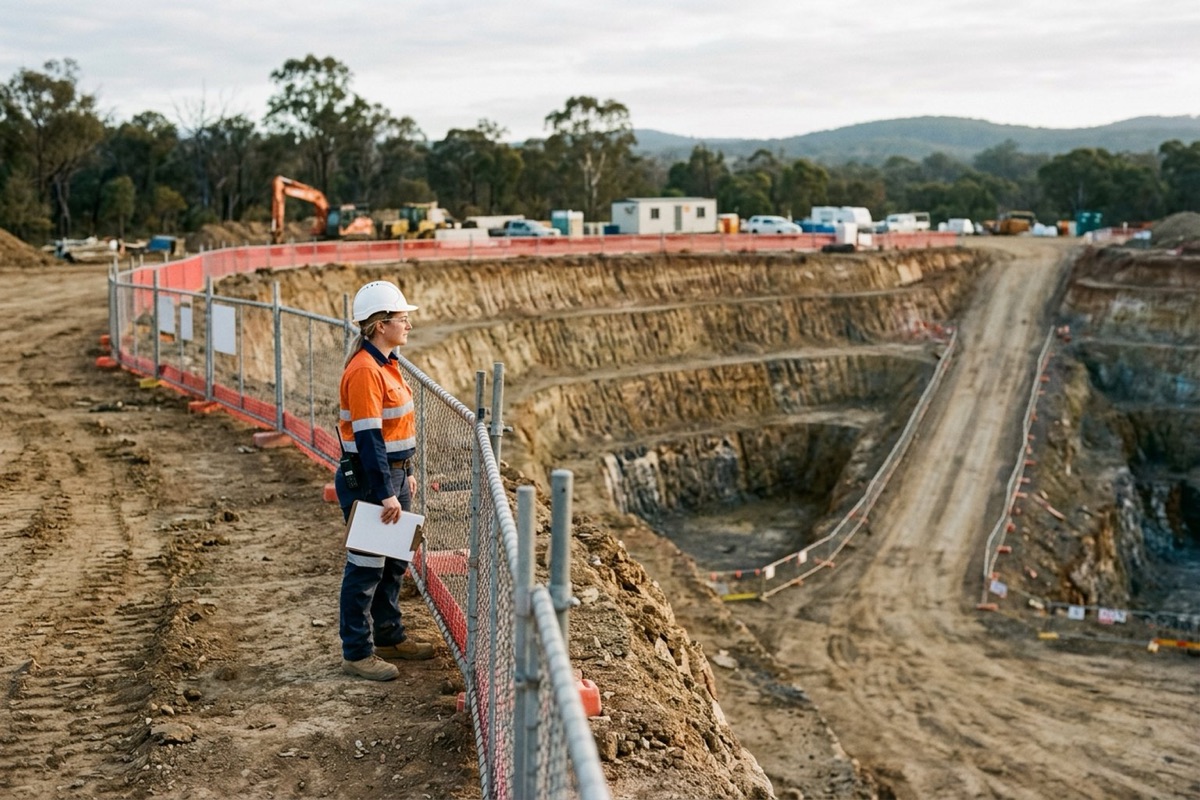
Regulation 306 applies to a business that proposes to excavate a trench at least 1.5 metres deep. It must:
- secure the work area from unauthorised access, including inadvertent entry, so far as is reasonably practicable; and
- minimise the risk of collapse by ensuring all sides of the trench are adequately supported.
The Regulation allows one or more of three support methods:
- Shoring — by shielding, such as trench shields or boxes, or other comparable means.
- Benching — cutting the sides back in a series of steps.
- Battering — sloping the sides back to a stable angle.
The support requirement does not apply if the business receives written advice from a geotechnical engineer that all sides of the trench are safe from collapse. That advice must state the period it applies to, and it may be conditional — for example, on rain or another natural occurrence that could create a risk of collapse.
When is excavation work high risk construction work?
Under regulation 291 of the model WHS Regulations, construction work is high risk — and needs a SWMS before it starts — if it is carried out in or near a shaft or trench with an excavated depth greater than 1.5 metres, or a tunnel.
Excavation often triggers other categories at the same time. The list also includes work:
- on or near energised electrical installations or services;
- on or near pressurised gas distribution mains or piping, or chemical, fuel or refrigerant lines;
- in an area where there is any movement of powered mobile plant;
- on, in or adjacent to a road or other traffic corridor in use by traffic other than pedestrians; and
- in an area that may have a contaminated or flammable atmosphere.
One SWMS can cover several categories if it deals with how they interact. Our guide to safe work method statements explains what it must contain.
What practical controls prevent collapse and falls?
The Regulations set the outcome; the Excavation work Code of Practice and good site practice fill in the detail:
- Support the sides before anyone goes in. Install shoring or shields from outside the trench, and never enter an unsupported section to fit them.
- Keep loads away from the edge. Spoil heaps, stockpiled materials and plant all add load to the trench wall and can fall in. Keep them back from the edge, as your engineer or the code’s guidance requires.
- Control mobile plant. Set exclusion zones around excavators, use spotters, and stop plant operating at the trench edge while people are below. See mobile plant and traffic management.
- Barricade and cover. Fence or barricade the edges, cover pits and shafts, and secure the site after hours so no one can fall in.
- Provide safe access. Use ladders, stairs or ramps within the supported area, close to where people work.
- Manage water. Water in or around an excavation weakens the ground; pump it out and divert surface water away.
- Protect neighbouring structures. Excavating near footings, walls, roads or other services can undermine them; get engineering advice before digging close.
- Inspect. Have a competent person check the excavation and its supports before each shift and after rain, vibration or anything else that could affect stability.
Can an excavation be a confined space?
Sometimes. A deep pit, shaft or trench can meet the definition of a confined space — for example, if it is likely to contain a harmful atmosphere or a risk of engulfment, and it is not designed to be occupied. If it does, the confined space requirements apply as well, including atmospheric testing and entry permits. See what counts as a confined space.
Regulation 305 already requires the risk of exposure to airborne contaminants in an excavation to be managed, so test the atmosphere wherever exhaust fumes, sewer gases or contaminated ground are possible.
How is Victoria different?
Victoria has not adopted the model WHS laws. Excavation is regulated under the Occupational Health and Safety Regulations 2017, and Victoria’s list of high risk construction work — which also requires a SWMS — includes work in or near trenches and shafts and tunnel work. The wording, thresholds and clause numbers are not the same as the model Regulations, so on Victorian sites work from the Victorian Regulations and WorkSafe Victoria’s guidance. Before You Dig Australia operates in Victoria as everywhere else.
Excavation checklist
- Lodge a Before You Dig enquiry well ahead of the work, and pass the plans to the excavator.
- Locate and expose services on site before digging near them.
- Prepare a SWMS if the trench or shaft will be deeper than 1.5 metres, or any other high risk category applies.
- Choose the support method: shoring or shields, benching or battering — or obtain written geotechnical advice with its period and conditions.
- Secure the area from unauthorised and inadvertent entry, including after hours.
- Keep spoil, materials and plant back from the edge, with exclusion zones and spotters.
- Provide safe access inside the supported area.
- Test the atmosphere where contaminants are possible, and treat confined spaces as confined spaces.
- Inspect every shift and after rain or vibration, and keep the services information on file.
Dig safely, every time
CPD-accredited online courses on excavation, ground support, underground services and mobile plant, each with an assessment and a certificate.
- Excavation, Trenching and Ground Support Safety View course →
- Working Safely Around Underground Utilities (Before You Dig) View course →
- Managing Mobile Plant on Construction Sites View course →
- Safe Work Method Statements for High-Risk Construction Work View course →
- Traffic Management on Construction Sites View course →
- Working Safely in Confined Spaces View course →
Frequently asked questions
How deep can a trench be before it needs shoring?
Under the model WHS Regulations, a trench at least 1.5 metres deep must have all its sides adequately supported by shoring, benching or battering, unless a geotechnical engineer advises in writing that the sides are safe from collapse. Shallower trenches still need their collapse risk managed.
Do I need a SWMS for a trench?
Yes, if the trench or shaft has an excavated depth greater than 1.5 metres, because that is high risk construction work. You may also need one at shallower depths if another category applies, such as work near energised electrical services, gas mains or moving mobile plant.
Is Before You Dig compulsory?
The WHS Regulations require the person in control of the workplace to take all reasonable steps to obtain current underground essential services information before excavation starts. Before You Dig Australia is a free service and the usual first step, but its plans show approximate locations, so services should also be located on site.
Can a geotechnical engineer approve a trench without support?
Yes. The support requirement does not apply if the business receives written advice from a geotechnical engineer that all sides of the trench are safe from collapse. The advice must state the period it covers and may be conditional on events such as rain.
Who is responsible for underground services information?
The person with management or control of the workplace must obtain it before directing or allowing excavation, and must give it to the people they engage to do the work. Everyone who receives it must take it into account.
What is the difference between benching and battering?
Benching cuts the sides of the excavation back in a series of horizontal steps. Battering slopes the sides back to a stable angle. Both reduce the risk of collapse, and shoring or trench shields are the alternative where there is no room to cut the sides back.