Demolition of any load-bearing or structurally significant element is high risk construction work under the model WHS Regulations, so it needs a safe work method statement (SWMS) before it starts. Demolition of a structure at least 6 metres high, demolition using load shifting machinery on a suspended floor, and demolition involving explosives must also be notified to the regulator in writing at least 5 days before work begins.
Before any building or plant built before 31 December 2003 is demolished, asbestos must be identified, and asbestos likely to be disturbed must be removed so far as is reasonably practicable before demolition starts.
What counts as demolition work?
The model WHS Regulations define demolition work as work to demolish or dismantle a structure, or part of a structure that is load-bearing or otherwise related to the physical integrity of the structure. Two things are excluded:
- dismantling formwork, falsework or other structures designed or used to provide support, access or containment during construction work; and
- removing power, light or telecommunication poles.
So stripping out a non-structural internal partition is not “demolition work” in this sense, but removing a load-bearing wall, a roof structure, a floor or a whole building is. If you are unsure whether an element is load-bearing, treat it as if it is until an engineer says otherwise.
Is demolition high risk construction work?
Yes, in two ways. Regulation 291 lists the categories of high risk construction work, and they include construction work that:
- involves demolition of an element of a structure that is load-bearing or otherwise related to the physical integrity of the structure; and
- involves structural alterations or repairs that require temporary support to prevent collapse.
Demolition jobs usually trigger other categories as well, such as a risk of a person falling more than 2 metres, the likely disturbance of asbestos, the use of explosives, work near energised electrical services, and work where powered mobile plant is moving.
High risk construction work needs a SWMS prepared before the work starts, and on a construction project the principal contractor must take all reasonable steps to obtain it. Our guides to safe work method statements and principal contractor duties explain what that involves.
When must demolition be notified to the regulator?
Regulation 142 requires a person conducting a business or undertaking (PCBU) proposing to carry out any of the following demolition work to give the regulator written notice at least 5 days before the work commences:
- demolition of a structure, or part of a structure that is load-bearing or otherwise related to its physical integrity, that is at least 6 metres in height;
- demolition work involving load shifting machinery on a suspended floor; and
- demolition work involving explosives.
The notice must be given in the manner and form the regulator requires — each state and territory regulator publishes its own notification process. Height is measured from the lowest level of the ground immediately next to the base of the structure up to its highest point.
There is one exception: an emergency service organisation whose workers carry out demolition while responding to an emergency must give the notice as soon as practicable, before or after the work.
What has to happen with asbestos before demolition?
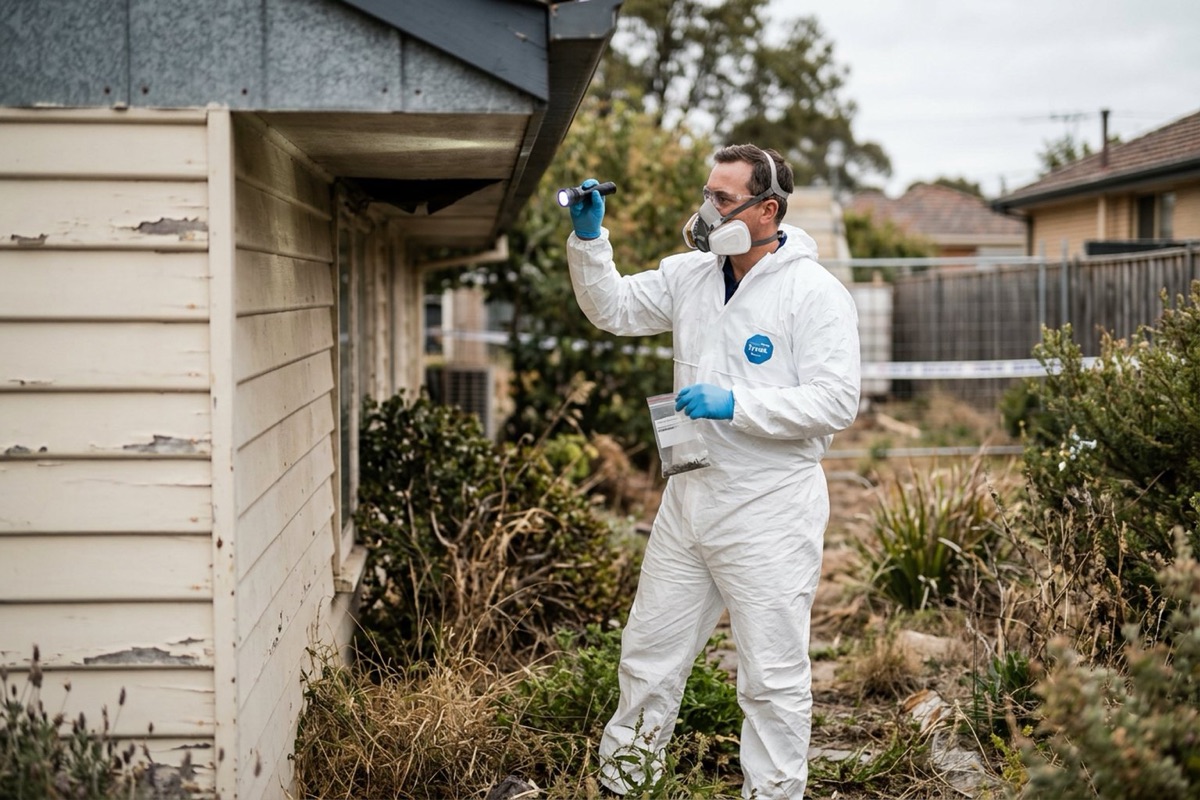
Part 8.6 of the model WHS Regulations applies to the demolition or refurbishment of a structure or plant constructed or installed before 31 December 2003. It does not cover minor or routine maintenance work. Before demolition:
- Review the asbestos register. The person with management or control of the workplace must review the asbestos register and revise it if it is inadequate for the proposed demolition — for example, where an area that was inaccessible will be opened up.
- Pass it on. That person must give a copy of the register to the PCBU carrying out the demolition, and the demolition PCBU must obtain it before starting.
- No register? Inspect. If there is no asbestos register, the demolition PCBU must not start until a competent person has inspected the structure or plant to determine whether asbestos or asbestos-containing material is present. If the competent person is uncertain, or part of the structure is inaccessible and likely to be disturbed, asbestos must be assumed to be present. The owner and occupier of residential premises, or otherwise the person with management or control, must then be told.
- Identify and remove. Under regulation 452, all asbestos likely to be disturbed by the demolition must be identified and, so far as is reasonably practicable, removed before the demolition starts.
Regulation 452 does not apply in certain emergencies or to domestic premises, which the Regulations deal with separately — on a house demolition, confirm the asbestos requirements that apply in your jurisdiction before work starts. Our guide to asbestos in buildings covers registers, licensed removal and clearance.
How should demolition be planned?
Safe Work Australia’s model Code of Practice: Demolition work sets out how to plan and manage the work. Its core principles are:
- Plan before work starts. Identify the hazards, assess the risks and decide on control measures before anything is taken down.
- Work in sequence. Demolition should generally be systematic and in the reverse order to construction, so the structure stays stable at each stage.
- Protect neighbours. No part of the demolition should adversely affect the structural integrity of any other building.
In practice, good planning also means:
- Understanding the structure — how it was built and how loads are carried, including shared walls, cantilevers and any pre-stressed or post-tensioned concrete — and getting engineering advice where stability during demolition is uncertain.
- Making services safe — arranging for electricity, gas, water, sewer and telecommunications to be disconnected or made safe by the relevant authorities before work starts.
What controls keep people safe during demolition?
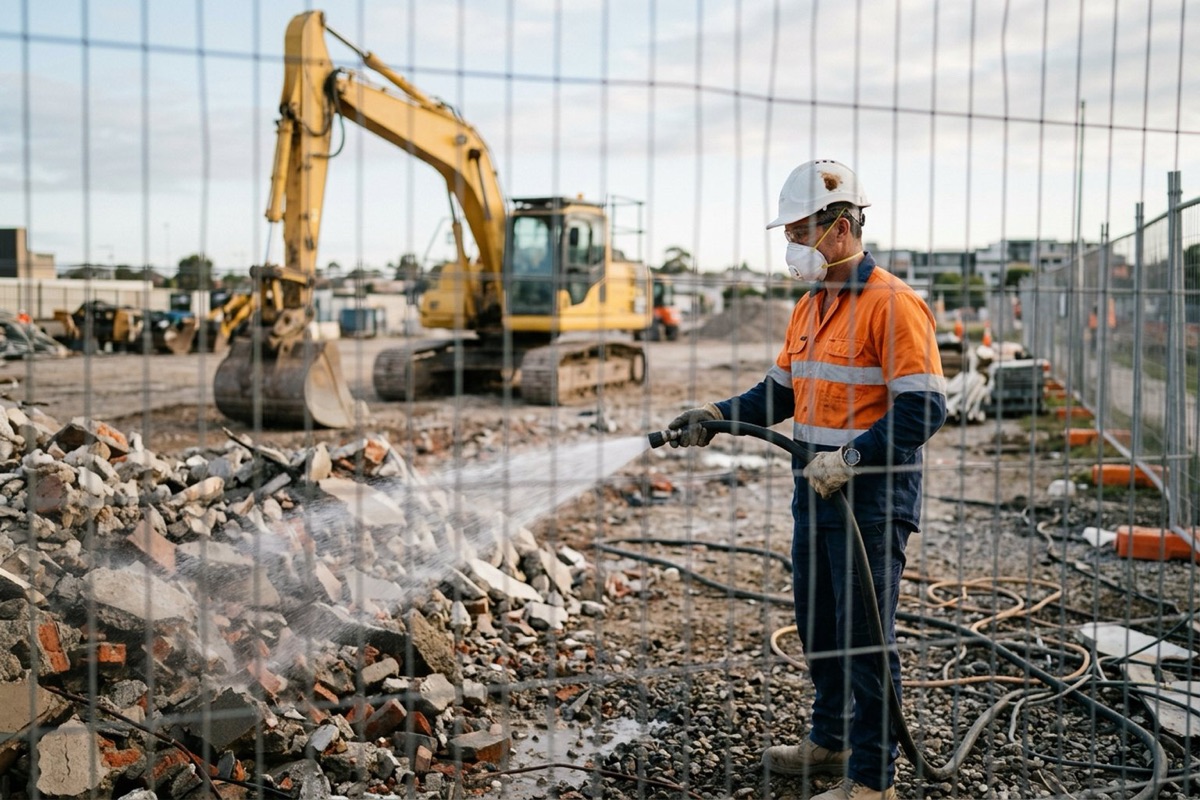
- Exclusion zones around the structure and the plant, large enough for falling material and the machine’s reach, with barriers and signs.
- Falling objects control — catch platforms, debris chutes and controlled drop zones rather than throwing material from height.
- Fall prevention for anyone working at the edges of floors, roofs and openings. See working at heights.
- Mobile plant management — machines sized for the job, operators competent, and pedestrians kept out of the plant’s operating area. See mobile plant and traffic management.
- Dust control — water suppression and wet methods to keep dust, including crystalline silica from concrete and masonry, out of the air.
- Temporary support for any element that could collapse before it is meant to.
- Waste management — separate and remove debris regularly so it does not overload floors or block access.
How is Victoria different?
Victoria regulates workplace safety under the Occupational Health and Safety Act 2004 and the Occupational Health and Safety Regulations 2017, not the model WHS laws, so the clause numbers and some requirements differ — work from WorkSafe Victoria’s rules on Victorian sites.
Building approval also applies. In Victoria, demolishing a building generally needs a building permit, and for some demolitions — for example, where more than half the volume of the building is demolished, or a façade visible from the street — the building surveyor must obtain the council’s report and consent under section 29A of the Building Act 1993 before the permit can be issued. Heritage-listed buildings need further approval. Other states have their own building and planning approvals for demolition, so check with your council or building certifier.
Demolition checklist
- Confirm approvals — building or demolition permit, planning and heritage consent where required.
- Review or obtain the asbestos register, or have a competent person inspect, and arrange licensed removal before demolition.
- Get structural information and engineering advice on sequence and temporary support.
- Disconnect services through the relevant authorities.
- Prepare the SWMS for every high risk construction work category involved.
- Notify the regulator at least 5 days ahead if the structure is 6 metres or higher, or if the work uses load shifting machinery on a suspended floor or explosives.
- Set up exclusion zones, falling-object controls, fall prevention and dust suppression.
- Brief the crew, supervise to the plan, and stop and reassess if the structure behaves unexpectedly.
Plan demolition work that stays standing until you mean it to fall
CPD-accredited online courses on demolition safety, asbestos, falls and mobile plant, each with an assessment and a certificate.
- Demolition Safety and Planning View course →
- Asbestos Awareness and Management in Construction View course →
- Safe Work Method Statements for High-Risk Construction Work View course →
- Managing the Risk of Falls: Working at Heights in Construction View course →
- Managing Mobile Plant on Construction Sites View course →
- Dust and Occupational Lung Disease: Awareness and Prevention View course →
- Construction and Demolition Waste and the Circular Economy View course →
Frequently asked questions
Do I need to notify the regulator before demolition?
Under the model WHS Regulations, yes, if you will demolish a load-bearing or structurally significant structure or part that is at least 6 metres high, use load shifting machinery on a suspended floor, or use explosives. Written notice must reach the regulator at least 5 days before the work starts, in the form the regulator requires.
Does demolition need a SWMS?
Yes, if it involves demolition of a load-bearing element or one related to the physical integrity of the structure, because that is high risk construction work. A SWMS is also needed for other categories that demolition often involves, such as falls over 2 metres or the likely disturbance of asbestos.
Do I need an asbestos survey before demolition?
For structures or plant built or installed before 31 December 2003, the asbestos register must be reviewed and given to the demolition contractor. If there is no register, a competent person must inspect before work starts. Asbestos likely to be disturbed must be identified and, so far as is reasonably practicable, removed before demolition.
Is removing an internal wall demolition work?
Only if the wall is load-bearing or otherwise related to the physical integrity of the structure. Removing a non-structural partition is not demolition work under the definition, but it may still involve asbestos, services and other hazards that must be managed.
What is the 6 metre rule for demolition?
Regulation 142 of the model WHS Regulations requires at least 5 days' written notice to the regulator before demolishing a structure, or a load-bearing part of one, that is at least 6 metres high. Height is measured from the lowest adjacent ground level at the base to the highest point.
Do I need a permit to demolish a house?
Usually, yes — demolition generally needs building approval from your council or a building surveyor or certifier. In Victoria this is a building permit, and some demolitions also need the council's report and consent under section 29A of the Building Act 1993. Check the requirements with your local council.
Sources and further reading
- Federal Register of Legislation — Work Health and Safety Regulations 2011 (Cth), reg 5 definition of demolition work, reg 142, reg 291 and regs 447–452 (model text)
- Safe Work Australia — Model Code of Practice: Demolition work
- Knox City Council (Vic) — Report and consent (section 29A demolition)
- WorkSafe Victoria — Occupational Health and Safety Act and Regulations